
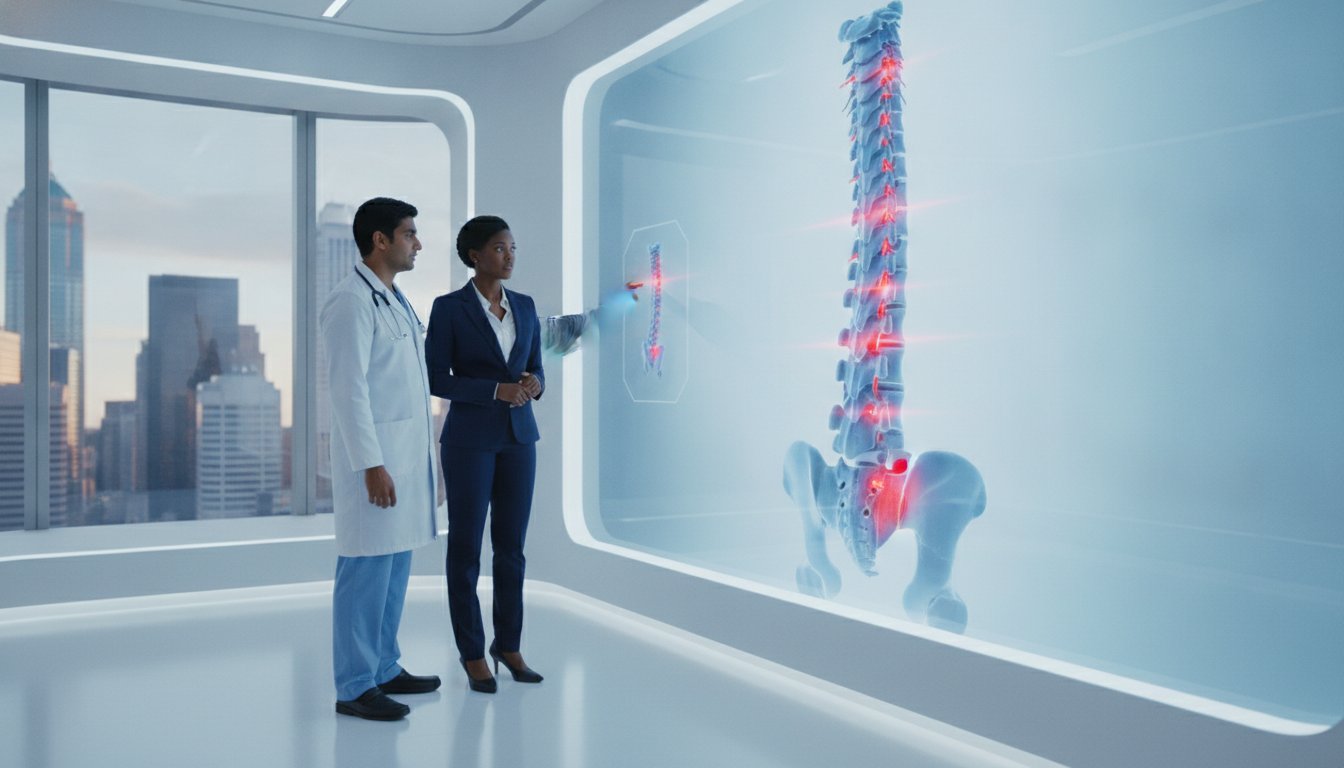
In 2026, a single missed soft tissue tear on a low-resolution scan doesn’t just delay a case; it can slash its potential settlement value by six figures before you even file a demand. Identifying the right mri centers for personal injury attorneys is the most direct way to secure the objective proof required for high-value settlements. You likely already know that the strength of your medical documentation is the primary ceiling for any claim, yet many firms still struggle with slow turnaround times and facilities that lack a fundamental understanding of Letters of Protection (LOPs).
This guide explains how to integrate high-performance diagnostic centers into your legal workflow to maximize case value and streamline documentation. We will examine the 2026 standards for diagnostic precision, the shift toward mandatory HIPAA security safeguards, and the logistical frameworks that turn imaging providers into powerful litigation assets. You will discover how to move beyond basic referrals to a system of national scalability that supports your firm’s growth and professional reputation. By the end of this guide, you will have a clear roadmap for selecting partners that provide the diagnostic clarity and administrative ease your firm requires.
Key Takeaways
- Learn how 3T MRI technology provides the objective evidence necessary to increase settlement multipliers in 2026.
- Identify why LOP and lien acceptance are non-negotiable criteria when selecting high-performance mri centers for personal injury attorneys.
- Compare the logistical advantages of integrated referral networks against hospital-based imaging to reduce administrative overhead and firm costs.
- Establish a standardized diagnostic protocol within your firm to ensure seamless medical-legal documentation and cohesive patient care.
- Discover how proprietary case management technology facilitates national scalability and streamlined communication between legal teams and imaging providers.
The Strategic Role of Diagnostic Imaging in Personal Injury Litigation
Personal injury litigation in 2026 relies on objective data to overcome the skepticism of insurance adjusters. While a client’s testimony regarding pain is necessary, it’s rarely sufficient to trigger a maximum policy payout. High-performance Magnetic Resonance Imaging (MRI) provides the visual proof required to move a case from a low-level nuisance settlement to a high-value recovery. Strategic partnerships with specialized mri centers for personal injury attorneys ensure that every soft tissue injury is documented with the precision needed to withstand rigorous defense scrutiny.
Early diagnostic intervention creates a clear medical-legal timeline. By securing imaging shortly after an accident, firms can establish a baseline that links specific injuries directly to the traumatic event. This proactive approach increases settlement multipliers by removing the “wait and see” ambiguity that defense teams use to devalue claims. Objective evidence is the only reliable way to move beyond subjective complaints and secure the compensation clients deserve.
Translating Subjective Pain into Objective Evidence
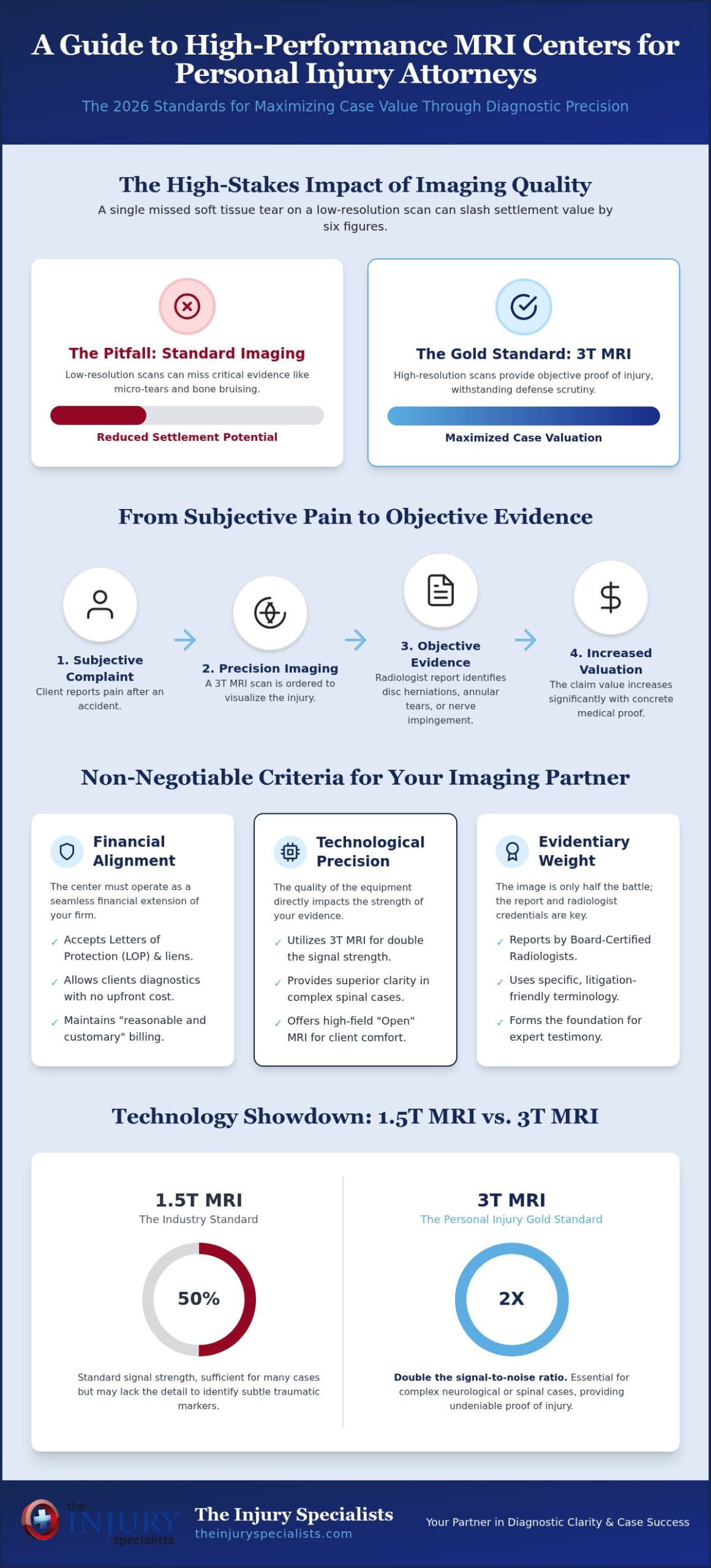
Insurance carriers use valuation software like Colossus to categorize claims based on documented injuries. Subjective complaints of “back pain” carry little weight in these algorithms. However, an MRI that identifies disc herniations, annular tears, or nerve root impingement provides the specific codes needed to increase case valuation. These findings provide the physiological “why” behind a client’s symptoms, turning invisible pain into courtroom-ready data. High-resolution diagnostics are also critical for countering pre-existing condition defenses. Modern 3T imaging can often distinguish between chronic degenerative changes and acute traumatic markers, such as bone marrow edema, which proves the injury is new.
The Evidentiary Weight of Board-Certified Radiologist Reports
The quality of the image is only half of the equation; the credentials of the reading radiologist carry significant evidentiary weight. Reports from board-certified radiologists who understand the nuances of personal injury litigation are essential. These professionals use specific, litigation-friendly terminology, such as “consistent with trauma” or “acute findings,” which simplifies the path to settlement. Beyond the initial diagnosis, these reports serve as the foundation for future medical cost projections and expert testimony. Partnering with mri centers for personal injury attorneys that prioritize detailed, clear, and authoritative reporting allows your firm to build a more persuasive narrative for every client.
Core Requirements: What Attorneys Need from MRI Centers
Litigation success depends on more than just medical imaging; it requires a partner that understands the legal ecosystem. High-performance mri centers for personal injury attorneys must function as an extension of the law firm’s workflow. If a center lacks experience with the specific demands of personal injury, the resulting documentation may fail under defense cross-examination. Selecting a facility is a strategic decision that impacts both the client’s health and the case’s ultimate value.
Financial Alignment: Liens and LOP Proficiency
Centers must accept Letters of Protection (LOP) and medical liens as a non-negotiable standard. This allows clients to receive critical diagnostics without upfront costs, preserving their cash flow and your case’s momentum. Effective partners understand the nuances of a personal injury referral network. They ensure billing remains consistent with “reasonable and customary” rates. This consistency prevents insurance adjusters from challenging the necessity or cost of the services, which can otherwise lead to unnecessary reductions during settlement negotiations.
Technological Standards for Diagnostic Precision
Equipment quality directly influences the strength of your evidence. While 1.5T machines are standard, 3T MRI units offer double the signal-to-noise ratio, providing the clarity needed for complex neurological or spinal cases. This precision is vital for understanding MRI evidence variability, as lower-quality machines might miss subtle traumatic markers like micro-tears or bone bruising. Centers should also offer high-field “open” MRI options for claustrophobic clients to ensure compliance without sacrificing diagnostic depth. All images must be provided in DICOM format to facilitate seamless, high-resolution review by your retained medical experts.
Administrative speed is a competitive advantage. Top-tier centers offer rapid scheduling and deliver reports within 24 to 48 hours. This turnaround ensures your demand packages aren’t delayed by medical bottlenecks. Secure, HIPAA-compliant digital portals allow your staff to retrieve images and reports instantly. This eliminates the logistical burden of physical discs or faxed documents. Finally, ensure the facility has a proven track record of deposition readiness. A radiologist who can confidently defend their findings under oath is an invaluable asset. For firms looking to simplify these requirements, utilizing an integrated referral platform ensures every facility in your network meets these rigorous standards.
Comparing Imaging Models: Standalone Centers vs. Integrated Networks
Law firms often default to local standalone centers, but this “one-off” strategy creates significant administrative friction. Managing fragmented relationships with dozens of mri centers for personal injury attorneys drains firm resources and introduces unnecessary risk. While a single local center might provide quality images, it cannot offer the logistical infrastructure required to scale a growing practice. Firms must choose between manual management and an integrated system that automates the diagnostic lifecycle.
Hospital-based radiology departments present even greater challenges. Research from 2026 indicates that hospital MRIs typically cost between $1,500 and $3,500, while freestanding centers range from $400 to $1,200 for identical scans. Beyond the inflated costs, hospitals rarely accept Letters of Protection (LOPs). This lack of financial flexibility forces clients to navigate complex insurance billing, which often complicates the final settlement and reduces the client’s net recovery. Centralizing your referrals through a specialized network avoids these pitfalls entirely.
The Efficiency Gap in Manual Referral Management
Chasing medical records is a low-value task that consumes hours of paralegal time every week. When a firm manages its own referrals, it risks fragmented documentation that can stall a case for months. If a report is delayed or a disc is lost in transit, the entire demand package is held hostage. Standalone centers often lack the medical-legal mindset required for high-stakes litigation. They frequently prioritize clinical throughput over the specific documentation needs of an attorney, resulting in reports that lack the “trauma-consistent” language necessary to trigger higher insurance valuations.
Advantages of a Unified National Network
Centralizing diagnostics through a personal injury diagnostic imaging referrals partner eliminates these operational bottlenecks. An integrated network provides a single portal for all national diagnostic needs, ensuring that whether your client is local or across the country, the reporting remains standardized. This data centralization allows your firm to monitor every case’s status in real-time without making a single phone call.
- Standardized Reporting: Consistent formats make it easier for adjusters to find the data they need to value the claim.
- Instant Scalability: Access a pre-vetted network of mri centers for personal injury attorneys without the need to vet new facilities manually.
- Administrative Leverage: Use the network’s collective bargaining power to ensure your clients receive priority scheduling and rapid report turnaround.
This model turns diagnostic imaging from a logistical hurdle into a streamlined asset. By leveraging a unified platform, firms reduce overhead and ensure that every client receives high-quality care that is fully documented for the courtroom. The result is a more efficient office and a stronger foundation for every case in your portfolio.
Best Practices for Managing Diagnostic Referrals and Medical Liens
Firm efficiency relies on a repeatable diagnostic protocol. Without a standardized workflow, the transition from initial intake to imaging becomes a logistical bottleneck. High-performing mri centers for personal injury attorneys require clear communication channels to ensure data moves seamlessly between the legal and medical teams. Establishing these protocols early reduces the administrative burden on your staff and ensures every client follows a consistent path toward recovery and documentation.
Monitoring the “Lien-to-Value” ratio is a critical best practice. Research shows that medical liens can consume 20 to 40 percent of a gross personal injury settlement before attorney fees are deducted. Firms must ensure that diagnostic costs don’t outpace the projected case value. Utilizing law firm medical referral programs helps maintain this balance by connecting attorneys with providers who respect legal billing standards and understand the financial constraints of a personal injury case.
Streamlining the Referral-to-Report Pipeline
Setting strict turnaround times for reports is essential. A 48-hour window should be the internal standard within your firm’s standard operating procedures. Automating record retrieval through personal injury case management technology ensures your demand packages are never delayed by administrative gaps. This technology tracks every milestone, from the initial referral to the final radiologist sign-off. It provides real-time visibility into the status of every client, allowing your team to focus on litigation strategy rather than chasing paperwork.
Coordinating the Multi-Specialty Medical Team
Diagnostic imaging isn’t a siloed event. It serves as the functional bridge between primary chiropractic care and advanced surgical intervention. When mri centers for personal injury attorneys deliver high-resolution findings, those results must immediately reach the entire medical team. This coordination justifies referrals to high-level specialists like neurosurgeons and creates a “continuum of care” narrative. Adjusters find it difficult to dispute a claim when the diagnostic evidence clearly dictates every step of the treatment plan. An integrated approach ensures that the chiropractor, the specialist, and the imaging center are all working from the same objective data set.
Streamline your firm’s diagnostic workflow and protect your case values by accessing our national imaging network today.
Scaling Firm Efficiency with The Injury Specialists Imaging Network
The Injury Specialists (TIS) functions as the primary power-connector in the medical-legal landscape. We provide a sophisticated infrastructure that allows firms to scale without increasing their internal administrative headcount. By utilizing our national network, your firm gains immediate access to top-tier mri centers for personal injury attorneys that are already vetted for litigation readiness. This eliminates the need for manual provider outreach and ensures that every diagnostic report meets the high evidentiary standards required in 2026.
Our approach centers on integration. We don’t just provide a list of facilities; we offer a customized medical case management process that aligns with your firm’s distinct workflow. This synergy is supported by our pre-vetted ecosystem of physician referral services for personal injury, ensuring that the transition from imaging to specialized treatment is seamless and fully documented.
Technology-Driven Case Management
Efficiency is driven by data. Our proprietary technology platform provides your team with real-time visibility into every client’s diagnostic status. You can track appointments, verify attendance, and retrieve reports through a single, centralized portal. This reduces administrative friction by eliminating the need for constant follow-up calls to various mri centers for personal injury attorneys. By centralizing communication and record storage, your firm can manage a higher case volume while maintaining a lean operational footprint. This world-class technology differentiates your firm in a competitive market, positioning you as a technologically advanced leader focused on results.
The Value of Pre-Settlement Funding Integration
Maintaining the integrity of a medical treatment plan often requires addressing financial barriers early. TIS facilitates access to pre-settlement funding, ensuring that clients can afford necessary diagnostics and follow-up care without delay. This funding bridges the gap between the accident and the settlement, preventing gaps in treatment that defense attorneys often use to undermine a case’s value. By integrating these financial solutions into the diagnostic workflow, you position your firm as a full-service advocate. This comprehensive support ensures that the victim’s recovery remains the priority, while the objective evidence continues to build toward a maximum settlement valuation.
Optimizing Your Diagnostic Workflow for 2026 and Beyond
The strength of your personal injury practice in 2026 depends on the clarity of your evidence and the efficiency of your administrative systems. Moving beyond subjective pain complaints requires high-resolution 3T imaging and radiologists who understand the specific demands of litigation. By prioritizing facilities that accept Letters of Protection and medical liens, you ensure that your clients receive immediate care while your firm avoids the logistical bottlenecks associated with hospital-based imaging.
Managing multiple individual mri centers for personal injury attorneys manually is no longer a viable strategy for firms seeking national scalability. Integrating a centralized network model allows you to leverage standardized reporting and real-time case tracking, turning your diagnostic pipeline into a high-performance asset. As the largest national referral network in the United States, The Injury Specialists provides a proprietary case management platform and specialized PI imaging partners to streamline your operations.
Scale your firm’s diagnostic reach with The Injury Specialists network today.
Your firm’s growth is directly linked to the quality of your professional partnerships. Implementing these strategic diagnostic standards today will secure higher settlement multipliers and more consistent results for your clients tomorrow.
Frequently Asked Questions
Why should PI attorneys prefer MRI centers that specialize in personal injury?
Specialized centers understand the unique documentation requirements of a legal case. They prioritize identifying findings like annular tears or disc herniations that general facilities might overlook. These providers are also accustomed to accepting Letters of Protection (LOPs), ensuring treatment continues without upfront costs. Their radiologists are typically more experienced in providing deposition testimony, which is critical if a case proceeds to trial and requires expert verification of traumatic injuries.
What is the difference between a 1.5T and a 3T MRI for legal evidence?
A 3T MRI provides double the signal-to-noise ratio of a standard 1.5T machine, resulting in significantly higher resolution. This increased clarity allows radiologists to identify subtle traumatic markers, such as bone marrow edema or micro-tears, which might be invisible on lower-field units. High-resolution imaging provides the objective proof necessary to increase settlement multipliers by leaving no room for defense teams to dispute the severity of a client’s soft tissue injury.
How do medical liens work with diagnostic imaging centers?
Medical liens are contractual agreements where the imaging center provides services in exchange for a guaranteed payment from the final settlement. This arrangement allows injury victims to receive high-quality diagnostics without paying out-of-pocket at the time of service. It’s essential to partner with mri centers for personal injury attorneys that maintain billing rates consistent with reasonable and customary standards to avoid challenges from insurance adjusters during the negotiation phase.
Can a diagnostic imaging network help with out-of-state clients?
Yes, a national diagnostic imaging network like The Injury Specialists provides access to pre-vetted facilities across the entire United States. This is vital for firms representing clients who were injured while traveling or who have relocated during the litigation process. A unified network ensures that regardless of the client’s physical location, the diagnostic quality, reporting format, and lien acceptance policies remain consistent with your firm’s established workflow and legal standards.
How fast should an MRI center provide a report for a PI case?
An efficient imaging center should deliver a final radiologist report within 24 to 48 hours of the scan. Rapid turnaround is critical to maintaining the momentum of a case and ensuring that demand packages aren’t delayed by medical documentation gaps. Firms should implement standard operating procedures that hold providers to these strict timelines. Delays in reporting can lead to stalled treatment plans and may negatively impact the client’s overall recovery and case value.
What should I look for in a radiologist’s report for litigation?
A litigation-ready report must go beyond a simple diagnosis to address causality and traumatic etiology. Look for specific language such as “consistent with trauma” or “acute findings” rather than generic descriptions of chronic degenerative changes. The report should clearly document the presence of herniations, nerve root impingement, or ligamentous instability. These objective findings provide the foundation for expert testimony and help your firm build a more persuasive narrative for insurance adjusters.
How does integrated case management software improve settlement outcomes?
Integrated case management software provides real-time visibility into a client’s diagnostic status, ensuring that no case milestones are missed. By centralizing record storage and automating retrieval, the software eliminates the administrative delays that often plague personal injury firms. This high level of organization allows attorneys to present a cohesive and fully documented case to adjusters, which often leads to faster settlements and higher valuations due to the indisputable objective evidence provided.
Are there MRI centers that provide pre-settlement funding for diagnostics?
While individual centers may not offer funding directly, The Injury Specialists facilitates pre-settlement funding to bridge the gap between medical needs and legal resolution. This ensures that clients can access essential imaging at high-quality mri centers for personal injury attorneys without financial strain. This integrated approach maintains the integrity of the medical treatment plan and positions your firm as a comprehensive advocate for the victim’s recovery, regardless of their current financial situation.

Leave A Comment
You must be logged in to post a comment.