

What if your firm’s administrative burden isn’t just a logistical bottleneck, but a direct drain on your clients’ settlement potential? You understand that fragmented communication between medical providers and legal teams creates treatment gaps that inevitably weaken a case. Managing massive medical record volumes and documentation errors often pulls your staff away from high-value tasks. Implementing professional medical case management for personal injury transforms these operational hurdles into a strategic asset. By aligning clinical recovery directly with legal strategy, you ensure that every medical milestone translates into verifiable evidence.
This guide demonstrates how integrated clinical oversight streamlines your internal workflows while maximizing settlement outcomes. We’ll examine the specific mechanisms that reduce administrative friction and provide the consistent, high-quality care your clients expect. You’ll learn how a strategic partnership between healthcare and legal sectors builds a bulletproof paper trail that commands respect from insurance adjusters. We’ve structured this overview to show you exactly how to scale your firm’s efficiency and increase case values through professional synergy.
Key Takeaways
- Identify how specialized medical-centric oversight differs from standard legal tracking to ensure comprehensive clinical documentation.
- Discover how proactive medical case management for personal injury identifies and closes treatment gaps that often weaken legal arguments.
- Transition from managing raw medical records to utilizing high-value clinical facts that directly influence settlement multipliers.
- Evaluate the benefits of integrated technology and national referral networks over standalone software to optimize firm efficiency.
- Implement a scalable medical-legal strategy that reduces administrative staff burden while maintaining consistent, high-quality client care.
Defining Medical Case Management in the Personal Injury Ecosystem
Professional litigation requires more than just file organization; it demands a clinical strategy. Medical case management for personal injury functions as a specialized discipline that aligns healthcare outcomes with legal requirements. In 2026, this role is critical due to the increased complexity of medical lien laws and the massive volume of digital health records. Effective management balances the interests of three primary stakeholders: the victim seeking recovery, the medical provider delivering care, and the attorney building the case.
The Intersection of Healthcare and Litigation
The primary objective of this discipline is two-fold: facilitating physical recovery for the patient and securing evidence recovery for the legal claim. Medical case management ensures that every treatment step follows established clinical protocols, which prevents defense objections regarding gaps in care. When a case manager oversees the journey, they bridge the gap between medical necessity and legal relevance. This proactive approach ensures that the medical narrative is consistent and documented in real-time.
Why General Case Management Isn’t Enough
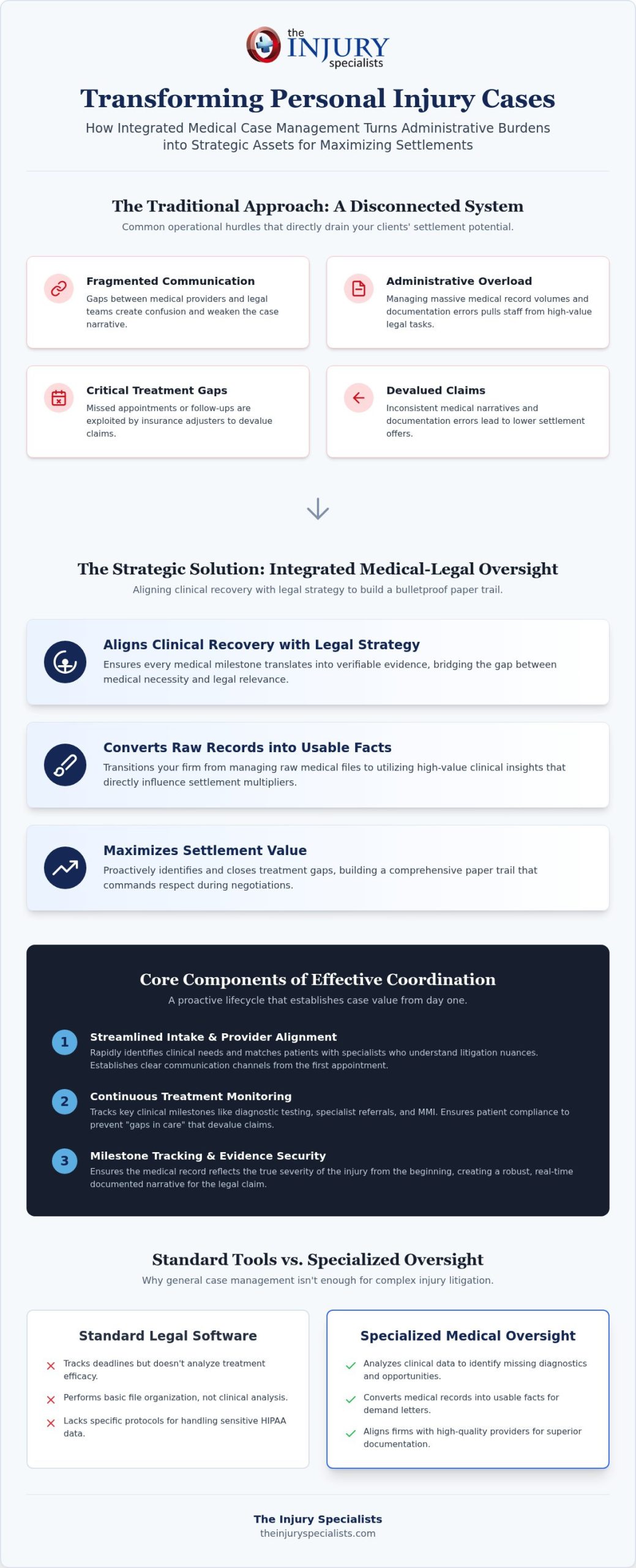
Standard legal tools often lack the clinical depth required for complex injury litigation. General practice software might track deadlines, but it doesn’t analyze treatment efficacy or identify missing diagnostic tests. Personal injury firms operating on contingency fees need medical-centric oversight to protect their investment in a case. This involves:
- HIPAA-Compliant Security: Handling sensitive clinical data requires specific protocols that standard legal platforms may not prioritize.
- Clinical Analysis: Converting raw medical records into usable facts for demand letters requires medical expertise, not just administrative filing.
- Ecosystem Alignment: Specialized management connects firms with high-quality providers who understand the nuances of personal injury documentation.
Relying on administrative staff to interpret complex medical billing or surgical reports often leads to missed value. Professional medical case management for personal injury ensures that the clinical record is robust enough to navigate the billed versus paid gap that insurance adjusters use to devalue claims. This specialized oversight builds a comprehensive paper trail that commands respect during settlement negotiations.
Core Components of Effective Medical Coordination
Effective coordination moves away from the traditional model of waiting for records and toward a proactive lifecycle. In personal injury, the time between the accident and the first diagnostic imaging is often the most critical period for establishing case value. High-performing firms don’t just react to treatment; they coordinate it. This ensures that the medical record reflects the true severity of the injury from day one. By aligning medical providers with your firm’s distinct processes, you eliminate the friction that typically slows down case progression.
Streamlining Initial Intake and Provider Alignment
The coordination process starts with a rapid intake that identifies the specific clinical needs of the victim. This phase requires matching patients with specialists through physician referral services personal injury that understand the nuances of litigation. Early intervention from imaging centers and chiropractic care is essential to document soft-tissue damage while the evidence is fresh. Establishing clear communication channels between the law firm and the clinic ensures that medical providers follow the firm’s distinct administrative processes. Utilizing integrated medical networks allows for seamless data exchange from the very first appointment.
Continuous Treatment Monitoring and Milestone Tracking
Professional medical case management for personal injury involves tracking specific clinical milestones to maintain case momentum. In this context, milestones include the completion of initial diagnostic testing, referrals to surgical specialists, and the eventual determination of Maximum Medical Improvement (MMI). Case managers monitor these steps to ensure the patient remains compliant with their treatment plan. If a client misses appointments or fails to follow up on a specialist referral, it creates a “gap in care” that insurance adjusters will use to devalue the claim.
Facilitators identify red flags early, such as delayed imaging reports or treatment plateaus. Resolving these delays in real-time prevents the file from stagnating. This level of oversight ensures that when the time comes for a demand letter, the evidence is complete, chronological, and ready for review. This methodical approach ensures that the clinical journey supports the legal strategy without the administrative burden falling on your internal staff.
Maximizing Settlement Value Through Clinical Documentation
The quality of medical case management for personal injury is the primary driver of settlement multipliers. Many law firms mistakenly categorize administrative oversight as an overhead cost. This perspective ignores the direct correlation between clinical clarity and financial recovery. Raw medical records are merely static data points that adjusters often ignore. Usable facts, however, are the dynamic evidence required for persuasive demand letters. A well-managed case converts clinical recovery into a high-value legal narrative. This cohesive care ecosystem reduces friction during the negotiation phase by presenting a unified, undeniable account of the injury.
Insurance adjusters look for inconsistencies to devalue claims. Professional oversight eliminates these vulnerabilities by ensuring that the medical record is chronological, complete, and clinically sound. This level of coordination moves the case beyond the billed versus paid gap that often limits recovery. By documenting the necessity of every treatment step, case managers build a defensive wall against defense arguments that care was excessive or unrelated to the accident. It’s the mechanism that converts clinical recovery into high-value legal evidence.
Bridging the Gap Between Medical Records and Legal Evidence
Accurate medical documentation for personal injury serves as the backbone of any successful claim. Strategic case management ensures that diagnostic imaging precisely aligns with the symptoms reported by the victim. When an MRI confirms a specific clinical finding mentioned in the initial intake, the case value increases. Medical-legal consulting plays a vital role here. Experts interpret complex findings for adjusters who seek reasons to deny coverage. This transformation of clinical data into legal evidence removes the ambiguity that leads to low-ball offers. It ensures that the demand letter is backed by objective medical proof rather than subjective complaints.
Managing Liens and Pre-Settlement Financial Logistics
Strategic management of medical liens protects the interests of both providers and attorneys. Without professional oversight, settlement-day surprises regarding outstanding balances can derail a case. Integrating pre-settlement funding for injury victims ensures care continuity. Patients complete their treatment plans without financial stress, which prevents gaps in care that weaken legal arguments. This financial transparency ensures that the final settlement accounts for all economic losses. High-level facilitators handle these logistics, allowing legal staff to focus on litigation strategy rather than billing disputes. Firms that don’t manage these logistics proactively often face reduced net recoveries for their clients.
Technology vs. Human Expertise in Case Oversight
Standalone software often fails because it acts as a closed system. It organizes existing data but doesn’t create the professional connections necessary for growth. The industry is seeing a decisive shift toward personal injury case management technology that prioritizes ecosystem alignment. Software alone cannot solve the fundamental challenge of securing high-quality personal injury patient referrals. This is where the Power-Connector model becomes essential. It uses technology to bridge professional silos, ensuring that medical case management for personal injury is both data-driven and human-led.
Essential Features of Modern PI Management Platforms
Modern platforms must go beyond simple record storage. Mandatory features include HIPAA-compliant security and automated tasking to ensure no clinical milestone is missed. Centralized matter records provide a single source of truth for both legal and medical teams. Real-time communication portals allow for immediate updates, which eliminates the need for time-consuming phone calls or faxes. Advanced data analytics also play a critical role. They allow firms to track provider performance and case progression metrics with precision. This level of transparency ensures that every stakeholder remains accountable to the case timeline. By analyzing these data points, firms can identify which providers deliver the most consistent documentation and which cases are at risk of stagnation.
The Role of Integrated Referral Networks
A personal injury referral network provides significantly more value than a static database. It offers immediate access to pre-vetted specialists who already understand the litigation process. These providers recognize the importance of detailed documentation and timely reporting. Using a national network allows firms to scale their operations without the local constraints of finding reliable doctors. Knowing how to find doctors for personal injury cases who specialize in lien-based care and precise documentation is essential for maintaining consistent standards across all matters. This integration ensures that medical case management for personal injury remains consistent across all matters, regardless of geographic location. Professional synergy is the result of combining advanced technology with a robust human network. Pre-vetted networks also reduce the risk of working with providers who may not be familiar with the billed versus paid evidentiary requirements in specific jurisdictions.
You can access the nation’s largest referral network to start streamlining your firm’s medical-legal workflows today.
Implementing a Scalable Medical-Legal Strategy
Transitioning your firm to a scalable model requires more than a software update. It demands a structural realignment that places clinical oversight at the center of your litigation strategy. Implementing medical case management for personal injury allows your firm to offload administrative friction while maintaining total control over case quality. This roadmap focuses on converting your operation into a high-efficiency engine that maximizes every settlement. By partnering with a sophisticated facilitator like The Injury Specialists, you gain access to the nation’s largest personal injury referral network and the technology needed to manage it.
Aligning Medical Case Management with Firm Workflows
Successful firms integrate external coordination directly into their intake protocols. When a new file opens, the medical case manager immediately aligns the victim with pre-vetted providers. This prevents the “wait and see” approach that often leads to treatment gaps. Your internal team shifts from chasing records to reviewing strategic clinical summaries. This “evidence-first” approach ensures that treatment tracking is always geared toward the final demand letter. The Integrated Case Model represents the gold standard for personal injury litigation in 2026.
This shift requires a cultural adjustment within your staff. Instead of viewing medical records as a post-treatment collection task, they must see them as real-time evidence. Training your team to utilize clinical milestones allows them to identify case value earlier in the lifecycle. This proactive monitoring ensures that the medical narrative remains consistent and that any red flags are addressed before they become liabilities during negotiation.
Leveraging National Networks for Professional Growth
Scaling your practice requires access to a broader ecosystem. Attorneys and doctors use a healthcare provider personal injury network to expand their professional footprint beyond local boundaries. This world-class platform provides the B2B networking tools needed to build reliable referral bases. You don’t just find doctors; you find strategic partners who understand your firm’s distinct processes. For firms looking to systematically find doctors for personal injury cases who are already familiar with lien-based care and litigation documentation requirements, a national network eliminates the guesswork of local provider searches. This level of connectivity is essential for firms looking to increase their case volume without sacrificing the quality of client care.
Getting started involves a simple integration process. First, audit your current medical documentation workflow to identify where delays occur. Next, connect with a specialized referral and case management program that offers national coverage. Finally, utilize the proprietary technology to automate routine communication and milestone tracking. This systematic approach ensures professional growth and consistent results across your entire caseload. Join the nation’s largest network today to streamline your medical-legal workflows and secure the settlements your clients deserve.
Scaling Case Value Through Strategic Coordination
Scaling your firm’s settlement outcomes requires a decisive shift from reactive record gathering to proactive clinical alignment. Professional medical case management for personal injury transforms raw clinical data into high-value legal evidence by ensuring every treatment milestone is documented with precision. You’ve seen how reducing administrative friction and eliminating treatment gaps allows your staff to focus on high-level litigation strategy. The path to professional growth in 2026 lies in leveraging a sophisticated, national ecosystem that connects attorneys with pre-vetted specialists through integrated technology.
Success depends on your ability to bridge professional silos and maintain a bulletproof paper trail. You can streamline your medical-legal ecosystem with The Injury Specialists to secure this advantage. Our partners gain immediate access to the largest personal injury referral network in the United States and utilize a world-class technology platform for seamless B2B case management. With specialized referral programs for physicians, chiropractors, and imaging centers, we provide the logistical ease required for large-scale success. Start building a more efficient, high-value practice today.
Frequently Asked Questions
What is the difference between legal and medical case management in personal injury?
Legal case management focuses on litigation deadlines, court filings, and procedural schedules. Medical case management for personal injury concentrates on clinical milestones, treatment compliance, and the quality of evidence. While legal staff handle the procedural elements of the claim, medical coordinators ensure that the health recovery process aligns with evidentiary needs. This dual approach prevents administrative bottlenecks and ensures that the clinical record is robust enough to withstand defense scrutiny during negotiations.
How does medical case management affect the total settlement value of a case?
It increases value by converting raw medical records into a chronological narrative of objective clinical findings. Professional oversight identifies missed diagnostic opportunities and ensures all injuries are documented in real-time. This eliminates the ambiguity that adjusters use to devalue claims. By maintaining a complete and consistent paper trail, firms can justify higher settlement multipliers and avoid the billed versus paid gap that often limits recovery in complex injury matters.
Is medical case management software HIPAA compliant?
Yes, world-class platforms utilize end-to-end encryption and secure access controls to meet HIPAA standards. Protecting sensitive patient data is a non-negotiable requirement for any system bridging the gap between healthcare and litigation. These platforms ensure that clinical updates, imaging reports, and billing data are shared only through authorized portals. This security framework protects both the provider and the law firm from the legal and financial risks associated with data breaches.
Can medical case management help reduce gaps in treatment for my clients?
It reduces treatment gaps by proactively monitoring patient compliance and appointment attendance. When a client misses a session or fails to follow up on a specialist referral, case managers intervene immediately to resolve the delay. This real-time oversight prevents defense counsel from arguing that the client’s injuries have healed or were not severe. Consistent care documentation is essential for maintaining the momentum of the legal claim and achieving Maximum Medical Improvement.
How do medical providers benefit from integrated case management networks?
Providers gain access to a streamlined B2B ecosystem that reduces administrative overhead and increases referral volume. Integrated networks connect clinics with law firms that value high-quality documentation and professional synergy. This system ensures that billing is handled efficiently and that clinical milestones are tracked through a centralized portal. Doctors can focus on patient care while the technology platform manages the complexities of the medical case management for personal injury environment and professional networking.
What role does medical case management play in managing medical liens?
It provides financial transparency by tracking all outstanding balances and provider liens throughout the treatment lifecycle. Case managers ensure that all financial obligations are documented and verified before settlement negotiations begin. This proactive tracking prevents settlement-day surprises where unexpected medical bills reduce the client’s net recovery. By managing these logistics, the system protects the interests of both the healthcare providers and the legal team, ensuring a smoother closing process for all parties.
Why is diagnostic imaging coordination a critical part of case management?
Imaging coordination is vital because objective evidence from MRIs or CT scans often serves as the anchor for case value. Coordinating these tests early ensures that the clinical findings match the reported symptoms while the evidence is fresh. Case managers facilitate immediate referrals to imaging centers, which prevents the delays that often weaken soft-tissue claims. This rapid documentation provides the objective proof required to overcome low-ball offers from insurance carriers during the demand phase.
How can a law firm scale its case volume using medical referral networks?
Firms scale by utilizing the nation’s largest personal injury referral network to find pre-vetted specialists in any jurisdiction. Accessing a world-class platform allows attorneys to offload the time-consuming task of searching for reliable doctors and managing clinical workflows. This efficiency enables the firm to handle a higher volume of cases without increasing internal staff size. By leveraging a national network, firms can expand their professional footprint and maintain consistent care standards across all matters regardless of geographic location.
