

A polished pitch won’t earn a law firm’s trust; dependable coordination can. If you’re figuring out how to market a chiropractic clinic to lawyers, focus on what makes a professional relationship useful: clear communication, organized documentation, and a patient-centered approach. Outreach can feel awkward or overly promotional when it starts with a referral request instead of a practical reason to connect.
Attorneys need professional partners who understand the demands of personal injury cases, while clinics need a consistent way to build relationships without crossing ethical lines or promising outcomes. The goal is not to secure referrals through pressure or incentives. It is to explain how your practice handles communication and care coordination, using specific details that a law firm can assess.
This guide lays out a practical outreach system, from defining an attorney-focused value proposition to choosing relevant ways to connect, following up, and tracking relationships over time. It also covers compliance considerations and explains how The Injury Specialists connects chiropractic practices and legal professionals through networking support, referrals, and medical case management. The result is a professional approach built on reliable processes and clear expectations.
Key Takeaways
- Show lawyers how your clinic supports coordinated, professional injury care, not just how it attracts patients.
- Build a repeatable outreach process: research each firm, prepare concise materials, make contact, follow up, and review engagement.
- To learn how to market a chiropractic clinic to lawyers, compare direct introductions, educational events, networking, and digital resources by fit and follow-up potential.
- Keep outreach and information sharing professional, and review applicable healthcare, privacy, and attorney conduct requirements with qualified counsel or relevant authorities.
- Track relationship quality through consistent communication, workflow fit, and completed processes, then use those insights to plan practical next steps.
Marketing Chiropractic Clinics to Lawyers: Focus on Needs
Start by explaining your clinic’s role in coordinated, professional injury care. Attorneys need to understand what your practice does, how it communicates, and how its processes support an organized flow of information. That is different from patient acquisition. A patient-facing campaign highlights access and care; attorney outreach should explain the clinic’s professional approach without sounding like a sales pitch or implying a legal outcome.
Attorney-focused clinic marketing is relationship-led professional outreach that demonstrates how a practice communicates, documents care, and coordinates appropriately. Keep the message specific and verifiable. A useful introduction might explain who handles records requests, how the clinic responds to authorized inquiries, and what information its documentation typically captures. Avoid claims about increasing case value, improving settlements, or giving a law firm a legal advantage.
Shape your value proposition around the practical details a firm needs to understand:
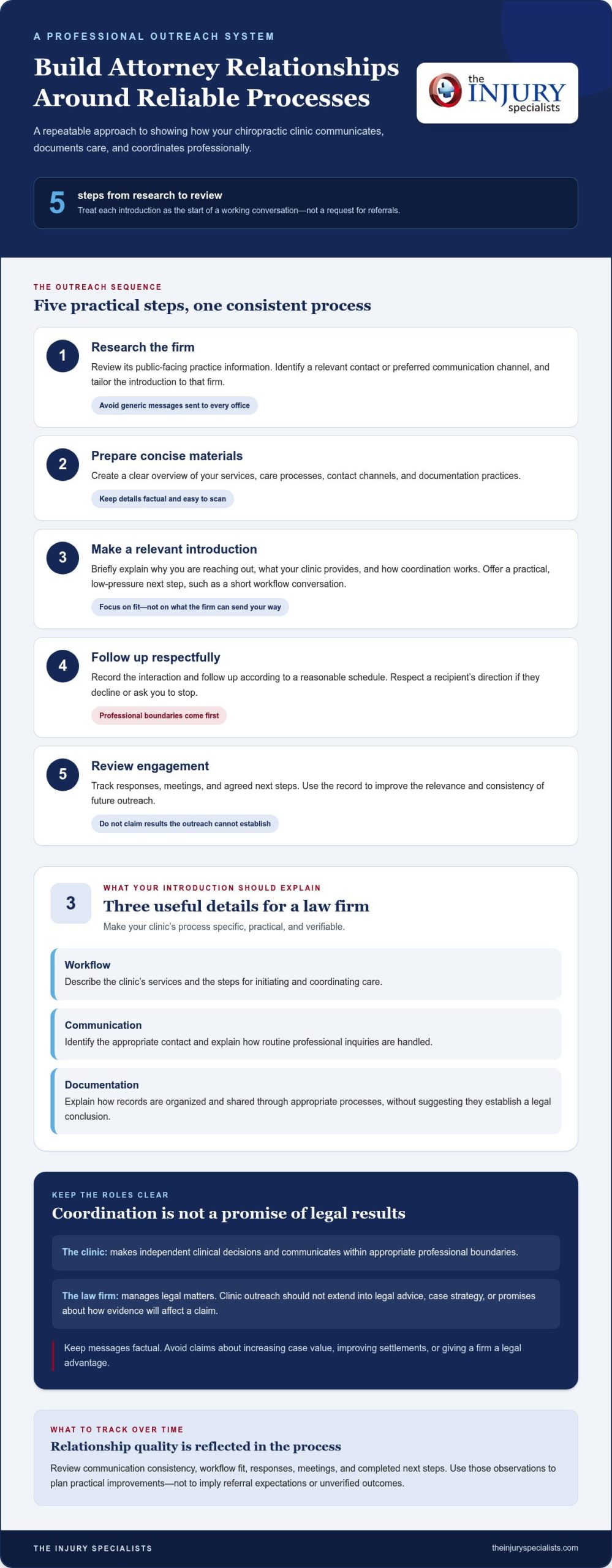
- Workflow: Describe the clinic’s services and explain the steps for initiating and coordinating care.
- Communication: Identify the appropriate contact and explain how the practice handles routine professional inquiries.
- Documentation: Describe how records are organized and shared through appropriate processes, without suggesting they establish a legal conclusion.
These details help a firm understand what to expect before a working relationship develops. They also make it easier for staff to direct questions to the right person and follow a consistent process.
Build a value proposition around coordination and communication
A strong value proposition connects the clinic’s capabilities to a firm’s operational needs. For example, state what types of care the practice provides, who handles administrative requests, and how the clinic organizes documentation. Be precise about the process rather than promising speed or a particular result. Clear responsibilities help both sides avoid preventable confusion.
Professional context matters, too. A Chiropractic profession overview can help frame the field’s history and professional considerations, but your outreach should describe your own clinic’s services and procedures directly. Use plain language and avoid broad claims about chiropractic care or the legal significance of treatment records.
Understand the law firm’s role in a professional relationship
Attorneys manage legal matters; clinics make independent clinical decisions and communicate within appropriate professional boundaries. Coordination can involve responding to authorized requests or clarifying administrative processes. It should not blur into legal advice, case strategy, or promises about how evidence will affect a claim. Keeping roles distinct gives both organizations a sound basis for communication.
Before approaching a firm, consider how its staff handle medical referrals and coordination, then describe how your clinic’s process can fit appropriately. The law firm medical referral programs guide offers related context on how these professional connections are structured. Use that understanding to make your introduction relevant, factual, and focused on patient care coordination rather than referral expectations.
Create an Attorney Outreach Process That Shows How Your Clinic Works
A repeatable process makes outreach easier to manage and more professional for the firm receiving it. Treat each introduction as the start of a working conversation, not a request for referrals. Research the firm, prepare consistent materials, make a relevant introduction, follow up respectfully, and review what happened. This structure helps your team build relationships without relying on improvised messages or unsupported promises.
An effective first message is specific, concise, and professionally useful. Mention the firm’s relevant practice area, briefly explain your clinic’s services and coordination process, then suggest a practical next step, such as a short conversation about workflows. Keep the focus on whether your process may fit the firm’s needs, not on what the firm can send your way.
- Research the firm. Review its public-facing practice information and identify a relevant contact or preferred communication channel. Tailor the introduction to the firm rather than sending the same generic pitch to every office.
- Prepare materials. Create a concise overview of services, care processes, contact channels, and documentation practices. Keep details factual and easy to scan.
- Make contact. Use a direct, professional message that explains why you’re reaching out and offers a clear, low-pressure next step.
- Follow up. Record the interaction and follow up according to a reasonable schedule. If the recipient declines or asks you to stop, respect that direction.
- Review engagement. Track responses, meetings, and agreed next steps. Use the record to improve relevance and consistency, not to claim results the outreach cannot establish.
Prepare materials that make the practice easy to understand
Use the same core facts across email, meetings, and follow-up so attorneys receive a consistent picture of the clinic. Explain what services are available, who handles professional inquiries, how care coordination works, and how documentation is organized. Write in plain language. Avoid vague superlatives, unsupported quality claims, and promises about case value or outcomes. A brief, orderly overview is more useful than a dense promotional packet.
Follow up consistently without turning outreach into pressure
Set a follow-up cadence your team can maintain, and log the date, channel, response, and agreed next step after each interaction. If there’s no reply, a concise follow-up can offer a useful workflow discussion rather than repeat the original pitch. Coordinated provider relationships may also involve chiropractic and physical therapy referrals; understand the connection before describing how your clinic works with other providers.
For example, your message might offer to explain the practice’s care-coordination process and answer questions about routine communication. Don’t send repeated promotional notes simply to stay visible. A firm’s silence may reflect workload or a lack of current fit, so keep the next step respectful and leave space for the relationship to develop. The guide to personal injury chiropractic and physical therapy referrals provides context for discussing coordinated provider relationships in a clear, professional way.
Track outreach in a simple system with fields for firm, contact, date, channel, response, meeting status, and next step. Review it periodically to see whether messages are reaching the right people and whether conversations lead to clear workflow discussions. This gives your clinic a practical basis for refining how to market a chiropractic clinic to lawyers without treating contact volume as proof of success. Clinics seeking structured networking and coordination support can explore chiropractic referral network resources.
Compare Attorney Marketing Channels and Choose the Right Mix
Choose channels based on whom they reach and what kind of professional connection they support. Broad visibility alone doesn’t show whether the right people understand your clinic’s process. A direct introduction can open a conversation, while an educational event gives you room to explain workflows. Digital resources help attorneys understand your practice before or after meeting you. The strongest mix is one your team can manage consistently and follow up on professionally.
Match each channel to a specific relationship-building goal
Use direct introductions to make your clinic known to a relevant contact, not to send a generic pitch to a long list of firms. Educational resources, such as a short presentation about records workflows, can clarify how your practice coordinates care. Networking creates familiarity through useful discussion rather than a one-time ask. In each case, define the intended next step before investing staff time.
Keep three activities distinct. Professional education shares general information about processes or care. General advertising communicates services to a broad audience. Referral arrangements concern how people connect with providers and may raise different professional or compliance considerations. Don’t treat an educational event as a way to disguise a referral request. The purpose, content, and follow-up should match the channel honestly.
Use digital marketing to reinforce, not replace, professional outreach
Your website should clearly describe the clinic’s services, contact channels, and care-coordination process. Keep those details aligned with what staff say in meetings and outreach. Educational articles can explain topics such as documentation practices or coordination between providers, but avoid implying that care guarantees a legal or medical outcome. Digital content supports credibility; it doesn’t replace direct professional communication.
Evaluate channels by relevance to the firms you want to reach, staff time required, quality of interaction, and whether a clear follow-up is possible. A smaller, focused conversation may be more useful than broad exposure if it helps both sides understand practical workflows. The right approach to how to market a chiropractic clinic to lawyers is therefore a coordinated channel mix, not a reach-first campaign. For broader context on provider networks, explore physician referral services for personal injury.
Keep Chiropractic Marketing to Lawyers Professional and Compliant
Professional outreach needs clear boundaries. Healthcare advertising, privacy requirements, and attorney conduct rules can vary by jurisdiction, so a practice that markets to law firms should review its approach before launching campaigns or referral initiatives. Rules may apply differently depending on the message, the information used, and the people involved. Treat compliance as part of the outreach process, not an afterthought.
For how to market a chiropractic clinic to lawyers, keep claims factual and avoid language that suggests guaranteed referrals, exclusive relationships, or improved case outcomes. Don’t offer or accept compensation for referrals without a jurisdiction-specific legal review. Fee-splitting and referral-compensation rules can be complex, and arrangements that seem routine may raise concerns under applicable requirements.
Protect patient information in every marketing interaction
Keep identifiable patient information out of introductions, presentations, testimonials, and promotional materials unless its use is properly authorized under applicable rules. A name is not the only detail that can identify someone; combinations of case details may also reveal a person’s identity. Privacy obligations depend on the information and circumstances involved, so use general examples and consult HIPAA guidance and qualified compliance counsel before using patient information for marketing.
Review referral and advertising practices before launch
Review proposed advertising, referral language, event materials, and any financial arrangement before putting them into use. Separate general education about clinic processes from a promise or incentive tied to referrals. Avoid describing a professional connection as exclusive or outcome-producing. The American Bar Association, relevant state bar associations, state licensing authorities, and the HHS Office for Civil Rights can be useful starting points for researching applicable guidance, but qualified counsel can assess how requirements apply to your specific activities.
Use a simple pre-launch review for each campaign or relationship proposal:
- Check the claims. Confirm that every statement about services and processes is accurate and supportable.
- Check the information. Remove patient details unless their use has been reviewed and appropriately authorized.
- Check the arrangement. Get jurisdiction-specific advice on referral compensation, fee-splitting, and other financial terms.
- Check the audience. Review relevant healthcare, licensing, privacy, and attorney conduct guidance for the jurisdictions involved.
Document the review and retain approved versions of outreach materials so the clinic can use consistent language. Revisit them when the campaign, relationship, or applicable requirements change. This creates a practical checkpoint while keeping decisions grounded in current, qualified guidance rather than assumptions.
For clinics building professional connections alongside careful coordination processes, explore professional networking and case-management support.
Turn Attorney Relationships into a Measurable, Sustainable Clinic Network
A professional connection becomes sustainable when both sides know how communication works and agreed actions don’t disappear after an introduction. Build a regular review cycle around relationship health and operational fit. This lets your clinic improve its coordination process without treating referrals, case value, or legal outcomes as measures of success.
Use a simple cycle to turn interactions into practical next steps:
- Document interactions. Record the date, participants, discussion points, agreed actions, and follow-up date in a professional contact log.
- Assess workflow fit. Review whether contact channels, response expectations, and documentation processes are clear to both organizations.
- Address gaps. If a request was unclear or a handoff stalled, identify the process issue and agree on an appropriate adjustment.
- Plan next steps. Set a relevant follow-up, such as sharing a process overview or scheduling a discussion, then record who owns it.
Keep the review focused on what the teams can improve. Structured case management can help organize coordination and align processes with professional workflows, but it doesn’t replace a clinician’s independent judgment or an attorney’s legal judgment.
Track relationship health without promising referral volume
Use indicators that reflect the quality and reliability of working interactions, not just the number of referrals. A periodic review can assess whether contacts receive consistent responses, whether communication is clear, and whether agreed administrative steps are completed. Note recurring friction points, such as uncertainty about the correct contact or how to submit a request, then clarify the process with the relevant firm.
Referral counts alone can’t show whether a relationship is effective, whether a patient received a particular outcome, or whether a workflow serves both organizations. A contact log is most useful when it shows what was discussed, what remains unresolved, and what action is appropriate next. Keep relationship tracking focused on professional interactions and process improvement.
Use a network partner to support consistent coordination
The Injury Specialists connects chiropractors, injury victims, and legal professionals through a personal injury referral network. Its medical case management and professional networking support help connect practices and firms around coordination needs. Case management supports organization and communication; it doesn’t direct clinical care, provide legal advice, or determine case strategy.
As you refine how to market a chiropractic clinic to lawyers, use a consistent review process to strengthen relationships based on communication and workflow fit, not promised volume or outcomes. The Injury Specialists provides chiropractic referrals and networking support for practices building professional connections.
Explore The Injury Specialists’ professional network to learn about chiropractic referrals and networking support.
Put Your Outreach Plan into Motion
Professional relationships grow through deliberate action, not one-off campaigns. Choose one practical improvement to put into place next, such as assigning outreach ownership or setting a recurring time to assess how your clinic communicates with legal partners. A clear internal commitment makes it easier to maintain momentum and adapt as your professional network develops.
The best approach to how to market a chiropractic clinic to lawyers is one your team can sustain while protecting professional boundaries and keeping coordination at the center. Start with a manageable step, learn from each interaction, and build from there.
The Injury Specialists supports connections between chiropractic practices and legal professionals. Explore ways to strengthen your clinic’s professional connections through its referral and networking resources. Start with a clear process and a thoughtful introduction.
Frequently Asked Questions
How can a chiropractor introduce a clinic to personal injury lawyers?
A chiropractor can start with a brief, tailored introduction that explains the clinic’s role and why the firm’s practice makes the connection relevant. For example: “Our clinic provides chiropractic care and has a defined process for coordinating professional inquiries. I’d welcome a short conversation about how we handle communication and records.” Attach only accurate, easy-to-review materials, then follow up using the channel the firm prefers. This approach makes how to market a chiropractic clinic to lawyers practical and professional.
What should a chiropractic clinic include in a lawyer outreach email?
Include a relevant subject line, a short description of the clinic’s services, and a plain-language outline of how inquiries and coordination are handled. Name the appropriate contact channel so the recipient knows where to direct a process question. Close with a specific meeting request, such as a brief discussion about communication workflows. Keep the email focused on verifiable information; don’t imply that the clinic can improve a claim or guarantee a legal result.
Is it legal for chiropractors to pay lawyers for patient referrals?
There isn’t one answer that applies to every arrangement or jurisdiction. Referral payments can raise legal and professional concerns, and the relevant rules may depend on the parties, services, payment structure, and circumstances. Don’t offer or accept compensation based on assumptions or informal custom. Before establishing any payment or reciprocal referral arrangement, ask qualified counsel to review the specific facts and applicable state and federal requirements.
Can a chiropractic clinic market directly to personal injury law firms?
A clinic can consider professional outreach to law firms, but the method and message matter. A factual introduction about services or a general discussion of administrative workflows differs from pressure, misleading solicitation, or an improper inducement. Rules may vary based on jurisdiction and the communication involved. Before starting a campaign, review relevant healthcare advertising, privacy, licensing, and attorney conduct requirements with qualified counsel and appropriate state authorities.
How can chiropractors build trust with personal injury attorneys?
Build trust by making your professional information easy to verify and correcting inaccuracies promptly. If a firm asks about a process, give a clear answer or identify the appropriate staff contact rather than guessing. Keep records organized, communicate within agreed boundaries, and distinguish clinical observations from legal conclusions. Reliability is demonstrated through ordinary interactions over time, not through claims about being the firm’s best choice or predicting what a case will achieve.
How often should a chiropractic clinic follow up with a law firm?
Set follow-up timing according to the firm’s response, any agreed next step, and its stated contact preferences. If the recipient suggests a later date, record it and follow that direction. If there’s no reply, one concise follow-up that adds context may be appropriate; repeated messages without engagement can become intrusive. Log each contact and pause outreach if requested. The purpose is to keep communication orderly, not to force a response.
What marketing claims should chiropractors avoid when contacting lawyers?
Avoid claims that can’t be substantiated, including statements that imply superior results without support or guarantee a steady flow of referrals. Don’t promise that treatment will increase case value, secure a settlement, or produce a legal advantage. Describe the clinic’s actual services and processes instead. Also avoid sharing patient stories or details in promotional materials unless their use has been reviewed and appropriately authorized under applicable privacy requirements.

Leave A Comment
You must be logged in to post a comment.