

A full room doesn’t guarantee a useful connection. The best attorney doctor networking events bring legal and medical professionals together around shared work, but an event listing may not tell you who will attend or whether the format fits your goals.
When your calendar is crowded, it helps to compare events before committing time. Look for a relevant mix of attendees, a clear purpose, and enough opportunity for conversation. Then approach introductions as the start of a professional relationship, not a pitch or an exchange of referrals.
This 2026 guide explains where to look for events likely to attract both professions, how to assess their format, and how to prepare a practical networking plan. You’ll also find ways to keep conversations within appropriate boundaries and follow up professionally. Events create introductions; consistent, respectful contact can build useful connections beyond the room.
Key Takeaways
- Choose attorney doctor networking events based on attendee mix, format, and professional relevance, not just the event title.
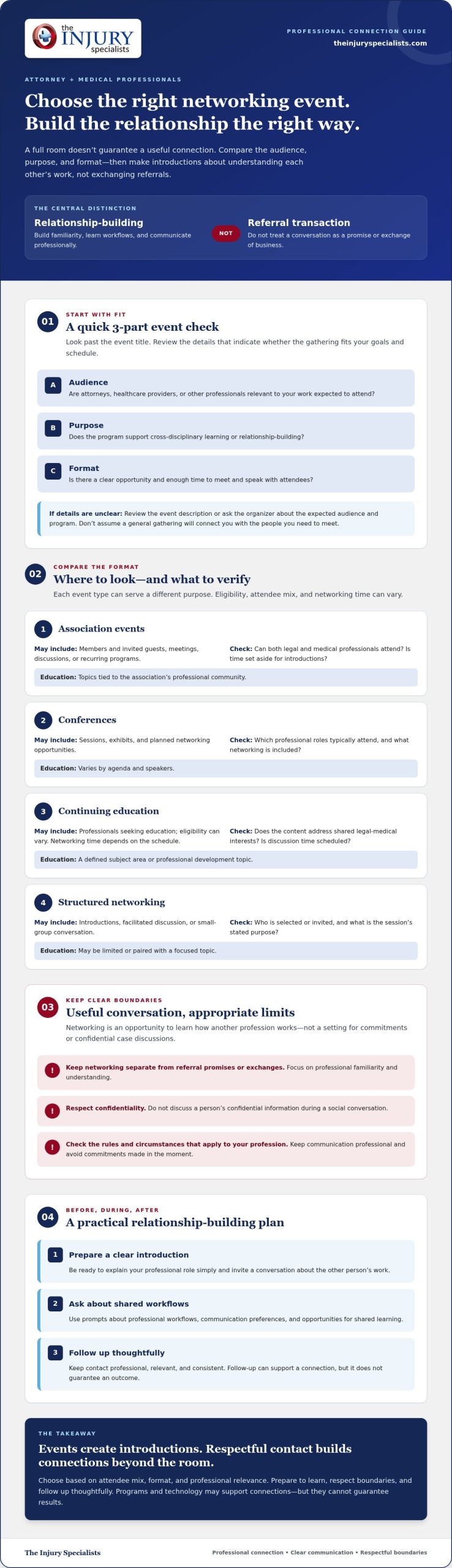
- Compare association meetings, conferences, continuing education, and structured networking against your goals and schedule.
- Prepare a clear introduction and prompts about professional workflows, communication, and shared learning.
- Keep networking separate from promises or exchanges of referrals, and check the rules and circumstances that apply to your profession.
- Follow up thoughtfully and consistently. Network programs and technology can support connections, but they don’t guarantee outcomes.
Attorney-Doctor Networking Events: What They Offer Personal Injury Professionals
Attorney doctor networking events bring legal and medical professionals together to exchange perspectives, learn about each other’s work, and begin building professional relationships. Formats may include educational sessions, facilitated introductions, or informal discussions on shared topics. Their value is the opportunity for informed communication, not a guarantee of referrals, case assignments, or business results.
In personal injury work, legal and healthcare professionals may interact around matters where clear, timely communication is important. Learning how another profession handles its workflows can help you ask more useful questions and set realistic expectations for future interactions. That is different from discussing a person’s confidential information or making commitments during a social conversation. General background on professional networking can help frame these events as relationship-building rather than a one-time exchange.
Professional networking builds familiarity and understanding; a referral transaction exchanges or promises business. Keeping the distinction clear helps attendees focus on useful conversation and respect professional boundaries.
Who benefits from attorney-doctor networking events?
Personal injury attorneys can use these events to build informed connections with healthcare providers and learn about communication needs across professions. Physicians and practice leaders can better understand legal workflows and explain their preferences for clear, professional communication. Case managers and other professionals may also benefit when the event’s eligibility and programming include their roles. Approach each conversation as a chance to understand another person’s work, not to solicit a specific case.
What makes an event relevant to personal injury work?
Look beyond the event title. Relevant programming brings legal and medical perspectives together through shared education, structured introductions, or discussions of professional workflows. Review attendee roles, objectives, session topics, and time set aside for conversation. Together, these details help you decide whether an event supports your goals or mainly offers broad socializing or single-purpose marketing.
Use this fit test before registering:
- Audience: Does the expected attendee mix include attorneys, healthcare providers, or other professionals relevant to your work?
- Purpose: Does the program support cross-disciplinary learning or relationship-building?
- Format: Is there time and a clear opportunity to meet and speak with attendees?
A general professional gathering can still be worthwhile, but don’t assume it will connect you with the people you need to meet. Review the event description and, if details are unclear, ask the organizer about the audience and program. That quick check can help you prioritize events that fit your professional objectives.
Which Attorney-Doctor Networking Events Should You Choose?
The right event depends on what you want to learn and which professionals you want to meet. Attorney doctor networking events may center on education, professional community, or planned introductions. Compare the audience and format before registering, then confirm current details directly with the organizer.
| Event type | Audience | Format and networking time | Educational focus | Questions to verify |
|---|---|---|---|---|
| Association event | Members and invited guests, depending on eligibility | Meetings, discussions, or recurring programs; check whether time is set aside for introductions | Topics tied to the association’s professional community | Can legal and medical professionals attend? Is networking structured? |
| Conference | Attendees from the fields represented in the program | May combine sessions, exhibits, and planned networking opportunities | Varies by agenda and speakers | Which professional roles typically attend, and what networking is included? |
| Continuing education program | Professionals seeking education; eligibility may vary | Usually centered on instruction, with networking time dependent on the schedule | A defined subject area or professional development topic | Does the content address shared legal-medical interests? Is discussion time scheduled? |
| Structured networking session | Participants selected or invited for a stated purpose | Introductions, facilitated discussion, or small-group conversation | May be limited, or paired with a focused topic | How are participants matched, and how much time is available to connect? |
How do conferences, association events, and webinars differ?
Conferences can combine learning with planned opportunities to meet attendees, but the balance varies by agenda. Association events may offer an ongoing professional community alongside educational programming. Webinars can be efficient for learning and asking questions, though they usually provide fewer spontaneous in-person introductions. Some virtual programs include facilitated discussion, so check the event description rather than assuming the format is lecture-only.
How can you assess an event before registering?
Review the agenda, intended audience, speaker backgrounds, and specific networking format. Confirm dates, accessibility, eligibility, and registration requirements with the organizer because listings can change. Prioritize credible learning and a relevant attendee mix over attendance claims or promotional language. If the program discusses professional introductions or referral arrangements, check whether it explains boundaries. The New York State Bar Association’s ethics risk opinion is one reference to review with qualified counsel.
For a broader view of how firm-level processes connect with professional relationships, explore this law firm medical referral program guide. The Injury Specialists provides attorney referral program support and technology for case management, marketing, and networking. Learn more about professional networking support when considering ways to maintain connections beyond an event.
Are Attorney-Doctor Networking Events an Ethics Risk? Set Clear Boundaries
Attending an event to learn and build professional relationships isn’t automatically the same as exchanging or buying referrals. Risk depends on what professionals say and do, any later arrangement, their roles, the jurisdiction, and the specific facts. Keep the distinction clear: discussing communication practices is different from offering compensation or making referral expectations part of a relationship.
An introduction can open a professional conversation, but it doesn’t replace compliance review of any later arrangement. Attorney doctor networking events should support appropriate discussion, not informal commitments about referrals.
What boundaries should professionals maintain at networking events?
Keep conversations focused on professional roles, education, and appropriate coordination. Attendees can, for example, discuss general communication preferences or topics they would like to learn more about. Don’t share identifiable patient or case details in casual event conversations. Avoid promising referrals, asking for a particular case, or discussing compensation and referral expectations without first obtaining appropriate guidance.
These boundaries protect trust and keep discussions useful. If a conversation turns to a specific patient, business arrangement, or exchange of value, pause and direct the matter to the appropriate formal review process.
Which rules and policies should attendees verify?
There isn’t one checklist that applies to every attendee or arrangement. Lawyers should check the applicable state bar professional conduct rules and current organizational policies. Healthcare professionals and their organizations may need to consider additional requirements. Ask qualified counsel to assess the facts before forming or acting on a proposed arrangement.
- Professional conduct: Review the rules and policies that apply to each participant and organization.
- Healthcare requirements: Ask counsel whether fraud-and-abuse requirements, including the federal Anti-Kickback Statute, are relevant to the proposed facts.
- Privacy: Treat HIPAA and other privacy obligations as review topics. Don’t assume an event setting changes how protected information should be handled.
The New York State Bar Association’s discussion of ethical business development activities offers a lawyer-focused perspective on networking and marketing. It’s a starting point, not a substitute for advice about another jurisdiction or a particular arrangement. Apply the same care to event policies: check them before participating, and seek qualified counsel when a conversation moves beyond general networking.
How to Prepare for an Attorney-Doctor Networking Event and Follow Up
A simple plan helps you network with purpose and leave with useful next steps. Treat the event as an opportunity to learn about professional workflows and establish connections, not as a deadline to secure business. Use this sequence before, during, and after attorney doctor networking events.
What should you do before the event?
Set one or two practical objectives, such as learning how another professional group prefers to communicate or meeting people who work in a relevant area. Review the agenda and official attendee information, if available. Use names and roles to identify people you may want to meet, but don’t assume their interests or needs based on a job title.
Prepare a brief introduction that explains your role and the topics you’re interested in discussing. Keep it conversational, then give the other person room to describe their work. These open-ended prompts can help:
- “What communication practices help your team coordinate with professionals in other fields?”
- “Which parts of your workflow are helpful for colleagues outside your profession to understand?”
- “Are there educational topics you’d like to see addressed in future programs?”
How should you follow up after meeting a professional?
Send a concise, personalized note that refers to something you discussed and mentions any next step you both agreed to. If you offered to share a relevant professional resource, send it with a short explanation of why it may be useful. Keep the message focused and respect the recipient’s preferred communication channel and pace.
Record only appropriate business contact details and requested follow-up actions. Don’t use event notes to store patient information, case details, or sensitive personal information. A brief internal reminder such as “send the article discussed” is usually more useful than a lengthy account of the conversation.
Provider networks involve processes and relationships beyond a single introduction. For more context, review this physician referral services guide. The Injury Specialists also provides case management technology and professional networking support. Explore networking and referral program support to learn how those offerings may fit your firm’s needs.
Turn Event Introductions Into a Stronger Professional Network
A brief conversation becomes useful over time through consistent communication, clear processes, and professional boundaries everyone understands. After an event, maintain relevant connections through appropriate follow-up and reliable ways to coordinate. A contact list alone won’t create an effective professional network.
Networks and technology can provide infrastructure for ongoing communication, marketing, and case-management workflows. They can help professionals stay connected, but they don’t guarantee referrals, case volume, or business outcomes. Assess the process and tools for practical fit rather than assuming what an introduction will produce. For a broader overview, see this personal injury referral network guide.
When does a professional network add value beyond events?
An ongoing network may be worth considering when professionals need repeatable ways to communicate and coordinate beyond occasional meetings. Evaluate whether its participants, processes, and technology fit the roles involved and the firm’s existing workflows. Consider how the network supports professional connections and whether its processes can work with the firm’s distinct approach. Assess the value of that infrastructure separately from expectations about referrals or case outcomes.
How can law firms explore a network partnership?
Start with the firm’s objectives and current processes. Identify what needs to work better, which professional relationships are relevant, and what expectations must be clear before evaluating a program. Then ask how its available technology supports networking, marketing, and case-management workflows. The answers should help the firm assess fit without treating participation as a promise of business results.
- Clarify goals: Define the firm’s priorities and how it currently manages professional connections.
- Review the process: Ask how program support can align with the firm’s distinct processes.
- Check requirements: Have qualified internal or external counsel review proposed arrangements and applicable requirements.
The Injury Specialists connects legal and medical professionals through a nationwide personal injury referral network. Its offerings include attorney programs and case-management technology that support marketing and networking. The company is a connector and platform, not an organizer of attorney-doctor networking events, and participation doesn’t guarantee referrals or other outcomes. Evaluate whether ongoing network infrastructure can support your firm’s professional processes beyond the introductions made at an event.
Build Professional Connections That Continue Beyond the Event
Attorney doctor networking events can start professional relationships, but lasting value depends on relevant follow-up, consistent communication, and clear boundaries. Choose events based on their audience and purpose, prepare a focused plan, and keep conversations centered on professional learning rather than referral expectations.
When connections need support beyond individual introductions, infrastructure can help. The Injury Specialists connects legal and medical professionals through a nationwide personal injury referral network, with case-management technology that supports professional workflows and networking. These resources can support a firm’s processes, but they don’t guarantee referrals or business outcomes.
Explore how The Injury Specialists’ network and programs may fit your professional goals. Explore The Injury Specialists’ professional network and programs.
Frequently Asked Questions
Where can attorneys find networking events with doctors?
Attorneys can look for attorney doctor networking events through professional associations, legal and medical conferences, interdisciplinary education programs, and event calendars. Review each organizer’s intended audience, agenda, and networking format rather than assuming a general event will attract both professions. Confirm dates, eligibility, and other current details directly with the organizer. Professional networks may support ongoing connections, but they aren’t necessarily event organizers.
What should an attorney ask a doctor at a networking event?
Ask about professional roles, shared work processes, communication preferences, or educational interests. For example, ask which communication practices help their team coordinate with professionals in other fields. Keep questions open-ended and general. Don’t seek patient-specific or confidential information, and don’t imply that meeting creates a referral obligation. If the conversation shifts toward a formal arrangement, pause and get appropriate compliance guidance before discussing next steps.
Can attorneys and doctors exchange referrals after meeting at an event?
Meeting at an event doesn’t determine whether a later referral arrangement is appropriate. Requirements can depend on the professionals involved, the proposed arrangement, applicable laws and professional rules, organizational policies, and the specific facts. Don’t promise or expect referrals simply because you’ve met. Before implementing a proposed arrangement, have qualified counsel review it and explain which requirements apply to the people and organizations involved.
How can I tell whether an attorney-doctor networking event is worthwhile?
Assess the event’s stated audience, agenda, speakers, networking format, and fit with your professional objectives. Check whether it includes time for discussion or focuses mainly on education. Confirm current details with the organizer, then set a clear goal for attending, such as learning about a shared workflow. Event size alone doesn’t establish relevance, quality, or whether you’ll make a useful professional connection.
What should I do after meeting a doctor or attorney at an event?
Send a concise, personalized message that refers to your conversation and any next step you both agreed to. Share relevant professional information only when appropriate, and respect the other person’s communication preferences. Record business contact details responsibly, along with a simple reminder of requested follow-up. Don’t include patient or case information in routine notes or messages. Seek qualified review before discussing a formal referral or business arrangement.
Are online events useful for attorney-doctor networking?
Online events can provide access to relevant education and professional introductions without requiring in-person attendance. Their usefulness depends on the audience, interaction format, and opportunities for discussion. Before registering, check whether the program includes live questions, breakout conversations, or a follow-up community. Treat virtual introductions with the same care as in-person conversations: protect private information, respect professional boundaries, and follow applicable conduct and organizational requirements.
Does The Injury Specialists host attorney-doctor networking events?
The Injury Specialists connects legal and medical professionals through a nationwide personal injury referral network, with attorney and medical provider programs, case management, and networking technology. The company’s described services do not include organizing or hosting events. Professionals can assess the network and its services separately from event attendance, and should confirm current program details directly. Participation should not be treated as a promise of referrals or business outcomes.
