

What if a lien dispute came down to a missed notice, an incomplete bill, or a late follow-up? A consistent process helps protect medical liens injury case teams manage by keeping records, communications, and deadlines visible before settlement discussions reach their final stage.
Unclear requirements and limited updates can make lien management difficult for providers, law firms, and injured people. The right steps depend on the lien’s source and applicable rules, so no workflow can guarantee payment or prevent every dispute. Early organization can, however, help teams identify gaps and unresolved questions sooner.
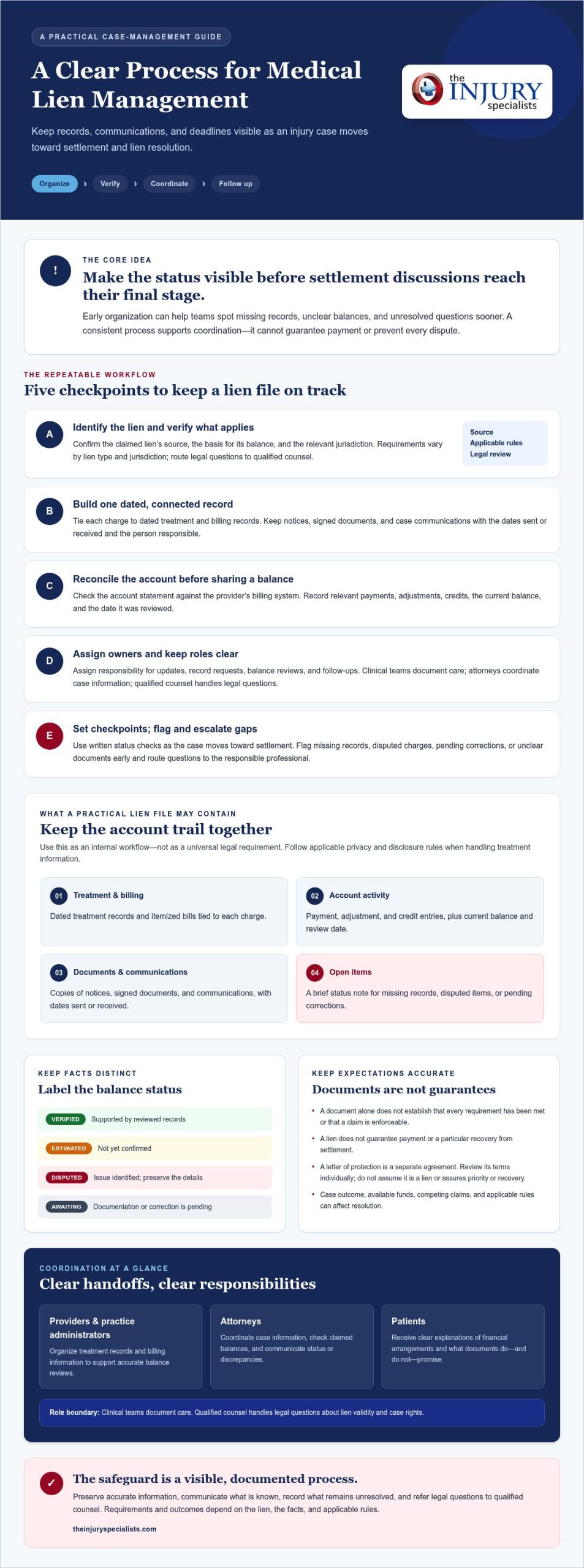
This article explains how to build a repeatable approach to lien documentation and follow-up. It covers which records to track, how to coordinate providers and attorneys while keeping clinical and legal roles clear, and when to refer questions to qualified counsel. It also explains why timely status checks matter as a case moves toward settlement and lien resolution.
Key Takeaways
- Identify the lien’s source and check which requirements apply in the relevant jurisdiction.
- Build a consistent file that connects each charge to dated treatment and billing records.
- Assign clear owners for updates, record requests, balance reviews, and follow-ups to reduce coordination gaps.
- Separate verified facts from estimates, and flag missing records or disputed charges early.
- Use written checkpoints and escalation paths, and refer legal questions to qualified counsel.
What it means to protect a medical lien in a personal injury case
A medical lien is a claimed right to seek payment from funds connected to an injury claim, subject to the law and documents that apply. In some situations, a provider asserts an interest in potential settlement proceeds for treatment related to the injury. The term “lien” has a broader legal meaning, as outlined in What is a lien, so verify the specific type and effect of a claimed medical lien rather than assuming.
Protecting a lien starts with understanding its source, the basis for the claimed balance, and any relevant notice or filing requirements. Requirements and processes for challenging or resolving a lien can vary by jurisdiction and lien type. A document alone doesn’t establish that every requirement has been met, make a claim enforceable, or guarantee payment. A lien also doesn’t guarantee a particular recovery from a settlement. The case outcome, available funds, competing claims, and applicable rules can all affect resolution.
Medical lien, letter of protection, and payment expectations
A lien may document a provider’s claimed payment interest, but its legal effect depends on applicable law and the facts of the case. A letter of protection is a separate agreement, often involving arrangements for payment from a future recovery. Review its terms individually. Don’t treat a letter of protection as a lien, or assume either document automatically gives a provider priority or assures recovery. Confirm what was signed, who the parties are, which charges it covers, and what requires legal review.
Who needs a reliable lien process?
Providers and practice administrators need organized treatment records and billing information to support accurate balance reviews. Attorneys coordinate case information, check claimed balances, and communicate status or discrepancies to the appropriate parties. Keep each role clear: clinical teams document care, while qualified counsel handles legal questions about lien validity and case rights. Patients should receive clear explanations of financial arrangements, including what a document does and doesn’t promise.
A dependable process connects these roles without turning assumptions into facts. Record whether a balance is confirmed, estimated, disputed, or awaiting documentation. If a notice, agreement, or account detail is unclear, flag it early and route the question to the responsible professional. Teams working to protect medical liens injury case records can start by preserving accurate information, communicating what is known, and avoiding promises about outcomes no document can guarantee.
Build a medical lien file with complete records and verified requirements
A reliable lien file makes it easier to confirm what was provided, what was billed, and what remains unpaid. Use a consistent checklist as an internal workflow, not as a universal legal requirement. Requirements differ by lien type and jurisdiction, so ask qualified counsel to confirm what applies before relying on a particular notice or agreement.
For each charge, connect the amount to dated treatment and billing documentation. Record when notices, authorizations, agreements, and case updates were sent or received, and who handled each action. If a charge is disputed, corrected, or outstanding, flag it promptly and preserve the prior version and related communications. This history helps others understand why a balance changed instead of relying on an unexplained total.
Records that support clear lien accounting
Maintain a clear account trail. Before sharing a balance, reconcile the account statement against the provider’s billing system and note relevant payments, adjustments, and credits. Keep itemized bills and supporting records together, while following applicable privacy and disclosure rules when handling treatment information. A practical file may include:
- Dated treatment and itemized billing records tied to each charge.
- Payment, adjustment, and credit entries, plus the current balance and its review date.
- Copies of notices, signed documents, and communications, with dates sent or received.
- A brief status note for any missing record, disputed item, or pending correction.
These records help distinguish verified figures from estimates or unresolved questions. They also make it easier to provide consistent updates across a provider’s office and a law firm. For broader context on coordinating these professional relationships, see this law firm medical referral program guide.
Confirm notice and agreement requirements before relying on a lien
Don’t assume a familiar form or process meets the rules for every case. Ask qualified counsel to confirm applicable forms, recipients, deadlines, and service methods. Keep the signed agreement or authorization in its exact version, and record when and by whom it was executed. For Medicare-related recovery, the federal Medicare Secondary Payer statute is a key reference. Case-specific requirements still need careful review.
A repeatable file process can help teams manage medical liens in an injury case by surfacing gaps early, but documentation alone doesn’t establish enforceability or assure payment. Medical case management and case-management technology can support coordination and documentation workflows. Learn more about medical case-management coordination as one operational support option.
Reduce medical lien disputes through clear case coordination
Even accurate records can be difficult to use if updates sit in separate inboxes or no one owns the next step. Assign a point person to each task, such as requesting treatment records, confirming an account balance, sending a case update, or following up on a missing response. Clear ownership keeps requests moving and shows who should address a gap.
Keep confirmed facts separate from estimates, assumptions, and open questions. For example, label a balance “confirmed by provider on [date]” rather than presenting an older statement as current. A brief status tracker gives everyone a shared view without implying that a disputed figure has been resolved:
- Item: Record request, balance review, or case update.
- Owner: Person responsible for the next action.
- Status: Requested, received, under review, disputed, or complete.
- Last update and next step: Date of the latest contact and the follow-up needed.
Set communication expectations among providers and attorneys
Agree on appropriate contacts, approved secure communication methods, and a practical update cadence. Record requests and responses in the case workflow so unanswered questions don’t disappear when staff or responsibilities change. If a bill conflicts with a prior statement, contact the responsible office, document the discrepancy, and keep the response with the account history. Don’t substitute an informal assumption for confirmation.
Keep roles distinct. Providers can confirm treatment and billing information; attorneys handle legal questions and advise on case-related decisions. Settlement timing and allocation belong to the relevant parties and their counsel, not to a clinical or administrative workflow. Coordination should provide accurate information, not steer treatment or determine legal outcomes.
Use case-management workflows to maintain visibility
A shared workflow can make task ownership, timestamps, and status notes easier to review. Case-management technology may support operational tracking and documentation, but teams should confirm what a platform actually records before relying on it for a specific function. The personal injury case-management technology guide offers broader workflow considerations.
Use the tracker to surface stalled requests, balance questions, and unresolved discrepancies for direct follow-up. Better visibility can help teams manage injury case lien workflows by reducing preventable handoff gaps. It can’t establish lien validity, guarantee payment, or replace legal review. The goal is a clear operational record that helps the right people act on verified information.
Review lien risks before settlement discussions and resolution
Before a case moves toward resolution, review each claimed lien in a consistent order: verify the current balance, identify conflicts, confirm applicable requirements with counsel, then coordinate next steps. Early review gives the responsible parties time to address missing records, unconfirmed agreements, disputed charges, or unclear lien status before those issues complicate the process.
A practical pre-resolution lien review
Start with the provider’s current itemized statement. Reconcile it against the account history, including recorded payments, adjustments, and credits. If the latest figure differs from an earlier statement, document the reason or request clarification rather than treating either amount as final without confirmation.
Next, ask qualified counsel to confirm which notices and agreements apply, and whether the file contains the required documents for the relevant jurisdiction and lien type. Keep open questions visible, with a responsible contact and an agreed follow-up date. A short review checklist can include:
- Balance: Current itemized amount checked against account records.
- Documents: Relevant notices and signed agreements located for counsel’s review.
- Conflicts: Disputed charges, missing records, or inconsistent figures clearly identified.
- Next action: Owner, contact, and follow-up date recorded for each unresolved item.
This process supports coordination. It doesn’t give a provider control over settlement allocation, determine legal priority, or guarantee payment. Those decisions depend on the case and applicable rules and belong with the relevant parties and their counsel.
Handle reductions and unresolved balances carefully
Record any proposed lien reduction along with its date, source, and response. A proposal isn’t an agreed final balance unless the appropriate parties accept it and document the terms. Keep the original amount, proposal, and any counteroffer or approval in the file so the negotiation history remains clear.
Refer questions about lien validity, priority, required approvals, or the legal effect of a proposed reduction to qualified counsel. Keep patient communications factual and consistent with signed documents. Explain what is confirmed, what remains under review, and who is responsible for the next update. Don’t present a pending negotiation as settled or promise a particular recovery.
A coordinated review can help teams manage medical liens in an injury case by surfacing gaps before resolution. For operational support connecting providers and law firms, explore medical case-management support. Coordination tools can help organize workflows, but they don’t replace legal advice or ensure lien payment.
Create a repeatable lien-protection workflow with coordinated support
A written workflow turns good intentions into consistent follow-through. Define who owns intake, documentation, balance updates, information exchange, and unresolved questions. Set checkpoints to review the file as the case progresses, and spell out when an issue must go to a supervisor or qualified counsel. The process should support accurate coordination, not promise lien enforceability or payment.
A repeatable process for providers and law firms
Standardize the steps and assign a person responsible for each handoff. For example, the provider’s office can confirm treatment and billing records, while the law firm identifies case-related questions and routes legal issues to counsel. Use approved secure methods to exchange information, and keep an audit trail of requests, responses, and balance updates. Review exceptions such as missing documents or unanswered balance questions, and assign a specific follow-up owner.
- Intake: Record the relevant contacts, available documents, and open information requests.
- Ongoing updates: Document changes to records or balances, including the source and date.
- Review: Check unresolved items at set workflow checkpoints and escalate as needed.
Keep clinical decisions independent from financial arrangements and referral considerations. Treatment decisions belong to medical professionals, and legal advice belongs to qualified counsel. A coordination process should not influence care or blur those responsibilities. For broader context on referral relationships, see the personal injury referral network guide.
Where coordinated case management can help
Structured coordination can give providers and law firms a clearer view of assigned tasks, pending requests, and documented updates. Case-management services and technology may support those workflows, but teams should confirm the capabilities of a specific platform before relying on it for particular tracking needs. Coordination helps organize information; it doesn’t decide legal rights, replace counsel, or determine clinical care.
The Injury Specialists connects medical providers and law firms through referral programs, medical case management, and case-management technology. The company does not provide legal representation or medical treatment, and its support doesn’t guarantee lien payment. To protect medical liens injury case teams manage, keep the process focused on verified records, clear owners, and timely escalation. Qualified providers and law firms can explore professional referral network support to assess whether coordinated case-management resources fit their workflow.
Make lien coordination part of your case workflow
A consistent process can reduce preventable lien issues without guaranteeing enforceability or payment. Keep records connected to dated treatment and billing, confirm requirements with qualified counsel, and assign clear owners for updates and unresolved questions. Before resolution, verify balances and document disputes or proposed reductions so pending issues aren’t mistaken for settled facts.
These steps help providers and law firms coordinate around reliable information while keeping clinical decisions, financial arrangements, and legal advice in their proper roles. To protect medical liens injury case teams manage, make the workflow repeatable and review it as cases progress.
The Injury Specialists supports medical providers and law firms through referral and case-management services. Its technology platform is designed to support professional workflows and documentation needs, not to guarantee lien outcomes. Explore coordinated support for injury-care workflows to learn more. With clear ownership and steady follow-through, your team can address open questions earlier and keep coordination on track.
Frequently Asked Questions
What is a medical lien in a personal injury case?
A medical lien is a claim or documented payment interest connected to medical care provided in an injury matter. Its meaning, requirements, and enforceability depend on the applicable agreement and jurisdiction. It doesn’t automatically guarantee payment. Providers and attorneys should keep accurate treatment, billing, notice, and agreement records, then have qualified counsel confirm which rules and documents apply to the case.
How can a medical provider protect a lien?
A provider can reduce avoidable problems by confirming requirements with qualified counsel and maintaining accurate, dated treatment and billing records. Document signed agreements, notices, account adjustments, and communications. Reconcile the current balance before sharing it, and follow up on missing or disputed information. These steps help protect medical liens injury case teams manage, but can’t guarantee a lien is valid, enforceable, or paid in full.
Does a letter of protection guarantee payment?
No. A letter of protection isn’t a universal payment guarantee. Its effect depends on its wording, the parties involved, and applicable law. Keep the signed document and related communications in the case file, and ask qualified counsel to review its terms. Don’t assume a letter of protection has the same legal effect as a medical lien or creates payment priority in every jurisdiction.
Can a medical lien be reduced or disputed?
A claimed balance or lien may be questioned or negotiated, depending on the case and applicable rules. Providers should verify the account, identify payments or adjustments, and retain supporting records. Attorneys can assess legal issues and communicate proposals. Record offers and responses, but don’t treat a proposed reduction as final until the relevant parties confirm the resolution and document the agreed terms.
What records should be kept for a personal injury medical lien?
Maintain itemized bills, relevant treatment documentation, payment and adjustment history, signed agreements or authorizations, notices, and a dated communication log. Organize records so charges can be connected to the related care and account activity. Limit access and disclosure according to applicable privacy and legal requirements. A complete file helps verify balances and respond to questions, but doesn’t replace jurisdiction-specific legal review.
When should a medical lien be reviewed in an injury case?
Review the lien and supporting records early, then update the file when treatment, billing, case status, or settlement discussions change. Before resolution, reconcile the current balance and identify missing documents, disputed charges, or unclear lien status. Timing and procedural requirements vary. Providers and attorneys should confirm applicable deadlines and next steps with qualified counsel rather than relying on a general timeline.
