

A larger PI caseload can expose operational weaknesses faster than it grows a practice. Growing a chiropractic practice with PI cases takes more than adding referral sources. You need the capacity to deliver consistent care, coordinate cases, manage records, and follow up on accounts without overloading staff or straining cash flow.
Unpredictable referrals and dependence on a few professional relationships can make growth difficult to plan. A sustainable approach starts with qualified, diversified connections and clear processes that support each case from intake through follow-up. Referral relationships should be professional and aligned with patient care, not driven by volume alone.
This practical 2026 plan shows how to build a stronger referral pipeline while preparing your practice for the work it generates. You’ll learn how to assess capacity, organize intake and case coordination, strengthen documentation and account workflows, and track measures that balance caseload growth with care quality and operational stability. Connected referral networks and case-management support can contribute to that system, alongside the processes your practice controls.
Key Takeaways
- Separate medical liens from letters of protection, then use the right intake criteria to determine whether a case fits your practice.
- Build professional referral relationships around practice fit, clear communication, and consistent follow-through, not referral volume alone.
- Assess payment timing and administrative demands before scaling, since referrals don’t guarantee recovery or payment.
- Use a defined handoff process with an assigned owner for intake, records requests, and account follow-up.
- Make growing a chiropractic practice with PI cases a measured effort: set a baseline, address workflow gaps, test outreach, and review results against capacity and care-quality thresholds.
Growing a Chiropractic Practice with PI Cases Starts with Readiness
A PI chiropractic practice provides clinically appropriate care to patients whose treatment is connected to a personal injury claim, while coordinating relevant communication, records, and account processes with the patient and authorized professionals. Chiropractic includes a range of approaches and techniques; the overview of Chiropractic provides general background. PI work adds operational coordination, not a different standard for clinical decisions.
Keep three terms distinct. A PI case is an injury claim connected to an incident, such as a motor vehicle collision. A medical lien generally refers to a claim or arrangement related to payment for care from a potential recovery. A letter of protection is typically a written communication involving an attorney and provider about payment from a future recovery. Their meaning and effect can vary by agreement and applicable requirements. Neither term is interchangeable with the other or a guarantee of payment.
What makes PI practice growth different from general practice growth?
PI cases can involve the patient, chiropractor, attorney, and other care professionals, each with a different role. Referral development builds professional relationships; it doesn’t determine who needs care or what care is appropriate. Clinical decisions must remain grounded in the patient’s needs. Case timelines, communication, and payment arrangements can also vary, so practices need a process that tracks each case without assuming every file will follow the same path.
Is your clinic ready to accept more PI cases?
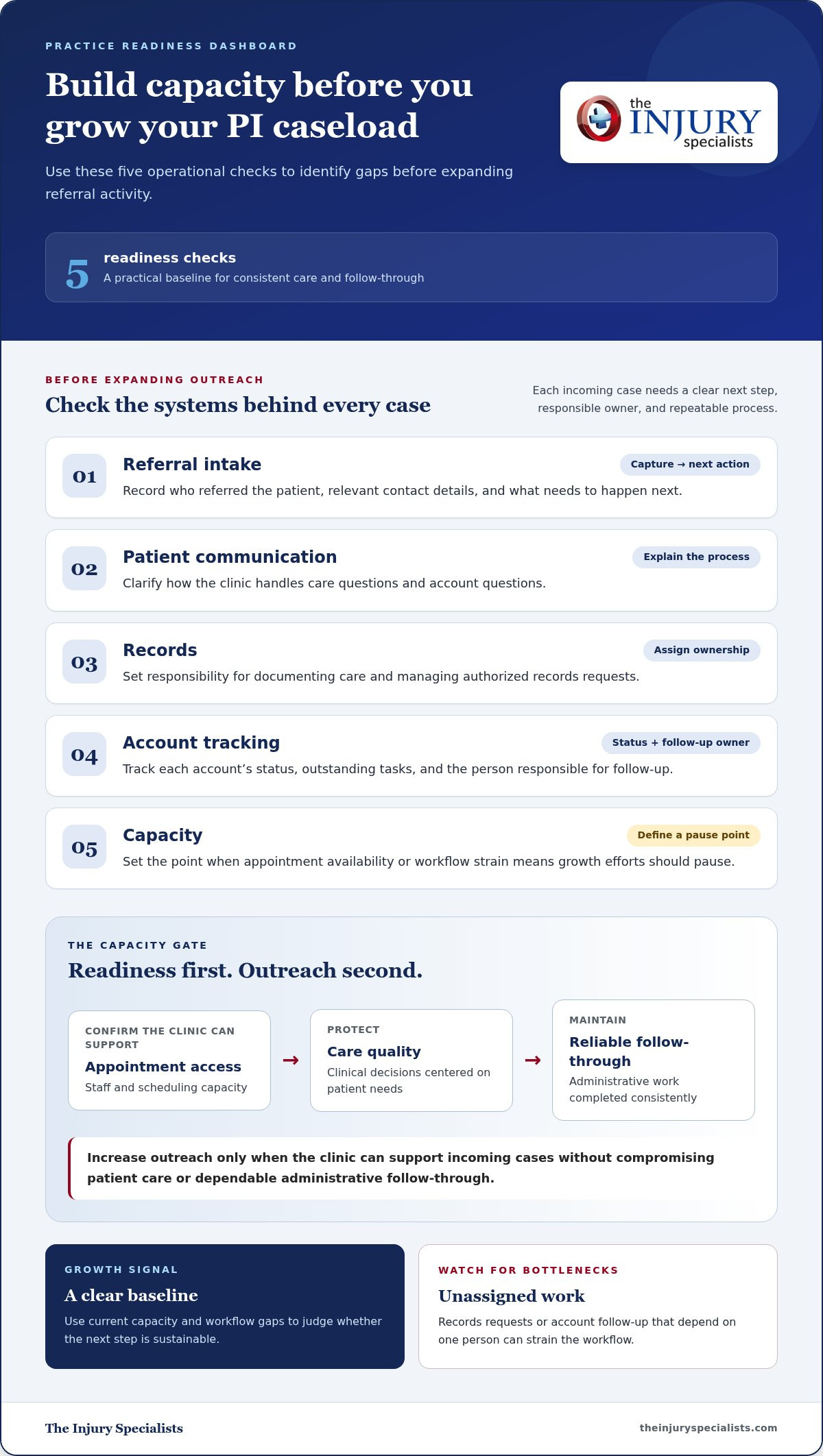
Start with capacity, not outreach. Review appointment access, staff familiarity with intake and records tasks, documentation practices, and ownership of patient and professional communications. Look for bottlenecks, such as unassigned records requests or account follow-up that depends on one person. Set a practical caseload limit based on appointment availability and your team’s ability to maintain care quality and complete administrative work consistently.
Use this readiness checklist before expanding referral activity:
- Referral intake: Record who referred the patient, relevant contact details, and the next action.
- Patient communication: Explain the clinic’s process and clarify how care and account questions will be handled.
- Records: Assign responsibility for documenting care and managing authorized records requests.
- Account tracking: Track each account’s status, outstanding tasks, and follow-up owner.
- Capacity: Define when appointment availability or workflow strain means pausing growth efforts.
Growing a chiropractic practice with PI cases is more sustainable when referral goals follow operational readiness. A clear baseline helps you judge the next step: increase outreach only when the clinic can support incoming cases without compromising patient care or reliable follow-through.
Build Ethical Referral Relationships to Grow a PI Chiropractic Caseload
Strong referral relationships rely on professional fit and dependable coordination, not promises of patient volume. Attorneys and complementary providers can be partners in communication and care coordination, but they are not guaranteed sources of cases. A consistent process helps each relationship work within its proper role while keeping patient needs and clinical judgment central.
How can chiropractors develop attorney relationships?
Use a clear sequence to establish working relationships with law firms:
- Define practice fit. Identify the types of cases, appointment capacity, and care processes your clinic can support.
- Communicate capabilities. Explain services, intake steps, availability, documentation practices, and the best channel for routine communication.
- Establish processes. Agree on practical communication handoffs, records request procedures, and points of contact. Keep patient authorization and privacy requirements in view when handling records.
- Follow through. Respond consistently, provide appropriate documentation, and close the loop on administrative requests without implying a particular clinical or legal outcome.
Track relationship activity and service quality, not just the number of referred cases. Useful measures include whether inquiries receive a response, requests reach the right staff member, and records tasks are completed through the clinic’s established process. Referral arrangements can raise ethical and legal questions that vary by jurisdiction and circumstance, so have qualified counsel review them before putting them into practice.
How do complementary providers fit into a PI referral network?
Physical therapists and imaging providers may be part of a coordinated professional network when clinically appropriate. Clear handoffs keep communication organized: identify the purpose of a referral, share relevant information through appropriate channels, and clarify who will handle follow-up. Coordination should support continuity, not steer treatment choices or replace independent clinical judgment. For related care-coordination context, see personal injury physical therapy referrals.
Keep clinical decisions grounded in the patient’s needs and evidence-informed care. The National Center for Complementary and Integrative Health’s Chiropractic: In Depth provides an overview of research and uses of chiropractic care. For broader context on how referral networks connect professionals, explore personal injury referral networks.
For growing a chiropractic practice with PI cases, aim for a reliable, diversified network supported by clear roles and consistent service. The Injury Specialists’ referral and case-management support can be one component of that broader professional network.
PI Case Growth and Payment Risk: Evaluate the Trade-Offs Before Scaling
More referrals can increase activity without increasing collected revenue. A referral source, case type, or relationship doesn’t guarantee payment timing or recovery. Before expanding, weigh potential value against the staff time, documentation work, and uncertainty each case adds. That makes growth a managed business decision, not a bet on an assumed outcome.
How should a practice assess payment uncertainty?
Use your own account history rather than anecdotes or assumptions. Apply consistent definitions to referral source, case stage, outstanding balance, aging, follow-up actions, and staff time. Review the results regularly to spot workflow friction and see where receivables remain unresolved. Keep written financial policies and apply them consistently. Ask qualified counsel to review applicable agreements and state-specific requirements.
| Growth factor | Potential benefit | Operational demand | Uncertainty and capacity check |
|---|---|---|---|
| PI referrals | Builds connections with attorneys and care professionals. | Requires intake coordination and consistent communication. | Referral activity doesn’t guarantee payment; confirm appointment and staff capacity. |
| Case documentation | Creates an organized record of care and related administrative activity. | Requires consistent processes for records and requests. | Incomplete or delayed work can add follow-up burden; review documentation quality. |
| Account follow-up | Improves visibility into open balances and next actions. | Needs clear ownership and regular tracking. | Collection timing and recovery vary; monitor workload and unresolved accounts. |
| Other practice opportunities | May align with different patient and service needs. | Workload and processes depend on the opportunity. | Compare fit, complexity, and capacity rather than assuming one channel is easier. |
How should PI growth compare with other practice opportunities?
Compare each opportunity using the same measures: patient fit, expected workload, administrative complexity, and collection uncertainty. Assess referral sources by how well their processes align with your clinic and how reliably communication works, not by volume alone. A source that generates more cases may still be a poor fit if your practice can’t manage the associated work.
Keep financial review separate from care decisions. Clinical judgment should reflect patient needs, not a case’s payment prospects or the identity of the referring professional. A measured approach to growing a chiropractic practice with PI cases tracks referral activity alongside receivables, administrative time, documentation quality, and available capacity.
Key distinction: Referral volume measures incoming opportunities. Collected revenue measures payments received. Sustainable growth considers both, along with the resources required to deliver care and manage each account. Use that full picture before increasing outreach or caseload limits.
Create Repeatable PI Intake, Documentation, and Case-Management Workflows
A defined workflow keeps each case moving through the right administrative handoffs without letting referral growth dictate care. Assign a staff owner and response standard to each step, then document what’s complete and what remains open. The clinician retains responsibility for clinical decisions; administrative systems support coordination.
Map the process from referral to follow-up:
- Receive the referral. Log its source, receipt date, contact details, and assigned staff owner.
- Complete intake. Gather the information your practice needs, explain clinic procedures to the patient, and route clinical questions to the appropriate provider.
- Coordinate care. Record relevant administrative updates and assign responsibility for communicating with authorized participants.
- Manage records requests. Log each request, verify the appropriate authorization and recipient, then track its status through completion.
- Follow up on accounts. Record billed, outstanding, and collected amounts separately, with a named owner for each next action.
Use secure processes for patient information, limit access to appropriate staff, and verify applicable privacy requirements with qualified counsel. Define how staff document attempts, responses, pending items, and escalations. This creates a usable record of administrative activity without turning case notes into assumptions about an outcome.
Which PI case metrics help a chiropractic practice manage growth?
Review referral counts by source alongside scheduled and completed visits, staff time spent on administration, response times, and documentation completion. Keep billed, outstanding, and collected amounts distinct so reports show where accounts stand. Define each measure consistently, then review trends on a regular schedule. Use metrics to evaluate workflow and capacity, never to direct clinical care.
How can case coordination support consistent service?
Set clear communication responsibilities and status-update procedures for authorized participants. Standard records-request and account follow-up steps help staff see what’s pending and reduce avoidable handoff delays. Medical case management and case-management technology can support coordination among medical and legal professionals while leaving clinical judgment with the treating provider. For more on the role of digital tools, see personal injury case management technology.
As you focus on growing a chiropractic practice with PI cases, use operational measures alongside referral activity to see whether your practice can support its current workload. The Injury Specialists connects providers and professional referral partners through medical case management and case-management technology. Explore case-management support as one part of a more organized coordination process.
Scale PI Practice Growth with a Measured Plan and the Right Network Support
Growth should follow evidence that your clinic can handle more cases without weakening service or straining operations. A 90-day plan provides a controlled way to test outreach, strengthen processes, and decide what to adjust. Set your review thresholds before the test begins, so a rise in referrals alone doesn’t define success.
What should a 90-day PI growth plan include?
Days 1-30: Establish a baseline. Document current appointment capacity, referral sources, intake and records workflows, administrative workload, documentation completion, patient experience, and receivables status. Use consistent definitions so you can compare later results fairly.
Days 31-60: Standardize the process. Address the gaps you found. Clarify who owns intake, records requests, account follow-up, and professional outreach. Set internal response expectations, then test them with your existing workload before increasing activity.
Days 61-90: Review and decide. Compare results with your baseline. Check service quality, appointment access, documentation completion, patient feedback, administrative workload, and receivables management. If a measure falls below the threshold your practice set, pause expansion and resolve the constraint before adding outreach. If workflows remain stable, consider a measured next step and continue monitoring.
When can a referral network support practice growth?
A professional network can help connect a practice with attorneys, medical providers, and other referral partners. Case-management support can help organize communication and coordination. These are parts of a broader growth system, not promises of referrals, revenue, collections, or case outcomes. Your practice retains control of patient care and independent clinical judgment.
Choose measures that balance opportunity with readiness. For example, define the appointment availability needed to accept additional cases, the documentation standard staff must maintain, and how unresolved account tasks will be monitored. These thresholds should reflect your clinic’s actual capacity and policies, rather than a generic target.
For growing a chiropractic practice with PI cases, use the 90-day review to make a clear decision: scale carefully when capacity, care quality, and administrative processes remain on track; otherwise, improve the workflow first. The Injury Specialists connects providers and professional referral partners through referral and case-management support. Explore provider referral and case-management support.
Build PI Growth on a Stronger Operating Foundation
Sustainable PI growth starts with readiness, not referral volume. Assess appointment capacity and staff workflows before expanding, build professional relationships around clear communication and appropriate coordination, and track administrative demands alongside case activity. A repeatable process for intake, records, and account follow-up helps the practice evaluate growth without compromising patient care.
Growing a chiropractic practice with PI cases also means recognizing that referral activity doesn’t guarantee payment or business results. Review capacity, documentation quality, patient experience, and receivables together before deciding whether to scale. A professional network can support connections and coordination as one part of that broader plan.
The Injury Specialists connects chiropractors and other providers with professional referral partners through a national personal injury network. Specialized chiropractic and physical therapy referral programs, medical case management, and technology designed to support medical-legal workflows can complement the systems your practice builds. Results depend on your practice and case circumstances, but a disciplined plan gives you a clearer basis for decisions.
Explore provider referral and case-management support, then take the next step toward PI growth that fits your practice. With measured expansion and consistent processes, your clinic can build a more sustainable foundation.
Frequently Asked Questions
How can a chiropractor get more personal injury cases?
Build a diversified network of professional relationships and make your clinic’s capabilities easy to understand. Communicate your intake process, appointment availability, documentation practices, and staff contacts to attorneys and complementary providers. Improve your website and local search visibility to help prospective patients find relevant information. Before increasing outreach, confirm that your team can manage new inquiries and follow through consistently. Referral activity can create opportunities, but it doesn’t guarantee patient volume or business results.
Are personal injury cases profitable for chiropractors?
Profitability depends on the clinic’s costs, administrative workload, payment arrangements, and whether accounts are ultimately paid. PI cases may bring added coordination and delayed payment, so assess them using your own records rather than assumed collection rates or anecdotes. Track staff time, billed amounts, outstanding balances, and collections separately. Keep financial policies clear, and have qualified counsel review relevant agreements and requirements. Clinical decisions should remain based on patient needs, not a case’s potential payment.
How do chiropractors build relationships with personal injury attorneys?
Start by explaining your practice fit, services, intake process, availability, and documentation workflow. Identify a contact for administrative requests and use a predictable process to respond and share records when properly authorized. Follow through consistently, and track communication quality and task completion, not only referred cases. Treat attorneys as professional partners, not guaranteed patient sources. Referral arrangements can raise legal and ethical issues, so have qualified counsel review them for the requirements that apply to your circumstances.
What is a medical lien in a chiropractic PI case?
A medical lien generally refers to a claim or payment arrangement connected to care and a potential recovery from a personal injury case. Its terms and effect depend on the applicable agreement and requirements. It isn’t the same as a letter of protection, and neither should be treated as a guarantee that the provider will be paid. Make financial terms clear, maintain organized account records, and seek qualified legal guidance about documents used in your practice.
How should a chiropractic practice manage delayed PI payments?
Use written financial policies and a consistent account follow-up process. Track billed, outstanding, and collected amounts separately, assign an owner to each open account, and record the status and next follow-up action. Review aging and unresolved balances regularly to understand the practice’s exposure and administrative workload. Payment timing and recovery vary by case and agreement, so don’t budget on assumed settlement dates or guaranteed collections. Consult qualified counsel about applicable agreements and requirements.
What should chiropractors track when growing a PI caseload?
Track referrals by source, inquiries, scheduled and completed visits, appointment capacity, response times, documentation completion, and staff time spent on administration. Monitor billed, outstanding, and collected amounts as distinct measures. Consistent definitions make trends useful for decisions about outreach and operations. Review the measures together: more referrals may also mean more administrative work or receivables. Use performance data to assess processes and sustainable capacity, never to determine a patient’s clinical care.
Can a chiropractic practice use a referral network to grow PI cases?
Yes. A professional referral network can help connect chiropractors with injury victims and other medical and legal professionals, while case-management support can help organize coordination. The Injury Specialists provides chiropractic and physical therapy referral programs, medical case management, and case-management technology. A network is one part of a broader growth plan, not a guarantee of referrals, revenue, collections, or case outcomes. Practices retain responsibility for independent clinical judgment and patient care.
How quickly can a chiropractic practice grow its PI caseload?
There’s no reliable universal timeline. Growth depends on the practice’s capacity, outreach, professional relationships, and ability to manage each case’s administrative work. A 90-day review can help a clinic establish baseline measures, improve workflows, test outreach, and assess service quality before deciding whether to scale. Treat that period as a planning and evaluation cycle, not a promise of a particular caseload increase. Expand at a pace that preserves care quality and operational stability.

Leave A Comment
You must be logged in to post a comment.