

What if the best way to earn more attorney referrals is to make your firm easier to refer to, not simply more visible? Learning how to get referrals from other attorneys starts with a clear answer to one question: which matters are the right fit for your team? When referral sources understand your focus, boundaries, and intake process, they can make more relevant introductions and know what to expect next.
That takes more than attending events or exchanging business cards. Attorneys need confidence that you’ll communicate clearly, handle an introduction professionally, and respect the client’s interests. A vague pitch or inconsistent follow-up can weaken a promising relationship. Referral arrangements also require careful attention to applicable ethics rules.
This guide explains how to define your referral fit, build professional relationships through useful contact, and respond to and track introductions. It also covers transparent referral discussions and documentation, so your process supports dependable connections without making them feel transactional or replacing independent legal judgment.
Key Takeaways
- Make your practice easier to refer to by clearly describing your focus, ideal matters, and capacity.
- Learn how to get referrals from other attorneys by building relationships around professional fit and useful, consistent contact.
- Choose referral channels based on client needs and practice goals, while handling ethics considerations with care.
- Use a clear process for introductions, client consent, prompt responses, and referral tracking.
- See how structured networking and workflow-aligned case management can support more consistent referral relationships.
How Attorney-to-Attorney Referrals Work, and What Makes Them Valuable
An attorney-to-attorney referral is a professional introduction that connects a client with a lawyer whose practice may better match the client’s needs. It can happen when a matter falls outside the referring attorney’s focus, calls for different experience, or exceeds the firm’s current capacity. The introduction starts a conversation. It doesn’t decide whether the receiving firm will take the matter or guarantee a case, result, or client relationship.
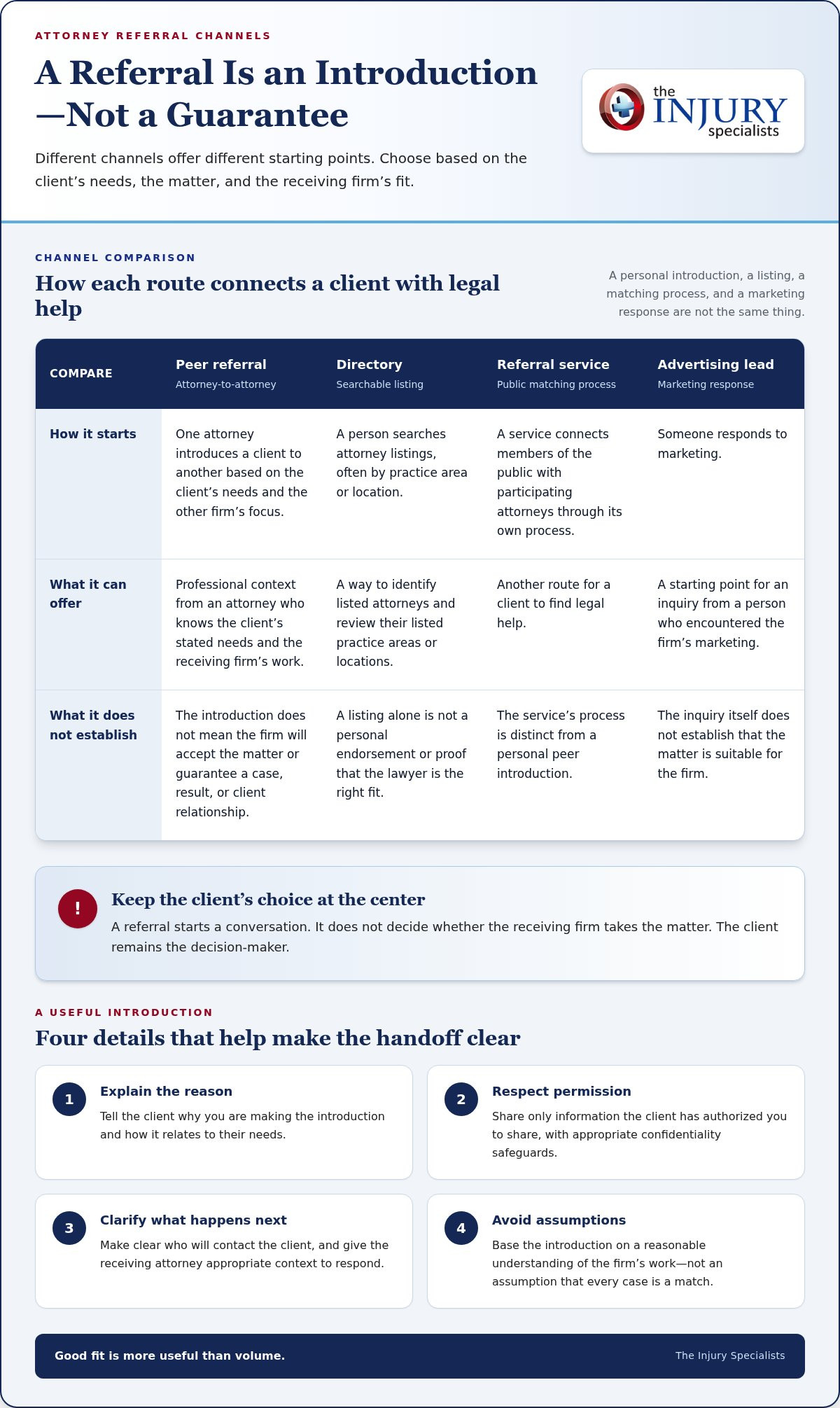
A referral is a professional introduction based on client needs and practice fit, not a promise that a firm will accept a case or achieve a particular outcome. This distinction matters. A peer referral draws on a professional relationship and an attorney’s knowledge of another firm’s work. An advertising lead typically begins with someone responding to marketing, while a directory helps people search listings. A formal lawyer referral service uses its own process to connect members of the public with participating attorneys.
Each channel can serve a purpose, but each gives the client a different starting point. A suitable peer introduction can help a client reach a lawyer whose work appears relevant. The referring attorney can bridge a gap while keeping the client’s interests central. The receiving firm gets context for the inquiry, not a presumption that the matter is suitable. Understanding legal ethics provides useful background, but attorneys must follow the rules and guidance that govern their own conduct.
What makes a referral appropriate and useful?
Fit depends on more than a practice-area label. Consider the client’s stated needs, the type of matter, and the receiving firm’s demonstrated capabilities and capacity. For example, an attorney handling a business dispute might introduce a client with a separate injury matter to a firm that regularly handles that kind of case. Base the introduction on a reasonable understanding of the receiving firm’s work, not an assumption that every case will be a match.
The client remains the decision-maker. Explain why you’re making the introduction, share only information the client has authorized you to share, and let the client decide whether to proceed. Make the next step clear by telling the client who will make contact. Give the receiving attorney enough appropriate context to respond, without implying that the firm has accepted the matter or promising a particular outcome.
Referral relationships versus directories and lead sources
A peer referral is personal and contextual: one attorney introduces a client to another based on knowledge of the client’s needs and the other firm’s focus. A bar directory is searchable, often by practice area or location, and helps people identify listed attorneys. A public matching service follows its own referral process. Directory participation isn’t a personal endorsement, and a listing alone doesn’t establish that a lawyer is the right fit.
Choose the channel that serves the client’s circumstances. Direct introductions can provide useful context when attorneys know each other’s work; directories and public services offer another route for finding legal help. Knowing the difference is a practical first step in learning how to get referrals from other attorneys: build relationships around accurate fit, not volume or an expectation of guaranteed business.
Build a Referral-Worthy Practice by Making Your Fit Easy to Understand
Attorneys can make useful introductions only when they understand what your firm handles and when a matter may fit. A broad description such as “we handle personal injury” gives a peer little to work with. A concise profile that names your focus, ideal matters, current capacity, and client service approach is easier to remember and share. It also helps prevent introductions based on assumptions.
Create a clear referral profile for other attorneys
Prepare a short explanation you can use in conversation and professional materials. Be specific, but stay within what your firm can accurately support. Include:
- Practice focus: Identify the matter types your firm regularly handles and those it doesn’t routinely accept.
- Relevant experience: Describe the kinds of matters or client needs your team has handled, without implying guaranteed outcomes or overstating results.
- Geographic scope and capacity: State where the firm practices and whether it can currently consider additional matters. Update this as circumstances change.
- Client service approach: Explain what a client can generally expect from your communication and intake process.
- Introduction details: Tell peers the best way to introduce a potential client and what initial information is useful, subject to the client’s permission and appropriate confidentiality safeguards.
For example: “Our firm handles plaintiff-side workplace injury claims in the jurisdictions where we practice. We’re a potential fit for clients seeking counsel on a work-related injury, and we can discuss the matter after an introduction and initial review.” This gives a peer useful criteria without claiming the firm will accept every inquiry.
Demonstrate reliability before asking for introductions
A referral profile works only if the information behind it is current. Review attorney biographies, contact details, practice descriptions, and intake instructions regularly. If your capacity changes or your focus shifts, update the peers who rely on that information. An outdated profile can send a client down the wrong path and create extra work for both firms.
Set clear expectations for what happens after an introduction. Explain who handles the initial response and how the client’s information will be protected. Share sensitive details only through appropriate channels and with the client’s authorization. Don’t promise a response time or case review process your firm can’t consistently meet.
Clear referral criteria help attorneys make more relevant introductions and help clients reach a firm whose work may fit their needs. This is a practical foundation for how to get referrals from other attorneys: make your fit specific, keep it accurate, and follow through on the process you describe.
Firms seeking a more structured way to build professional connections can explore attorney networking and case-management support. A system aligned with a firm’s workflows can support consistent relationship-building and organized handling of referred matters, while leaving referral decisions and professional obligations with the attorneys involved.
Choose Referral Channels and Handle Ethics Concerns with Care
Different channels solve different connection problems. To decide how to get referrals from other attorneys, consider the client’s needs, the relationship behind the introduction, and the rules that apply to the lawyers involved. No channel makes a referral automatically appropriate, and no introduction should replace the client’s informed choice.
- Peer relationships: Direct professional connections can support context-rich introductions when attorneys understand each other’s practice focus.
- Bar association networks: Member directories and events help lawyers find peers and build professional familiarity. Participation alone doesn’t signal a personal endorsement.
- Formal referral services: These use an organized process to connect members of the public with participating attorneys. Their structure differs from a lawyer-to-lawyer introduction.
- Professional platforms: Depending on their purpose, they can help attorneys connect, communicate, or coordinate workflows. A platform doesn’t determine whether a referral is appropriate or an arrangement is ethically permissible.
Match the channel to the task. A peer introduction may help when a lawyer knows a colleague’s relevant work. A directory can support broad discovery, while a formal service may provide a defined public-facing referral process. Platforms can support ongoing professional connections, but they don’t replace judgment about client fit or referral terms. Be transparent about how an introduction happens so clients understand their options.
Match the referral channel to the relationship
Use networking to develop professional familiarity, not to create pressure for a particular exchange. A conversation at a bar event can help attorneys learn what each firm handles; it doesn’t establish that future matters must be sent in either direction. Keep client-directed decisions separate from relationship-building, and explain relevant connections so the client can make an informed choice.
Keep referral arrangements within professional boundaries
Referral fees, fee divisions, solicitation, and reciprocal expectations raise separate ethics questions. Don’t assume a payment or an informal “I’ll send you one if you send me one” arrangement is allowed. Rules vary by jurisdiction, and details such as the lawyers’ roles, client disclosure, written consent, and compensation structure can matter.
For context, ABA Model Rule 1.5(e) addresses fee divisions between lawyers who aren’t in the same firm. It provides for division when the lawyers’ shares are proportional to services performed or they assume joint responsibility, the client agrees in writing to the arrangement and each lawyer’s share, and the total fee is reasonable. It is a model rule, not a substitute for checking the current requirements that govern a specific matter.
Before agreeing to compensation or reciprocal terms, review the applicable state rules and consult qualified ethics counsel for situation-specific guidance. Keep ordinary professional networking separate from compensation discussions, and document any arrangement as required. These points are general information, not legal advice. The client’s interests and choices remain central, regardless of which channel leads to an introduction.
Process to Earn, Respond to, and Maintain Referrals
Reliable referrals depend on a process that works before, during, and after an introduction. A simple workflow helps attorneys build relationships without turning every conversation into a request for business. It also gives clients and referral partners a clear handoff, while limiting shared information to what’s appropriate.
- Identify aligned peers. Look for attorneys whose practices complement yours and whose clients may sometimes need services your firm doesn’t provide. Focus on professional fit and shared commitment to client service, not just the size of someone’s network.
- Start with useful contact. Share relevant professional information, offer an introduction when it genuinely helps, or discuss an issue that affects both practices. Set a manageable cadence for check-ins and educational exchanges so contact feels consistent, not dependent on asking for cases.
- Communicate the fit clearly. If a client may benefit from another lawyer’s help, explain why you’re suggesting the connection and what the receiving firm handles. Don’t imply that the other attorney will accept the matter or achieve a particular result.
- Follow through and close the loop. Confirm the client’s consent before sharing information. Acknowledge the introduction, tell the client what communication to expect, and provide appropriate updates to the referring attorney within agreed boundaries.
Start conversations that create professional value
Prepare a concise introduction to your practice, then ask peers about their current focus and the kinds of matters they’re equipped to consider. A useful exchange might involve discussing how your firms handle a handoff or sharing a professional resource relevant to a shared client need. Keep a simple record of whom you’ve spoken with and an appropriate follow-up point. This makes relationship-building intentional without turning it into a volume-driven campaign.
Make the handoff and follow-up dependable
Before sending an email or making a call that identifies a client, confirm what the client has authorized you to share. Include only relevant information and use an appropriate channel for sensitive details. The first message can explain the reason for the connection, identify the client’s preferred next step, and introduce both parties without disclosing unnecessary facts.
After an introduction, acknowledge it promptly and clarify who will contact the client next. If the receiving firm can’t take the matter, communicate that appropriately so the client isn’t left uncertain. When follow-up with the referring lawyer is suitable, confirm that contact occurred or that the referral process has ended, without sharing confidential case details.
Track relationship activity and referral outcomes in a secure, access-controlled system. Useful fields might include the date, referring source, general matter category, response status, and next follow-up. Avoid recording unnecessary client facts in networking records; keep case information in the firm’s appropriate systems and follow its confidentiality practices. A consistent workflow makes it easier to maintain professional connections and manage handoffs. Explore attorney referral and case-management support.
Scale Attorney Referrals with Consistent Networking and Case Workflows
A firm may benefit from a structured referral system when relationship-building is scattered across several people, introductions receive inconsistent follow-up, or staff have no shared way to track next steps. Structure doesn’t mean treating every professional contact as a sales lead. It means clarifying responsibilities and creating a dependable process that supports sound judgment, client interests, and relevant connections.
Set up a manageable referral relationship system
Assign ownership for partner communication, referral acknowledgment, and internal tracking. In a smaller firm, one person may handle each task; in a larger practice, responsibilities may sit across attorneys and intake staff. Either way, everyone should know who responds to an introduction, where activity is recorded, and when a relationship needs attention.
Use a system suited to your firm’s existing work. A contact record might capture an attorney’s practice focus, the last professional interaction, and a planned follow-up. A separate referral workflow can show whether an introduction was received, acknowledged, routed for review, or closed. Keep client details in appropriate case systems, and limit relationship records to information needed for professional coordination.
Review the process periodically. Look for patterns in fit and follow-through: Are introductions aligned with the firm’s focus? Are acknowledgments happening reliably? Are partners receiving appropriate updates? Use those observations to refine your criteria and workflow, not to rank every contact by lead volume.
Connect networking with case-management workflows
Networking is more sustainable when the handoff connects to a firm’s actual operations. A clear path from introduction to intake review can help staff route inquiries consistently, record the status, and identify the next step. Tailoring case-management processes to the firm’s way of working can support that coordination without replacing attorney judgment or ethics review.
The Injury Specialists’ attorney referral program combines professional networking support with case management tailored to a firm’s processes. Its technology platform is designed to support case-management, marketing, and networking activity, connecting relationship development with organized workflows. The Injury Specialists also provides medical case management and referral connections that help link legal and medical professionals in the personal injury ecosystem.
Keep expectations grounded. A network or technology platform can support connections and workflow consistency, but it doesn’t guarantee referral volume, case outcomes, or revenue. The firm remains responsible for evaluating each matter, communicating with clients, and meeting its professional obligations.
If your firm is ready to organize professional connections and referral workflows around its own processes, explore The Injury Specialists attorney referral program.
Make Your Next Referral Connection Intentional
Choose one practical improvement to put in place next: clarify who owns partner follow-up, update your referral profile, or create a consistent way to record introductions. Small, repeatable steps make it easier for colleagues to understand when your firm is a fit and help your team handle connections with care. That’s a durable foundation for how to get referrals from other attorneys without making professional relationships feel transactional.
As your network grows, consider whether added structure could support your firm’s approach. The Injury Specialists offers an attorney referral program with case management tailored to a law firm’s processes, along with networking and marketing support for legal professionals. Its technology platform supports professional connections and case workflows, while attorneys retain responsibility for their own referral decisions and ethics obligations.
Explore The Injury Specialists’ attorney referral and case-management support to see how it can fit into your firm’s referral process. Start with a clear goal, build on relationships grounded in trust, and keep the client’s interests at the center. Consistency can turn a good professional connection into a stronger, more dependable working relationship.
Frequently Asked Questions
How do attorneys get referrals from other attorneys?
Attorneys get referrals by helping peers recognize when a matter may suit their practice and by handling introductions professionally. To improve how to get referrals from other attorneys, explain your focus in practical terms and build relationships with lawyers whose clients may have related needs. For example, a business attorney may encounter a client with a separate employment issue. Keep the introduction client-directed, and don’t treat referrals as guaranteed or reciprocal.
What is the best way to ask another lawyer for referrals?
Ask for a focused conversation about the kinds of matters each firm handles, rather than opening with a request for cases. You might say, “I’d like to understand the employment matters your team takes on and share the types of business disputes we handle.” Then explain the situations where your firm could be a fit. This gives the other lawyer useful context without pressuring them to send work or promising referrals in return.
Can attorneys pay other attorneys for referrals?
Sometimes, but the arrangement must comply with the rules that govern the lawyers and matter. ABA Model Rule 1.5(e) permits certain fee divisions between lawyers in different firms when the division reflects work performed or each lawyer assumes joint responsibility, the client agrees in writing to the arrangement and each lawyer’s share, and the total fee is reasonable. State rules can differ, so review current requirements and seek ethics counsel before agreeing to payment.
How do lawyers build referral relationships with attorneys in other practice areas?
Start by learning where your practices intersect, even if you don’t handle the same matters. A real estate lawyer and a trusts-and-estates attorney, for instance, may encounter clients with distinct legal needs that call for separate counsel. Share the limits of your practice as well as its focus, and stay in touch through relevant professional discussions. A relationship built around sound client fit is more useful than an informal expectation that referrals will be exchanged.
How should a law firm follow up on an attorney referral?
First, confirm who will contact the client and make sure the client understands the next step. If the firm can’t consider the matter, communicate that promptly through an appropriate channel so the referring attorney can help the client consider other options. If the firm does proceed, keep the referring lawyer’s updates within the client’s authorization and confidentiality obligations. Record whether the introduction was accepted, declined, or remains under review to prevent duplicate outreach.
Do bar association lawyer referral directories generate attorney-to-attorney referrals?
Usually, a searchable bar directory is designed to help users find participating lawyers, rather than to create a direct peer introduction. A lawyer might use a directory to identify a colleague with a relevant practice focus, then decide independently whether to make an introduction. Some bar associations also operate separate public referral services with their own matching procedures. Check which resource you’re using, since a directory listing alone doesn’t establish an endorsement or referral relationship.
How can a law firm track referrals without compromising client confidentiality?
Track relationship activity separately from substantive case details. A referral log can record the source, date, broad matter category, assigned staff member, and status, while the case file holds information needed for legal work. Limit access to each system according to its purpose, and avoid adding sensitive facts to general networking notes. Follow the firm’s confidentiality and record-handling policies, and document only what staff need to coordinate the introduction and evaluate the process.

Leave A Comment
You must be logged in to post a comment.