

More PI cases grow from trusted professional relationships, not a single referral channel. The most practical answer to how doctors can get more PI cases is to build connections with attorneys, patients, and other medical professionals while staying visible in relevant networking groups and bar association referral services.
Consistent, professional communication helps referral partners understand your practice, specialties, and approach to patient care. Keep the patient’s needs first, with clear expectations and independent choice at the center of every referral relationship.
This article explains how to strengthen referrals from attorneys, patients, and medical professionals, participate in networking groups, and use bar association services as part of your outreach. You’ll also learn what attorneys look for in medical providers and how a focused referral network can support sustainable growth.
Key Takeaways
- Build referral connections with attorneys, patients, and other medical professionals by making your specialties and patient-care approach clear.
- Use professional networking groups and bar association referral services to create consistent opportunities to meet potential referral partners.
- Strengthen attorney relationships through responsive communication, relevant clinical expertise, and respect for patient choice.
- Identify which referral support fits your practice, from medical case management to marketing and networking that can expand partner connections.
1. Attorney, client, and medical professional referrals
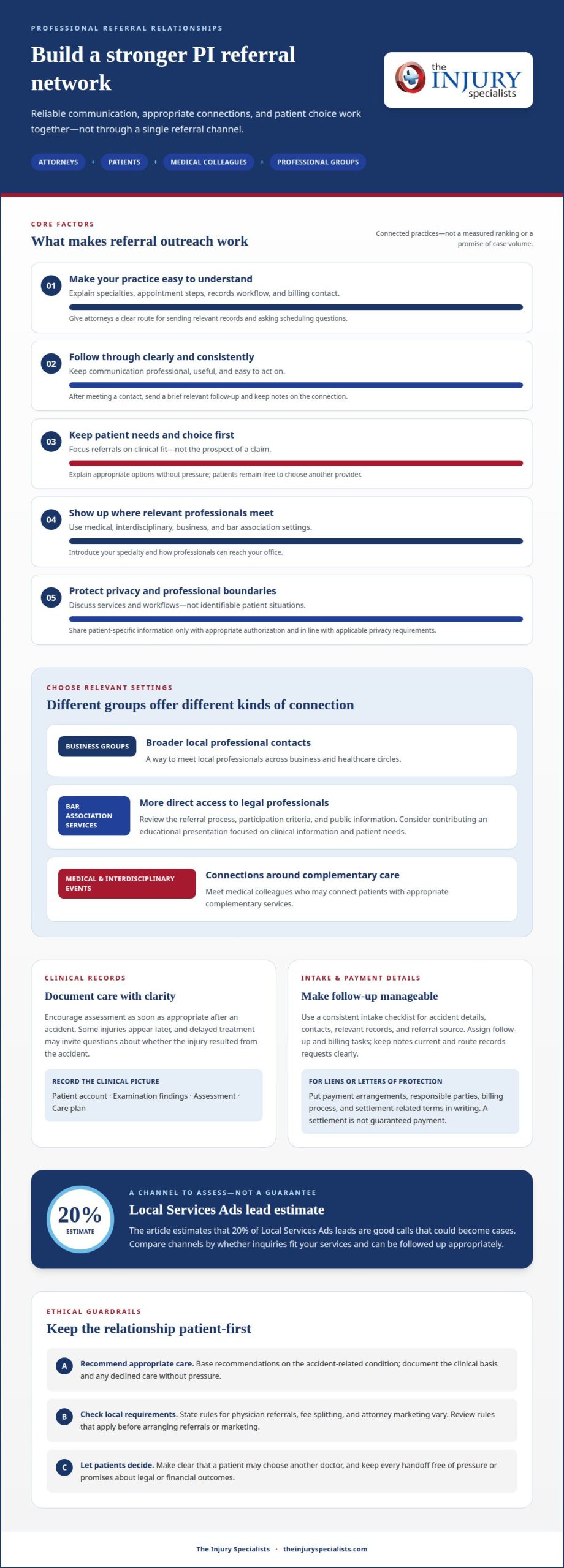
Build referral relationships around clear information, reliable follow-through, and patient choice. Give attorneys a concise overview of your specialties, appointment process, records workflow, and billing contact. For example, a referring lawyer should know how to send relevant records and where to direct scheduling questions. Patients may refer others after a positive experience, while medical colleagues can connect patients with appropriate complementary care. Keep every referral focused on clinical needs, not the prospect of a claim.
Timely evaluation matters after an accident. Encourage patients to seek medical assessment as soon as appropriate, so symptoms and reported pain can be documented close to the event. Some injuries appear later, and delayed treatment may give an insurer grounds to question whether an injury resulted from the accident. A diagnosis made much later may also invite scrutiny. Document the patient’s account, examination findings, assessment, and care plan in the medical record.
Faith may influence a patient’s care decisions. Ask respectfully about any concerns, explain clinically appropriate options, and document the discussion and the patient’s choice. Recommend only treatment that is reasonable and necessary for the accident-related condition. Record the clinical basis for each recommendation and any declined care without pressuring the patient.
State rules for physician referrals, fee splitting, and attorney marketing vary. Review the rules that apply in each state before setting up referral or marketing arrangements; attorney mail advertising rules also vary by state.
For personal injury liens or letters of protection, document the payment arrangement, responsible parties, billing process, and settlement-related payment terms in writing. Don’t treat a settlement as guaranteed payment. Track balances and communicate clearly with the patient and authorized legal contact.
Streamline intake with a consistent checklist. Record accident details, contact information, relevant records, and the referral source, then assign follow-up and billing tasks. Keep notes current and make records requests easy to route.
2. Networking groups and bar association referral services
A practical way to understand how doctors can get more PI cases is to make networking a repeatable professional activity. Attend medical association meetings, interdisciplinary events, and business groups where attorneys and healthcare professionals gather. Prepare a brief introduction explaining your specialty, the injury-related conditions you assess, and how another professional can reach your office. Clear information gives new contacts a useful reason to remember your practice.
Bar association referral services can offer another route to professional connections. Review the program’s referral process, participation criteria, and public information, then identify suitable ways to contribute. For example, offer an educational presentation about your specialty’s role in evaluating injury-related conditions. Keep the focus on clinical information and patient needs, rather than asking attendees to send cases.
Protect patient privacy in every conversation. Discuss general services and office workflows, not identifiable patient situations. Share patient-specific information only with appropriate authorization and in accordance with the privacy requirements that apply to your practice.
Make follow-up useful and specific. After meeting an attorney, send a brief note referring to your conversation and providing your practice’s referral contact. Record the connection and topics discussed, then reconnect with relevant updates, such as a change to your scheduling process or a new educational resource. For doctors considering how doctors can get more PI cases, a group is valuable when its professional connections align with the practice’s services.
Compare networking opportunities by the relevance of their participants and activities. A business group may broaden local professional contacts, while a bar association service may offer more direct access to legal professionals. Practices looking to build referral relationships can explore referral-partner networking support as one possible part of that effort.
Alongside these relationship-building efforts, practices can compare networking with other ways of generating inquiries and assess whether each channel brings relevant contacts. The page estimates that 20% of Local Services Ads leads are good calls that could become cases. That estimate can provide a point of comparison when reviewing outreach, but it does not replace attention to fit: consider whether an inquiry matches the services the practice provides and whether follow-up can be handled appropriately.
3. How can doctors build ethical referral relationships with personal injury attorneys?
Build relationships around clinical fit, not a promised flow of cases. A personal injury lawyer may refer a client to a doctor they know and trust. Make that trust practical: explain your specialties, appointment process, and how your office handles records requests. Keep discussions focused on care and coordination, without suggesting that referrals guarantee legal or financial outcomes.
Respect patient choice at every handoff. A lawyer may suggest a familiar physician, but a client who objects can choose another doctor independently. Make that option clear without steering the patient toward a particular attorney or provider. For example, give the patient your practice information and let them decide whether your clinical services fit their needs. Patient-led choices support relationships built on confidence rather than pressure.
Show attorneys how your practice supports accurate case communication. Lawyers may value doctors who treat patients well, understand the practical demands of injury care, and have billing staff familiar with personal injury matters. Explain who handles records requests, how your office prepares reports, and where attorneys can direct administrative questions. Keep clinical opinions independent. A report should reflect the examination and medical record, not a desired claim outcome.
Use consistent boundaries after the first introduction. Confirm referral procedures in writing, share only information the patient has authorized, and route questions to the right staff member. If a lawyer asks about a patient, verify the request and applicable authorization before discussing case-specific details. Review recurring issues with your team, such as incomplete records or unclear billing communications. These steps help the physician and attorney coordinate efficiently while keeping patient care and clinical judgment central.
Personal injury attorneys may value doctors who treat patients well and have billing departments familiar with billing and preparing reports for claims or litigation. That familiarity can help offices communicate about administrative needs, but it should not turn a report into advocacy detached from the medical record. Keep billing explanations clear and reports grounded in the care provided, so attorneys can understand the information without expecting a particular conclusion. Confidence in a professional relationship should come from dependable work and open communication, while the doctor’s assessment remains independent.
4. What injury lawyers seek in medical providers
Attorneys look for providers whose clinical focus matches the patient’s injury. Relevant specialists may include physiatrists, orthopedic surgeons, neurologists, and chiropractors. Each brings a different perspective: an orthopedic surgeon may assess a fracture, while a neurologist can evaluate a concussion. Clear specialty information helps a law firm understand when a practice may fit a patient’s medical needs.
A primary care doctor may not specialize in treating traumatic injuries such as broken bones, concussions, back pain, or neck pain. That doesn’t make primary care irrelevant. It means attorneys need to understand the provider’s scope and experience before referring a patient. An accurate practice profile can describe conditions treated, assessment capabilities, and when a patient may need another specialist.
Clinical documentation is another practical indicator of fit. A useful record connects the patient’s reported symptoms with examination findings, diagnosis, and treatment plan. For example, a note about restricted neck movement should describe the assessment and its relevance to the patient’s concerns. Specific, consistent records help explain the medical course without making legal conclusions or overstating causation.
Operational clarity matters too. Explain how the office handles scheduling, medical record requests, and billing questions. Identify the staff contact for each process and follow a consistent workflow. Attorneys can then direct administrative requests efficiently, while clinicians preserve time for patient evaluation and care. Keep clinical decisions independent of the case’s desired outcome.
Review your practice profile with these criteria: specialty fit, injury-assessment experience, clear documentation, and organized case communication. If your practice needs a stronger referral network and coordinated medical case management, explore physician referral and case management support.
The Injury Specialists: Physician Referral Services, medical case management, marketing and networking to increase referral partners.
The Injury Specialists supports physicians seeking stronger referral connections through Physician Referral Services, medical case management, marketing, and networking. These services help practices build relationships with referral partners and coordinate personal injury case workflows.
For practices working with law firms, the Attorney Referral Program provides medical case management based on each firm’s distinct process, along with marketing and networking to grow referral relationships. Chiropractic and Physical Therapy Referrals and Imaging Center Referrals support related needs across the medical referral network.
Consider this support when your practice wants to expand professional connections or organize case management around its workflow. Contact The Injury Specialists or visit theinjuryspecialists.com to learn more.
Build a referral strategy that can grow with your practice
Referral growth takes ongoing effort, not a one-time campaign. Choose a manageable next step: refine how your office introduces its services, strengthen a professional connection, or review how staff handle incoming referrals. Then assess whether those efforts bring appropriate patients and build useful, lasting relationships. This keeps growth aligned with your practice’s capabilities and patient needs.
A sustainable approach to how doctors can get more PI cases starts with consistency. Make referral communication part of your routine, and revisit it as your specialties, workflows, or professional network change. The goal is a dependable process that supports clinical independence while making it easier for appropriate partners to connect with your practice.
If you’re ready to develop your referral network with support tailored to medical professionals, contact The Injury Specialists. Take the next step at a pace that fits your practice, and build from there.
Frequently Asked Questions
What marketing strategies help doctors attract personal injury patients?
Use clear, educational marketing to help injured people understand your clinical services and how to access them. A practice website can explain relevant specialties, appointment steps, and what information patients should bring. Share useful content, such as guidance on describing symptoms during an evaluation, without promising claim outcomes. Keep messaging consistent across practice materials, and use professional marketing support to build awareness among appropriate referral partners.

Leave A Comment
You must be logged in to post a comment.