

A difficult client interaction often calls for clearer communication, not a quicker reaction. Handling difficult personal injury clients starts with listening carefully, acknowledging concerns, and explaining next steps in plain language. Set expectations for updates and response times early, then follow through consistently. These habits can make conversations more constructive while keeping case communication focused and professional.
Clients dealing with pain, uncertainty, and unfamiliar legal processes may need more reassurance and structure than they expected. That can challenge a busy legal team, but predictable communication helps everyone share the same understanding. This article explains how to identify what may be behind difficult interactions, respond promptly while maintaining boundaries, and set realistic expectations from the first consultation. It also covers ways to offer support while keeping clients informed, involved, and prepared to participate in their cases.
Key Takeaways
- Listen for the concern behind a client’s behavior, then confirm shared understanding in clear, plain language.
- Set communication channels, response expectations, and professional boundaries early, and follow through consistently.
- Use the initial consultation to explain case stages, decision-making roles, and realistic expectations without promising an outcome.
- Offer steady, respectful support that helps clients stay informed and participate more clearly in case decisions.
1. Active listening and empathetic communication
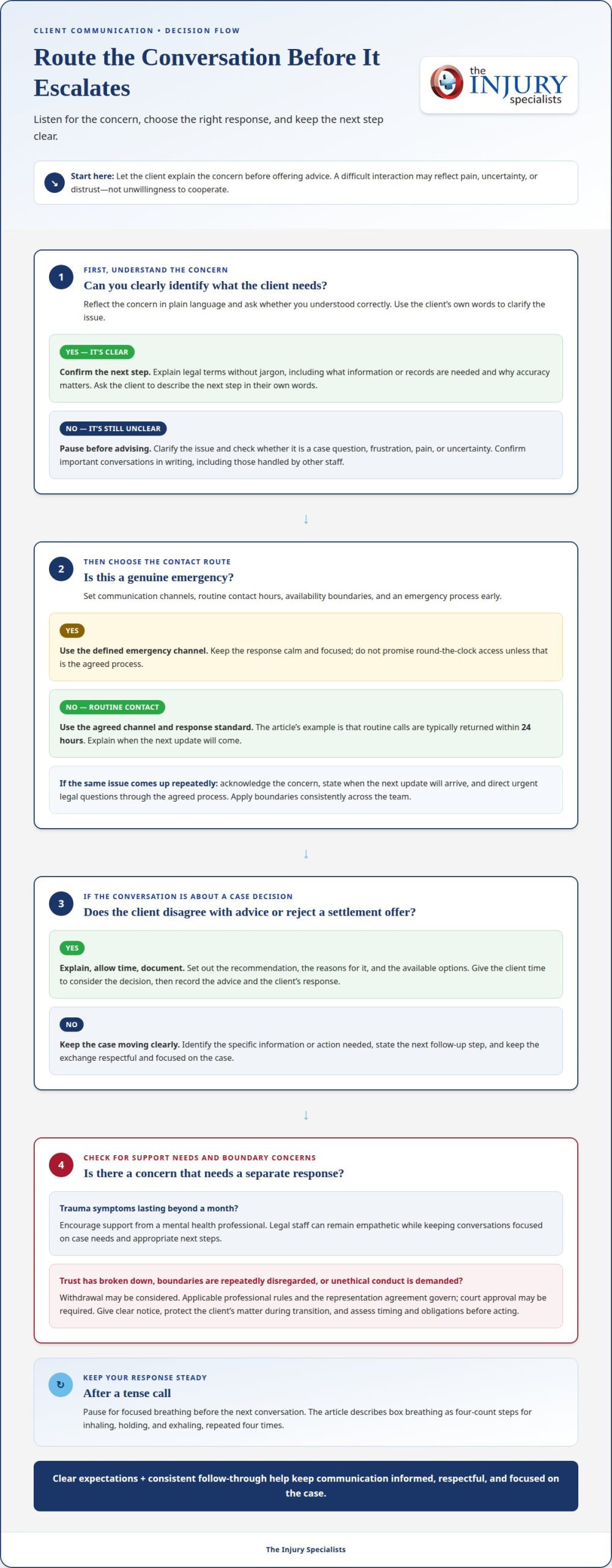
Begin each conversation by listening: let the client explain the concern before offering advice. Someone who repeatedly asks about a treatment appointment may need help understanding what information the legal team needs. Reflect the concern in plain language, then ask if you have understood correctly. This shows empathy without agreeing to every demand. It also helps distinguish a case question from frustration, pain, or uncertainty affecting the relationship.
Use the client’s own words to clarify the issue, then explain legal terms without jargon. For example, after discussing a document request, summarize which records to gather, why accuracy matters, and what the client should keep. Ask the client to describe the next step in their own words. This simple check can uncover confusion before it affects cooperation. Confirm important conversations in writing, including those handled by paralegals or other staff.
Establish communication preferences early. Ask whether the client prefers phone calls, email, or another agreed channel, and set a consistent update schedule. Explain the team’s usual contact channels and availability boundaries. If a client repeatedly calls about the same issue, acknowledge the concern, explain when the next update will come, and direct urgent legal questions through the agreed process. Boundaries work best when the whole team applies them consistently.
Be sensitive to timing. Stress may be especially high during the first few months after an injury, so a difficult interaction may reflect pain or distrust rather than unwillingness to cooperate. Listen for the underlying concern and address what you can. If a client describes trauma symptoms lasting beyond a month, encourage support from a mental health professional. Legal staff can show empathy while keeping conversations focused on case needs and appropriate next steps.
2. Responding promptly and maintaining availability
Set a response standard before urgent messages arrive. For example, tell clients that routine calls are typically returned within 24 hours, and explain how genuine emergencies are handled. A client calling at 9 PM about a delayed settlement needs a calm acknowledgment and a clear next update, not an unrealistic promise of 24/7 access. Define the emergency channel and routine contact hours so attorneys can respond consistently without making every concern an emergency.
Ethical practice under the ABA Model Rules calls for professional case management, clear communication, and appropriate boundaries. When a client is unresponsive, demanding, or angry, send a concise message through the agreed channel, identify the specific information or action needed, and state the next follow-up step. Anxiety after an injury may lead to repeated requests; acknowledge the stress without treating frustration as misconduct.
When a client disagrees with advice or rejects a settlement offer, explain the recommendation, the reasons for it, and the available options. Give the client time to consider the decision, then document the advice and the client’s response. Keep the conversation focused on the case rather than matching a confrontational tone. A constructive relationship depends on accurate information and respectful exchanges, even when a client chooses differently from the attorney’s recommendation.
Attorneys can also manage their own reactions. After a tense call, pause for focused breathing. Box breathing uses four-count steps for inhaling, holding, and exhaling, repeated four times. A brief pause can help keep frustration from carrying into the next conversation. Acknowledge emotional responses to injury while keeping communication respectful and focused on the work.
Withdrawal may be considered when trust breaks down, a client repeatedly disregards advice or boundaries, or demands unethical conduct. Applicable professional rules and the representation agreement govern withdrawal, and court approval may be required. Give clear notice and protect the client’s matter during the transition. Leaving before a deadline or settlement can disrupt continuity and put important case steps at risk, so assess timing and obligations before acting.
3. Setting expectations during the initial consultation
Use the first consultation to make an unfamiliar process easier to follow. Explain likely stages, such as discovery, depositions, mediation, and court appearances, and describe what the client may need to do at each stage. For example, preparing for a deposition may involve reviewing facts and answering questions clearly. A practical outline shows what may come next without promising a result. This is a useful starting point for handling difficult personal injury clients.
Clarify the attorney’s role and the client’s role. Explain that the attorney evaluates legal options and makes recommendations, while the client participates in decisions affecting the case. Set expectations for tasks such as providing accurate records and sharing relevant updates. This distinction can help attorneys understand challenging behavior: a missed document request may reflect confusion about responsibilities, not unwillingness to cooperate.
Explain what the attorney cannot control. Court schedules, opposing parties, and regulatory timelines can affect progress. Describe how the team will communicate during quiet periods and what developments may change the next step. If a client expects an immediate resolution, clarify that timing depends on factors beyond the legal team’s control. Address fee concerns directly, using clear language about the arrangement and work involved.
Document the consultation concisely, including advice, options discussed, questions raised, and decisions made. For informed consent, record what the client agreed to after the explanation, including any decision to proceed differently from the recommendation. Confirm key points in writing so both sides have a reliable reference. When handling difficult personal injury clients, specific notes help attorneys track expectations, spot misunderstandings, and ground later conversations in shared facts.
Make clear from the outset that the outline is a guide, not a guarantee. Describe the process, likely timeline, and expectations at each phase, including depositions, mediation, and court appearances, without promising or implying a particular result. Explain how communication will work, who makes which decisions, and the limits of the representation. Be candid that court schedules, opposing parties, and regulatory timelines are outside the attorney’s control. Keep advice within legal issues the attorney can competently address; the role does not include solving every personal problem or removing all stress.
4. How emotional support affects cooperation and case outcomes
Emotional support can make case conversations more productive. A client who feels heard may share details more accurately and consider options more clearly. Acknowledge the strain of an injury, then explain the practical next step. If a client calls repeatedly in one day for updates, respond to the concern behind the calls and clarify when the next case update will arrive.
Proactive communication matters even when there has been little change. Send a brief update explaining what has happened, what remains pending, and what the team will do next. When sharing difficult news, be transparent, explain its effect on the case, and discuss available next steps. This helps clients assess settlement offers using relevant information rather than reacting only to fear or frustration.
A client portal can organize case progress and past and current invoices in one place. Use it alongside direct communication, not as a substitute for explaining important developments. Good intake practices can also prevent avoidable friction: record the client’s main concerns, preferred contact method, key case details, and follow-up responsibilities. A consistent system helps staff document conversations and respond with context when a client raises the same issue again.
Handle complaints by identifying the specific concern, reviewing the relevant communications, and responding with a clear explanation or proposed next step. For fee disputes, address the invoice and the client’s questions directly; for requests for case files, record the request and manage it through the firm’s established process. A reliable case-management system supports that workflow by keeping updates, documents, and client communications organized. Consider case management technology to support coordinated case communication.
Personal injury firms can acknowledge emotional responses and encourage clients to consider exercise, sleep, social connection, self-care, or mindfulness as they cope. These options offer practical ways to care for themselves while a case is underway. Feeling supported can also help clients share accurate information, make clear decisions, and participate in the legal process. When sharing difficult news, be transparent and reassuring, and discuss potential next steps so clients know what comes next without minimizing the moment.
The Injury Specialists: Physician Referral Services, medical case management, marketing and networking to increase referral partners.
The Injury Specialists offers an Attorney Referral Program with medical case management based on each firm’s distinct process, alongside marketing and networking to grow referral partners. For firms seeking support beyond client communication practices, these services can connect case coordination with a broader professional network.
The Injury Specialists also offers Physician Referral Services, medical case management, Chiropractic and Physical Therapy Referrals, and Imaging Center Referrals. These services support coordination among the professionals involved in personal injury cases, complementing clear expectations and consistent communication.
Consider these services when your firm wants to strengthen referral relationships or align case management with its processes. Contact The Injury Specialists to discuss referral management and case management support for your firm.
Build a more dependable client experience
A disciplined approach to handling difficult personal injury clients can become part of a firm’s wider operating model. Use challenging interactions to identify where communication, coordination, or case processes need greater clarity. Then turn those observations into practical adjustments your team can apply consistently.
Strong professional relationships also support coordination across personal injury matters. The Injury Specialists works with law firms and healthcare providers through referral management, medical case management, and networking support. These connections can complement a firm’s efforts to strengthen its processes and professional relationships.
If your firm is ready to explore support for referral growth and case coordination, contact The Injury Specialists. A clear next step can help your team build stronger workflows and a more reliable experience for the people it serves.

Leave A Comment
You must be logged in to post a comment.