

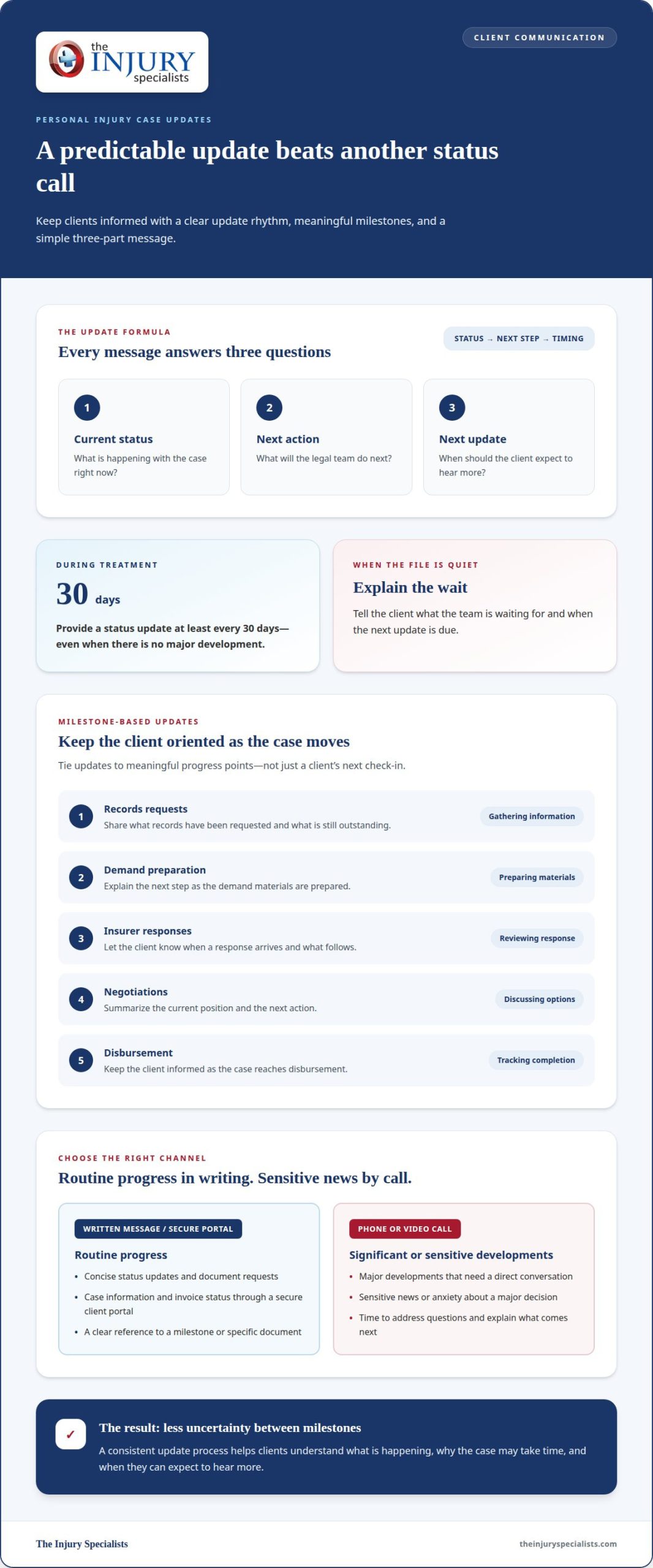
Fewer status calls start with predictable updates, not silence. In PI cases, firms can reduce routine check-ins by explaining the current status, the next step, and when the client should expect another update. During treatment, schedule status updates at least every 30 days, even when there’s no major development. Use calls for significant or sensitive news and concise written messages for routine progress.
Clients need to know what is happening and why a case may take time. A clear communication plan answers their concerns without leaving them guessing. This guide explains how to discuss setbacks and solutions, prepare clients for mediation trade-offs, and set out timelines and possible outcomes in practical terms. Milestone-based updates and realistic expectations make progress easier to understand and keep decisions and next steps clear.
Key Takeaways
- When a setback changes the case, explain what happened, what it may affect, and the practical options for moving forward.
- Prepare for mediation by discussing case strengths, vulnerabilities, and how fees, costs, and medical obligations can affect the net recovery.
- Clarify that settlement decisions involve trade-offs, and make sure clients understand their role in significant case decisions.
- Set expectations around the stages of a PI case by separating what the legal team can manage from delays driven by treatment, insurers, or court schedules.
1. Communicating setbacks honestly and discussing solutions
Set communication expectations at intake. Ask how the client prefers to receive updates, confirm contact details, and agree on a schedule. Explain who will provide routine updates and which events trigger a direct call. During treatment, provide a status update at least every 30 days, even when the file is waiting on records. A consistent process for managing client expectations in PI cases gives clients a clear point of contact during active and quiet periods.
Comparative negligence rules vary by state. A claimant’s share of fault can reduce recovery, and some state systems bar recovery once a fault threshold is reached. Attorneys should identify the applicable state rule, explain how the evidence relates to fault, and describe the practical effect in plain language.
When a setback occurs, explain what happened, how it affects the case, and what comes next. If an insurer disputes injury severity, for example, tell the client what information the team is gathering and when it will revisit the issue. If records are delayed, identify what is outstanding and set a date for the next update. When a client is dissatisfied, listen to the concern, acknowledge its emotional impact, clarify what the client expected, and agree on a specific follow-up. Avoid promising a settlement amount or outcome.
Explain changes in case costs before they surprise the client. Describe which work is increasing costs and clarify that case costs are ultimately paid from the client’s share of any recovery. If the case becomes more complex or changes procedurally, explain what changed and how the team plans to respond. Case management software can bring calls, emails, documents, deadlines, and follow-up tasks together. A shared workflow helps staff record conversations and provide consistent updates. Use a secure portal for routine status messages and document requests, and reserve phone or video calls for sensitive developments. When the case is quiet, explain what the team is waiting for and when the next update is due. This approach supports managing client expectations in PI cases through clear, reliable communication.
2. How Can Law Firms Reduce Client Status Update Calls in PI Cases?
Give every update a clear structure: the current status, the next action, and when the client can expect to hear more. Tie messages to milestones such as records requests, demand preparation, insurer responses, negotiations, and disbursement. Even while waiting for medical records, give the client a timeline for the next update. This reduces uncertainty and helps clients follow the case without needing repeated calls.
Before mediation, discuss case value as a range that includes the possibility of losing. Explain that valuation depends on provable damages, including medical bills and lost earnings, and that each side may assess the same injury case differently. Review vulnerabilities, such as disputed liability or questions about injury severity, against the available evidence. Make clear that an estimate is not a promise. Discuss how attorney fees, case costs, medical liens, health insurance subrogation, and outstanding medical bills can affect the client’s net recovery. Agree on understandable goals, priorities, and acceptable trade-offs.
A secure client portal can make case information and invoice status accessible without a status call. Keep records requests, medical documents, demand materials, and negotiation notes in centralized, matter-specific files. Consistent document names help staff locate the right item and answer questions with accurate details. A brief written update can point to a specific milestone or document, while a call can address anxiety about a major decision. Organized case management workflows also help teams coordinate follow-up and keep messages consistent.
Lawyer-client communications must protect confidentiality and follow the ethical rules governing the legal profession. Attorneys should explain developments clearly and give clients enough information to make informed decisions. Advise clients not to post about their injury or claim on social media, since posts may become relevant evidence. If an insurer requests a recorded statement, clients should discuss the request with their attorney before responding.
3. Explaining mediation risks and settlement trade-offs
Mediation gives both sides a structured opportunity to discuss settlement, but an offer is not a verdict. Explain that insurers may dispute liability, question injury severity, argue that the claimant contributed to the accident, or make an inadequate offer. Initial offers are almost always substantially below fair value. Continued negotiations after an initial offer typically produce offers two to five times higher than the first amounts proposed, but that pattern does not predict the outcome of any individual case.
Before mediation, review the evidence, vulnerabilities, and priorities with the client. Identify which medical records support the injury and treatment, where liability may be contested, and what information is missing. Explain how these factors may shape each side’s view of the claim. The client should understand the difference between the proposed settlement and the amount they may receive after attorney fees, case costs, medical liens, health insurance subrogation, and unpaid medical bills.
Settling before maximum medical improvement can make future treatment needs and the full course of recovery less clear. If a client accepts a settlement before treatment ends, later medical expenses may not be covered. Discuss this timing trade-off in light of the client’s medical progress and available records, not an assumed recovery date.
Support an informed decision with a clear comparison: the current offer, the risks of continued negotiation or trial, and the practical effect of waiting. The client, not the lawyer, makes the final decision about settling at mediation. Explain your recommendation and the reasons for it, then document the client’s choice.
Before the client signs, review the settlement agreement together. Explain the release’s scope, payment terms, and any stated obligations in plain language. Pause to clarify unfamiliar terms and confirm the client understands which claims the agreement resolves. A clear discussion supports the client relationship and helps prevent a rushed signature from causing confusion later.
4. Setting realistic expectations about legal processes, timelines, and outcomes
Use the initial consultation to map the personal injury case from treatment through resolution. Explain the likely stages in plain language: gathering evidence, completing treatment, preparing a demand, negotiating, and, if needed, litigating. Most injury cases take 12 to 24 months to resolve. Present that range as a planning reference, then explain which events can lengthen the timeline, such as ongoing treatment, disputed liability, or court scheduling.
Set expectations by distinguishing the work the team can control from outside delays. Attorneys can manage case preparation, evidence presentation, negotiation strategies, and decisions about whether to take a case to trial. They cannot control an insurer’s response time, court availability, the pace of a client’s recovery, or a jury’s decision. Explain, for example, that waiting for treatment to finish can affect when settlement discussions begin. A client’s medical progress may shape when the case is ready for settlement discussions.
At intake, explain what progress looks like at each stage. A records request means the team is gathering evidence, not that negotiations have begun. A demand presents the case for consideration, while an insurer’s response may lead to further negotiation. Before a deposition, mediation, or court appearance, describe its purpose, who will participate, and what decisions may follow. Explain legal terms as they arise, then ask the client to describe the next step in their own words.
Revisit expectations when facts change. A new diagnosis, additional treatment, or a liability dispute can alter both the timeline and available strategies. Update the client on what changed, what the team is doing, and when it will report progress again. That clarity gives clients a practical basis for assessing satisfaction and raising concerns early. For firms aligning case workflows with client communication, strengthen your case communication process with coordinated support.
The Injury Specialists: Physician Referral Services, medical case management, marketing and networking to increase referral partners.
The Injury Specialists supports personal injury firms with coordinated case management and professional referral relationships. Its Attorney Referral Program includes medical case management tailored to each firm’s distinct process, as well as marketing and networking to grow referral partners.
For firms improving communication workflows, these services can support coordination across legal and medical relationships. Physician Referral Services, Chiropractic and Physical Therapy Referrals, and Imaging Center Referrals connect firms with referral options relevant to injury cases. Case Management Technology supports case management operations.
Consider these offerings when your firm wants to strengthen referral connections or align medical case management with its processes. Contact The Injury Specialists to discuss your firm’s needs.
Turn clearer communication into a stronger workflow
A durable approach to managing client expectations in PI cases turns recurring questions into opportunities to improve firm processes. Review which stages create the most uncertainty, where handoffs stall, and what clients need explained before key decisions. Use those patterns to refine intake conversations, case workflows, and progress updates. The goal is not simply to reduce calls. It is to help clients understand what is happening and help staff respond consistently.
Make communication practices part of your firm’s ongoing operations. Discuss workflow gaps with your team, then adjust how legal and medical case coordination supports each matter. If you’re developing referral relationships or looking to strengthen your firm’s processes, contact The Injury Specialists to discuss a practical next step. Clear systems can help your team move forward with greater consistency.
Frequently Asked Questions
How Can Law Firms Reduce Client Status Update Calls in PI Cases?
Give clients one dependable place to find routine case information, such as a secure portal, and agree on how urgent issues will be handled. A useful update can bring together several developments, such as records received, documents still outstanding, and the next anticipated action. This helps clients see that work is progressing without requiring separate calls for every administrative step.
What should personal injury lawyers explain to clients at the start of a case?
Explain the main stages, the client’s role, and the information the firm needs to assess the claim. Discuss preserving accident-related records, identifying witnesses, sharing insurance details, and reporting relevant changes in treatment. Clarify who handles routine questions and how the firm will communicate. Explain legal terms in plain language, then invite the client to point out anything they do not understand.
How long do personal injury cases typically take in the United States?
Most injury cases take 12 to 24 months to resolve. The range helps with planning, but a specific case’s progress depends on issues such as treatment, evidence gathering, negotiation, and court scheduling. For instance, a case involving ongoing care may not be ready for settlement discussions as early as one with completed treatment and well-documented damages.
What factors affect the timeline and outcome of a personal injury claim?
Key factors include the strength of liability evidence, the documented extent of injuries, treatment progress, and the insurer’s response. Court availability and jury decisions can also affect timing and results. A missing witness statement, for example, may require more evidence gathering. Reviewing these factors as the case develops helps clients understand why the strategy or expected next step may change.
How often should a personal injury lawyer update clients?
During treatment, provide a status update at least every 30 days, including when there’s no major development. Also update clients when a meaningful event changes the file, such as receiving important records or getting an insurer response. The message can be brief: identify what changed, what remains pending, and the next planned communication. A consistent cadence helps clients know when to expect news.
How should lawyers explain settlement value and case uncertainty to clients?
Discuss settlement value as a range, not a fixed prediction, and connect the estimate to evidence such as medical records, bills, lost earnings, and liability facts. Explain the assumptions behind the range and how different evidence could change the assessment. Distinguish the potential gross settlement from the client’s estimated net recovery, then revisit the analysis when new records or offers arrive.
