

The next viable case may begin with a conversation already in progress. Finding new sources of personal injury cases means building consistent check-ins with clients and providers, then recognizing when police reports or witness statements point to an injury matter that needs attention. These conversations can surface opportunities and useful context, but they do not guarantee a particular number of new cases.
Referrals are more useful when firms stay connected to people and organizations who may encounter injured individuals. A timely, professional check-in can keep communication open and bring a potential case to light while key details are still available.
This article explains how to structure client and provider check-ins, what police reports and witness statements can contribute, and how to handle information those conversations uncover. It also covers ways to organize follow-up so your firm can assess potential matters efficiently and build a steadier referral pipeline.
Key Takeaways
- Use consistent client and provider check-ins to surface potential matters and keep referral relationships active.
- Compare online channels by lead quality and conversion outcomes, not just the number of inquiries they produce.
- Assess advertising and lead-generation practices against the rules that apply to attorney marketing and referrals.
- Use a repeatable lead review process, and consider The Injury Specialists’ Attorney Referral Program and networking support to strengthen referral connections.
3. Which online marketing channels generate personal injury leads, and how do their conversion rates compare?
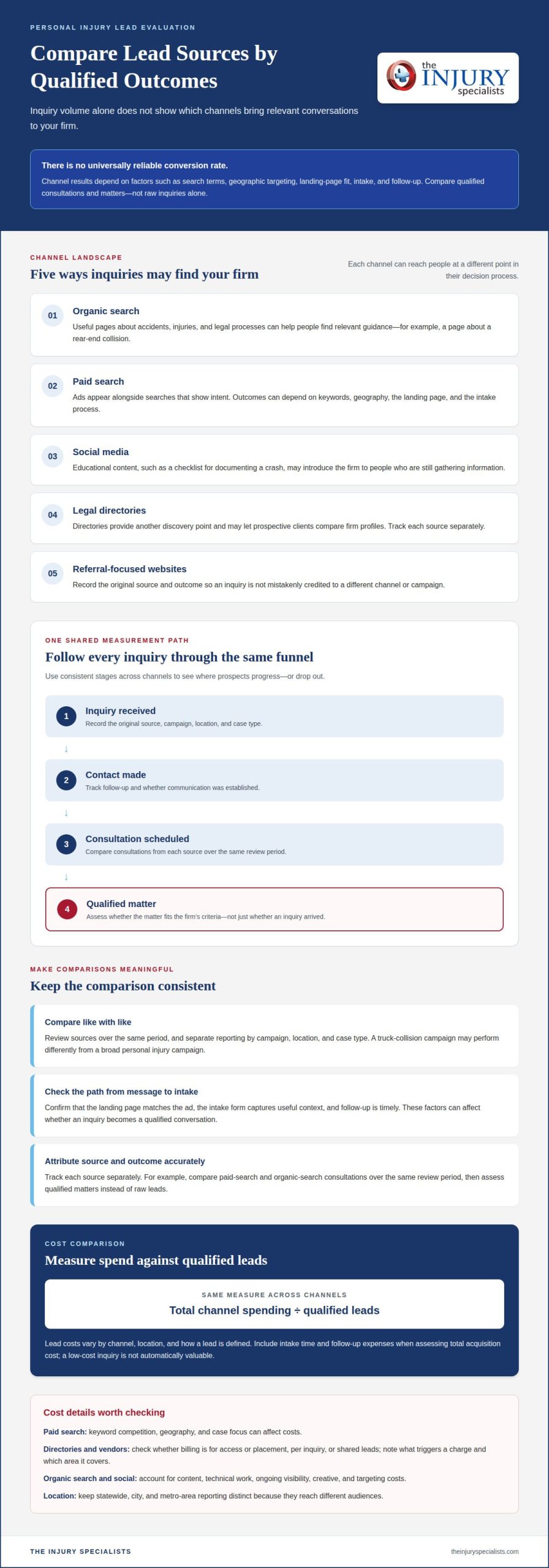
Personal injury firms can attract inquiries through organic search, paid search, social media, legal directories, and referral-focused websites. Each channel reaches people at a different point in their decision process. Someone searching for an injury attorney may be ready to speak, while a person viewing a social post may still be gathering information. Compare channels by qualified consultations, not inquiry volume alone.
Organic search builds visibility through useful pages about accidents, injuries, and legal processes. A page about a specific situation, such as a rear-end collision, can reach people seeking relevant guidance. Paid search places ads alongside searches that show clear intent. Results depend on search terms, geographic targeting, the landing page, and the intake process. Because these factors affect conversion, no single channel has a universally reliable rate.
Social media can introduce a firm to people who are not actively looking for representation. Educational posts, such as a checklist for documenting a crash, may prompt inquiries later. Legal directories offer another discovery point, often letting prospective clients compare firm profiles. Track each source separately so a directory inquiry or social response is not credited to the wrong campaign.
Use the same funnel to compare performance: inquiry received, contact made, consultation scheduled, and qualified matter. Record the original source and outcome for every inquiry. For example, compare paid-search and organic-search consultations over the same review period, then assess qualified matters rather than raw leads. A channel may generate fewer inquiries but more consultations that fit the firm’s criteria.
Review performance by campaign, location, and case type. A search campaign focused on truck collisions may perform differently from a broad personal injury campaign. Check whether the landing page matches the ad, the intake form captures useful context, and follow-up is timely. This process supports finding new sources of personal injury cases by showing which channels produce relevant conversations and where prospects drop out.
4. US Personal Injury Lead Costs by Source and Location
Personal injury lead costs in the United States vary by channel, location, and how a lead is defined. A paid-search inquiry, directory contact, and referred prospect are not equivalent purchases. The cost depends on competition for the audience, campaign targeting, and what qualifies as a lead. One national figure would obscure those differences.
Paid-search costs depend on keyword competition and geography. A campaign targeting a major metropolitan area may face different auction pressure from one serving a smaller community. Case focus matters too: searches about a specific collision or serious injury may face different competition from broad attorney searches. Review spending alongside the inquiries that meet your firm’s criteria.
Directories and lead-generation vendors may use different billing models. Some charge for access or placement, while others charge per inquiry or distribute shared leads. When multiple firms receive the same inquiry, that can affect the value of each contact. Before comparing quotes, note whether a lead is exclusive, what triggers a charge, and which area it covers.
Organic search does not usually carry a direct fee for each inquiry, but it requires investment in content, technical work, and ongoing visibility. Social campaigns also have creative and targeting costs. Compare channels using the same measure: total channel spending divided by qualified leads. For example, separate inquiries from a collision-specific page from general website contacts, then track which become consultations.
Compare locations using consistent boundaries. A statewide campaign, a city campaign, and a broader metro campaign reach different audiences and may have different costs. Separate reporting by market, channel, and case type. Include intake time and follow-up expenses when assessing total acquisition cost. This gives firms a practical basis for reallocating budgets without assuming a low-cost inquiry is automatically valuable.
For a meaningful comparison, review the same reporting period across sources and markets. Track spending, qualified inquiries, consultations, and retained matters. These stages show where costs rise or leads lose relevance, helping firms prioritize sustainable growth over headline lead volume.
3. What rules govern attorney advertising, lead generation, and paid referrals for personal injury cases?
For a U.S. personal injury firm, review the requirements in every state where an ad appears or a lead is delivered. Do not assume a campaign is compliant everywhere because it passed review in one market. Before launch, identify the audience, message, lead source, and referral arrangement, then assess each under the rules that apply in that jurisdiction.
Distinguish advertising from lead generation and referrals. An ad promotes a firm or legal service. A lead-generation arrangement collects or routes prospective-client inquiries. A referral arrangement connects a person with a lawyer. A vendor’s label does not determine how an arrangement should be assessed, so document what each party actually does.
Review the entire path from ad to intake. Check, for example, whether a landing page clearly identifies the law firm, its claims match the firm’s services, and the form explains how submitted information will be used. Keep the final ad, page, form, vendor agreement, and approval record together. These materials help the firm review what a prospective client saw and agreed to.
Review payment terms separately. Record whether the firm pays for advertising placement, a marketing service, a routed inquiry, or a referral. Do not assume these arrangements are equivalent. Have the responsible reviewer examine the contract’s payment trigger, exclusivity, lead distribution, and any language about recommending or selecting counsel.
Use the same review process when expanding a campaign. Before targeting a new state, review the ads, intake language, vendor relationship, and referral practices for that audience. Assign an owner and review date to each campaign, then revisit materials whenever the message, platform, or routing process changes. This makes compliance review a defined part of growth planning, not a last-minute response to a complaint.
4. How can a law firm evaluate and verify the quality of personal injury leads
Start with a written intake standard. Define the case types, locations, and facts your firm can assess. For example, a motor vehicle inquiry should identify the incident, where it happened, and how to reach the prospective client. A consistent standard helps staff distinguish a relevant inquiry from an incomplete contact record.
Next, validate the lead’s source and details. Record when the inquiry arrived, which campaign or referral generated it, and whether the person intended to contact your firm. Check for duplicates across forms, calls, and vendor records. If a lead appears in multiple systems, preserve its original timestamp and source rather than counting it twice.
Assess what information is needed for a preliminary review. Intake staff can ask whether an injury was reported, whether care was sought, and what follow-up the person wants. Treat the answers as initial information, not verified conclusions. A witness statement, police report, or medical record may provide context later, subject to appropriate access and handling.
Review vendor and technology practices before relying on their data. Confirm how the vendor defines a lead, whether it distributes the same inquiry elsewhere, and how it records consent. For tools that handle treatment data, verify HIPAA compliance and determine how much of the medical file each feature can access. Limit review to information relevant to the firm’s process.
Finally, compare lead quality with outcomes. Track contact success, consultations, qualified matters, and retained cases by source. If a campaign produces repeated duplicates or inquiries outside the firm’s target locations, investigate the form, targeting, and delivery settings. Document why each lead was rejected, then use those patterns to refine intake criteria and supplier reviews.
Use a consistent review process to improve referral and intake operations. Explore ways to strengthen your lead evaluation process.
The Injury Specialists: Physician Referral Services, medical case management, marketing and networking to increase referral partners.
The Injury Specialists helps firms build referral relationships through its Attorney Referral Program, marketing, networking, and medical case management tailored to each firm’s process. These services suit firms looking to develop provider connections and organize case management alongside their existing lead evaluation.
For healthcare professionals, Physician Referral Services combine medical case management, marketing, and networking to help grow referral relationships. Chiropractic and Physical Therapy Referrals and Imaging Center Referrals offer additional ways to build professional connections. The right service depends on whether your priority is expanding attorney relationships, strengthening provider connections, or supporting case coordination.
Consider these services when your firm is ready to develop referral relationships beyond online campaigns and track how those connections support its process. Contact The Injury Specialists to discuss your firm’s referral and case-management needs.
Turn Consistent Check-Ins Into a Growth Practice
Make the next step practical: set a recurring time to review how inquiries and referral conversations reach the firm. Assign someone to record each source, note follow-up needs, and share patterns with the team. This creates a feedback loop, so outreach responds to real interactions rather than assumptions about what prospective clients need.
Finding new sources of personal injury cases takes consistent effort. Connect relationship-building with lead review, and use what your team learns to guide future conversations. The Injury Specialists can support firms developing referral relationships and aligning medical case management with their process.
Start a conversation with The Injury Specialists about your firm’s next steps. With a clear process and steady follow-through, your team can keep building stronger connections.
Frequently Asked Questions
What Results Do Firms See?
Track each stage to see which sources generate inquiries, consultations, and matters that meet your criteria. Assess results using your firm’s own intake records, not a general industry benchmark. For example, compare how many provider introductions lead to completed consultations, then review why other prospects disengage. This reveals where follow-up or relationship-building needs attention.
What are the best sources for finding personal injury cases for a law firm?
The most useful sources generate relevant inquiries that fit the firm’s practice and intake capacity. Firms can build relationships with medical providers, stay in touch with former clients who choose to make introductions, and publish clear information about common injury situations. When reviewing a source, consider whether inquiries fit the firm’s case focus instead of ranking sources by volume alone.
How can personal injury lawyers get referrals from medical providers and other attorneys ethically?
Build professional relationships through clear communication and appropriate introductions, not pressure. A lawyer can explain the firm’s focus, share practical contact details, and make it easy for a provider or attorney to connect someone who asks for legal help. Keep referral discussions transparent, document how each introduction occurred, and review arrangements under the professional rules that apply in the relevant jurisdictions.
How can law firms find personal injury cases through local networking and community outreach?
Choose outreach that lets attorneys share useful information without turning every interaction into a pitch. For example, offer a presentation on preserving accident records at a community education event, or join a professional group discussion about coordinating legal and medical communication. Record relationships formed and follow up with relevant resources. Consistent participation helps people remember the firm when someone asks for a referral.

Leave A Comment
You must be logged in to post a comment.