

The right medical specialist depends on the injury being evaluated. Finding medical specialists for personal injury cases may involve emergency physicians, orthopedic surgeons, neurologists, pain management specialists, psychologists or psychiatrists, and life care planners. Recommendations from trusted friends, family, or a personal injury lawyer can help you identify a doctor to consider.
It’s reasonable to want a clear starting point after an accident, especially when an injury’s effects aren’t immediately obvious. This article explains what different specialties evaluate and how recommendations can help you find a doctor whose expertise fits your needs. It also explains when a primary care doctor may recommend a specialist, so you can understand how referrals fit into the process.
Key Takeaways
- Match the specialist to the injury: different medical fields evaluate trauma, bone and joint issues, nerve effects, pain, and emotional impacts.
- Use recommendations from trusted people as a starting point, then consider how the doctor’s experience aligns with the injury and your needs.
- Learn what credentials, board certification, and relevant experience can tell you when assessing a specialist.
- A primary care doctor may help direct you to a specialist when an injury needs focused evaluation.
Medical specialties used in injury cases
Finding medical specialists for personal injury cases starts with matching the medical question to the relevant specialty. Complex matters may require input from several fields.
Treating Physicians and Independent Examiners
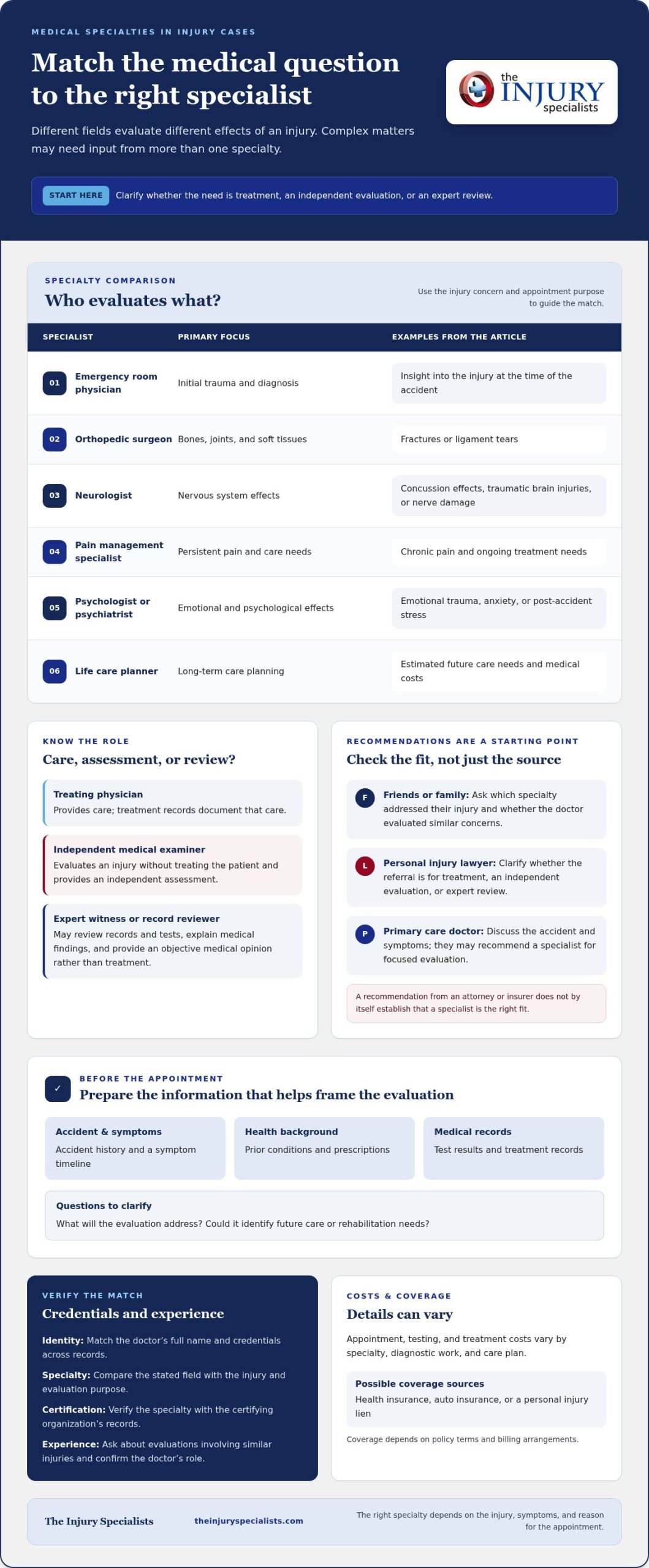
A treating physician provides care, while an independent medical examiner evaluates an injury without treating the patient. The distinction matters: treatment records document care, while an examiner provides an independent assessment. A licensed healthcare professional may also review records and tests as an expert witness, explaining medical findings rather than treating the patient.
Specialist Referrals After an Injury
A primary care doctor may recommend a specialist after discussing the accident and your symptoms. That referral can focus attention on a particular concern, such as a suspected fracture. For law firms, finding medical specialists for personal injury cases also means identifying whether the need is treatment, an evaluation, or expert review.
Different specialists address different injury questions:
- Emergency room physicians provide insight into initial trauma and diagnosis.
- Orthopedic surgeons assess bone, joint, and soft-tissue injuries, including fractures or ligament tears.
- Neurologists evaluate concussion effects, traumatic brain injuries, and nerve damage.
- Pain management specialists assess chronic pain and ongoing treatment needs.
- Psychologists or psychiatrists evaluate emotional trauma, anxiety, and post-accident stress.
- Life care planners estimate long-term care needs and medical costs.
A medical specialist may serve as an expert witness by reviewing evidence and providing an objective medical opinion.
Appointment, testing, and treatment costs vary by specialty, diagnostic work, and care plan. Health insurance, auto insurance, or a personal injury lien may cover specialist care, depending on policy terms and billing arrangements.
Before an appointment, prepare the accident history, a symptom timeline, prior conditions, test results, prescriptions, and treatment records. Ask what the evaluation will address and whether it may identify future care or rehabilitation needs.
Recommendations from friends, family, and personal injury lawyers
Recommendations can help you find doctors with relevant experience, but use the source to guide your questions, not determine the fit. Friends and family can share their own experiences; a personal injury lawyer may know specialists familiar with injury evaluations. The injury, symptoms, and appointment purpose still matter.
Treat each recommendation as a lead. Ask the person who suggested the doctor what care they received or what evaluation the specialist provided. For example, a relative treated for a broken wrist may recommend an orthopedic surgeon, but that experience may not be relevant to a head injury assessment.
- Friends or family: Ask which specialty addressed their injury and whether the doctor evaluated similar concerns.
- A personal injury lawyer: Clarify whether the referral is for treatment, an independent evaluation, or expert review.
- Your primary care doctor: Explain the accident and symptoms; they may recommend a specialist if they don’t see you for the injury.
Delaying care can leave an injury unevaluated, and some symptoms may appear after an accident. A recommendation from an attorney or insurer doesn’t establish that a specialist is the right fit. Consider the doctor’s role, relevant specialty, and reason for the appointment.
For law firms, a referral should match the case question to the appropriate medical expertise. Suspected nerve damage, for example, calls for a different evaluation than a fracture. Keep the referral purpose clear, distinguish treatment from an independent medical opinion, and share relevant case information through appropriate channels. This helps the specialist understand the evaluation’s purpose without confusing patient care with claim review.
Firms developing professional referral relationships can consider an attorney referral program that includes medical case management based on a firm’s distinct process, plus marketing and networking to grow referral partners.
Ask friends or family for personal injury doctor recommendations. A personal injury lawyer may also refer you to doctors with relevant experience, giving you another lead to consider.
How can I verify a specialist’s credentials, board certification, and experience?
Start by defining the medical question the specialist needs to address. For example, a neurologist evaluating nerve symptoms should have experience relevant to that evaluation. A doctor’s title alone doesn’t establish whether their background fits the injury or requested role.
Gather the specialist’s full name, stated specialty, and credentials. Ask which organization issued each credential and what field it covers. Then consult that organization’s directory or contact it to verify the details. For board certification, match the doctor’s name and specialty to the certifying organization’s records. Confirm that the certification applies to the relevant specialty, not another area of practice.
Consider experience in context. Ask whether the specialist has evaluated injuries like the one involved, such as a traumatic brain injury, ligament tear, or chronic pain condition. Clarify whether the doctor provides treatment, conducts independent evaluations, reviews records, or serves as an expert witness. These roles involve different work, so match the doctor’s experience to the case question.
- Identity: Match the doctor’s full name and credentials across records.
- Specialty: Compare the stated field with the injury and evaluation purpose.
- Certification: Identify the certifying organization and verify the listed specialty.
- Experience: Ask about comparable injury evaluations and the doctor’s role.
For a law firm, document the source and date of each verification, along with the specific credential or experience confirmed. Keep those notes separate from medical opinions. A credential check establishes background details; it doesn’t determine whether an opinion is medically persuasive or whether the specialist’s conclusions fit the records.
Before assigning a complex case, compare the specialist’s documented background with the specific issue to be analyzed. A case involving future care needs, for example, requires a different focus than one involving the interpretation of diagnostic images. A focused match helps the firm determine what expertise the referral should provide and which records the specialist needs to review.
Do I need a specialist referral after a personal injury?
Start by contacting your primary care doctor and explaining the accident and your injuries. The doctor may recommend a specialist if they don’t treat that type of injury. This gives the next clinician context about your symptoms and the evaluation needed. A referral can also help clarify which specialty should assess a particular concern.
There isn’t one referral route for every injury. Persistent joint pain may require a different assessment from concussion symptoms. Describe when each symptom began, how it affects daily activities, and whether it has changed. These details help your primary care doctor understand what a specialist’s evaluation could address.
For a law firm coordinating care, keep the referral question specific. Identify the body system or symptoms to be assessed, and distinguish a treatment appointment from an independent medical evaluation. A focused request helps avoid sending records without explaining why the specialist is reviewing them. Share the accident history and relevant medical records through appropriate channels.
- Explain the concern: Describe the injury, symptoms, and when they appeared.
- Clarify the referral purpose: State whether the need is treatment or focused evaluation.
- Organize records: Gather prior diagnoses, test results, prescriptions, and treatment notes.
- Track next steps: Record the recommended specialty and any follow-up instructions.
Referral coordination also matters when a case involves imaging, rehabilitation, or several specialties. Imaging can provide diagnostic information, while physical therapy addresses rehabilitation needs. A clear referral purpose helps each provider understand their role in the care process and gives the firm a more organized record of evaluations and follow-up.
Law firms building a structured medical referral process can use physician referral services to support connections with medical professionals.
The Injury Specialists: Physician Referral Services, medical case management, marketing and networking to increase referral partners.
The Injury Specialists supports law firms seeking coordinated medical referral pathways for complex injury matters. Its Physician Referral Services and medical case management help organize connections with medical professionals around a firm’s distinct processes. This can help firms structure referrals and coordinate cases.
Other offerings include an Attorney Referral Program, Chiropractic and Physical Therapy Referrals, and Imaging Center Referrals. Marketing and networking support can help firms grow referral partnerships, while case management technology supports coordination. These services connect firms with professional resources; medical providers deliver evaluations and treatment.
To discuss referral support for your firm, contact The Injury Specialists or visit theinjuryspecialists.com.
Build a Clear Path for the Next Case
For a law firm, finding medical specialists for personal injury cases is part of building an effective case workflow. Make each referral purposeful: define the medical question, identify the expertise it requires, and connect the evaluation to the case’s needs. This structure helps teams coordinate complex matters while keeping the client’s care in focus.
Review how your firm manages referrals and case coordination. If your process needs additional support, The Injury Specialists can help build professional connections and align medical case management with your firm’s distinct processes.
Contact The Injury Specialists to discuss referral support for your firm. A focused process can help your team move forward with clarity on each case.
Frequently Asked Questions
How Do You Find a Doctor Who Can Evaluate a Personal Injury?
Start by identifying what the evaluation needs to establish, such as the cause of ongoing symptoms or the extent of an injury. Then seek a specialist whose field fits that question. Clarify whether you need treatment or an independent medical opinion, since those roles differ. For a case review, a doctor may assess records and diagnostic findings without treating the patient.
What medical specialists commonly treat injuries in personal injury cases?
Common specialties include orthopedics for fractures and joint injuries, neurology for nerve or brain-related concerns, and pain management for persistent pain. Emergency physicians assess initial trauma, while psychologists or psychiatrists may evaluate emotional effects. A life care planner can address projected care needs but doesn’t provide medical treatment. The right fit depends on the injury and the specific evaluation or care needed.
How do I find a qualified medical specialist after an accident?
Ask your primary care doctor for a referral that matches the injury or symptoms. Then clarify the specialist’s role: ongoing treatment, a focused evaluation, or an expert opinion for a case. For example, a referral for persistent numbness should describe that concern rather than simply request a general injury assessment. Bring relevant records and a concise account of how symptoms affect daily activities.
How do I find personal injury medical specialists near me?
Start with recommendations from your primary care doctor, trusted family or friends, or a personal injury lawyer. Narrow the options by matching each specialist’s field to the injury, such as orthopedic care for a suspected bone or joint problem. When comparing recommendations, focus on the care or evaluation you need, not just proximity. Be clear about your symptoms and the appointment’s purpose.

Leave A Comment
You must be logged in to post a comment.