

Attorney relationships can help a medical practice build a steadier personal injury caseload, but growth depends on more than referrals. To grow a personal injury medical practice, pair dependable communication and coordinated case management with clear processes for records and billing. One practice reports that friendly attorneys pay 90 to 95% of its bills in full.
Treating personal injury patients can create cash-flow pressure: payment may take months or years when care is provided under a medical lien or letter of protection. Strong professional relationships can help coordinate care and case information, but they work best alongside disciplined financial and administrative systems.
This article covers potential benefits and challenges of treating personal injury patients, then outlines practical ways to build productive relationships with attorneys. Learn how to set clear expectations, make communication reliable, and create workflows that support both patient care and practice operations.
Key Takeaways
- Assess the operational and cash-flow demands of personal injury care before expanding, and build processes that support consistent case management.
- Set clear communication and documentation expectations with attorneys to make collaboration more dependable.
- Align your services with patient needs and create a coordinated experience across care, records, and follow-up.
- Build referral relationships through reliable professional networking and workflows that make it easy for attorneys and other providers to collaborate.
1. Benefits and challenges of treating personal injury patients
Personal injury care can add patients whose treatment involves a crash, workplace incident, or fall. The U.S. Bureau of Labor Statistics recorded 5,070 fatal work injuries in 2024, down 4% from 2023. That figure illustrates one source of serious workplace harm, not a forecast of clinic demand. A lawyer may coordinate claim-related records, while the practice remains responsible for clinical decisions and accurate documentation.
Personal injury practices need systems that connect scheduling, clinical notes, billing, and case documents. Choose practice management and electronic health record tools that support these workflows, control access to records, and produce consistent documentation. Before adopting a platform, test a sample claim from intake through follow-up.
Marketing, referrals, liens, and billing involve federal and state requirements that can vary by location and service. Map the rules that apply to your practice, including restrictions on referral arrangements, patient privacy, professional advertising, and lien procedures. Then have qualified counsel review your written policies.
Common risks include incomplete records, unsupported billing, misleading marketing, and sharing patient information without appropriate safeguards. Use a documented intake checklist, record the clinical basis for each service, and train staff to handle attorney requests through an approved process.
Startup and operating costs depend on your specialty, staffing, space, equipment, software, insurance, and billing workflow. Build a budget around these categories, then compare projected collections and expenses using your own service mix rather than assuming claim revenue will arrive quickly.
Improve intake by collecting contact details, incident information, relevant records, and referral details on a consistent form. Assign a staff member to confirm appointments, track missed visits, and update the case file after each encounter.
Letters of protection and medical liens can defer payment until a claim is resolved, creating a cash-flow gap. Document the agreement, charges, treatment dates, and outstanding balance. Review aging claims regularly and reserve operating cash for delayed collections.
Track monthly patient volume, completed visits, referral sources, claim balances, collection rates, and operating costs to measure growth. Compare each measure over time, then identify whether changes stem from intake, scheduling, treatment completion, or payment delays.
Competition can affect how your practice differentiates its services and communicates with attorneys. State-specific lien, billing, and referral rules also shape workflows, so tailor policies to your clinic’s location before expanding into another market.
2. Building relationships with attorneys
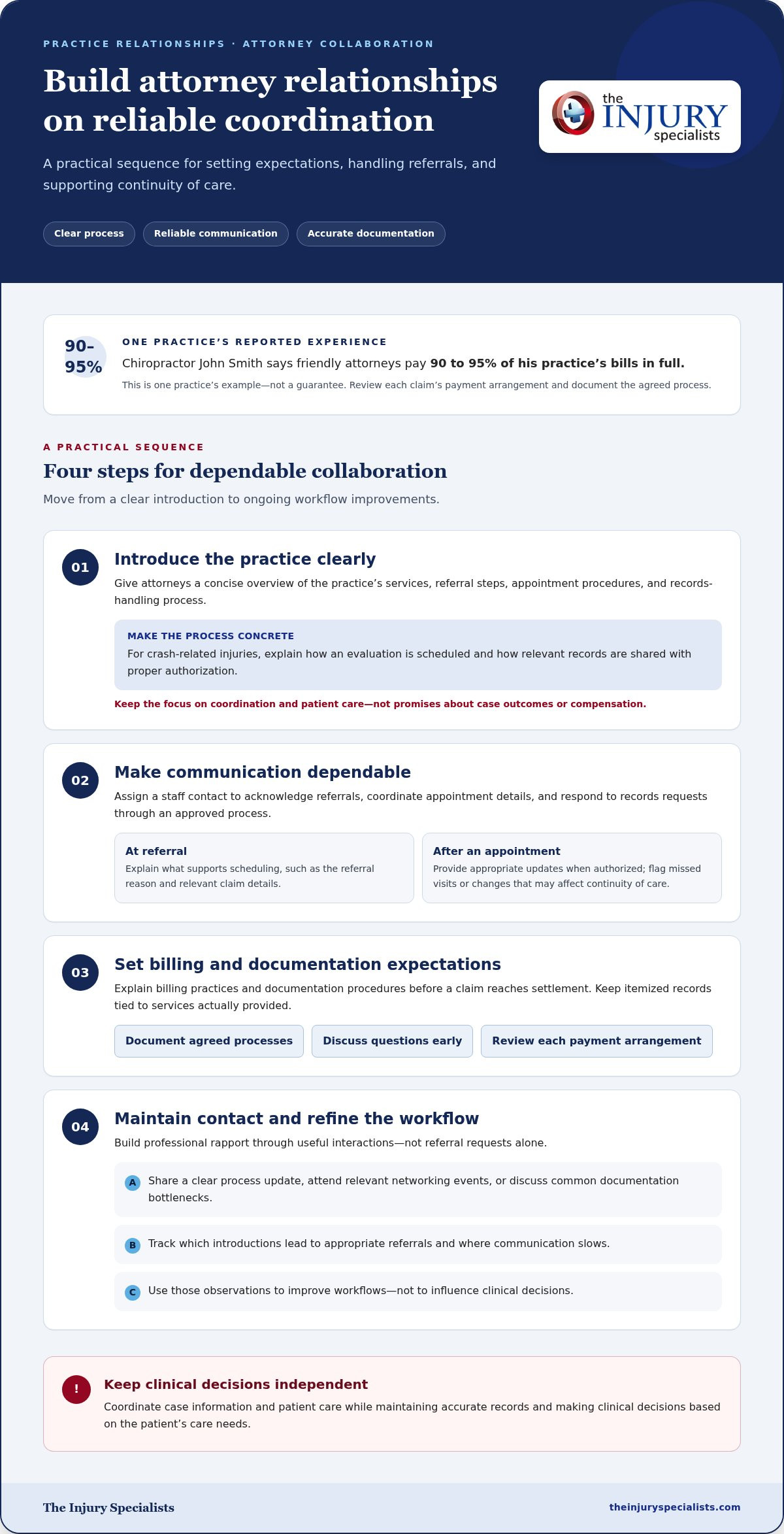
Attorneys are more likely to refer cases when they understand a practice’s services, communication process, and documentation standards. Start with a concise introduction covering your specialties, referral steps, appointment procedures, and records handling. For example, a clinic treating crash-related injuries can explain how it schedules an evaluation and shares relevant records with proper authorization. Focus on coordination and patient care, not promises about case outcomes or compensation.
Reliability makes the relationship useful beyond the first referral. Assign a staff contact to acknowledge referrals, coordinate appointment details, and respond to records requests through an approved process. Explain what information supports scheduling, such as the referral reason and relevant claim details. After an appointment, provide appropriate updates when authorized, and flag missed visits or changes that may affect continuity of care.
Set expectations before a claim reaches settlement. Explain billing practices and documentation procedures clearly, and keep itemized records tied to services actually provided. Chiropractor John Smith says friendly attorneys pay 90 to 95% of his practice’s bills in full. That example underscores the value of working relationships, but it doesn’t replace careful review of each claim’s payment arrangement. Discuss questions early and document agreed processes.
Maintain contact through useful professional interactions rather than referral requests alone. Share a clear process update, attend relevant networking events, or discuss common documentation bottlenecks with an attorney. Track which introductions lead to appropriate referrals and where communication slows. Use those observations to improve workflows, not to influence clinical decisions. Practices seeking structured attorney relationship support can explore a program that aligns medical case management with a firm’s distinct process.
3. What services should a personal injury medical practice offer to attract and retain patients?
Build your service mix around clear assessment, appropriate care, and dependable follow-up. At the first visit, document the patient’s reported injury, symptoms, relevant history, examination findings, and next steps. Explain the care plan in plain language, including how progress will be reviewed. For example, a patient with neck pain after a collision should know the planned follow-up and how to report a change in symptoms.
Make access straightforward with a consistent intake process, appointment reminders, and a clear way to ask administrative questions. Coordinate diagnostic imaging or specialist referrals when clinically appropriate, and explain how patients can access those next steps. If a patient misses an appointment, follow up through the practice’s established process and record the outcome. These basics help prevent avoidable confusion throughout the care journey.
Continuity matters after the initial evaluation. Schedule follow-up according to the treatment plan, review documented progress at each visit, and update records when findings or recommendations change. Give patients copies of relevant instructions and a clear point of contact for appointment or records questions. Patients who understand what happens next can engage more effectively with their care plan.
Operational support is part of the service experience. Train staff to handle intake, appointment coordination, records requests, and billing questions through consistent workflows. Use case management to organize clinical documentation and administrative tasks without allowing outside requests to direct clinical decisions. To grow your practice, assess each service by patient need, staff capacity, and fit with your clinical scope. Expand selectively, then review patient feedback, appointment completion, and workflow gaps to identify what needs improvement. A coordinated experience helps your practice serve patients and communicate clearly with authorized parties.
4. How can a personal injury medical practice build referral relationships with attorneys and other providers?
Start by identifying attorneys and healthcare professionals whose work aligns with your clinical scope. A physical therapy clinic, for example, can introduce its services to personal injury attorneys and physicians. Prepare a concise overview of conditions treated, appointment procedures, records processes, and referral contacts. Keep the information factual and focused on coordination. Avoid claims about case outcomes, settlement value, or guaranteed patient results.
Make referrals straightforward for the sending office. Provide one intake contact, explain what information helps schedule an evaluation, and acknowledge referrals through a consistent process. For example, an attorney’s office can send authorized records with the patient’s contact details and reason for referral. Your team can record receipt, arrange the next step, and communicate relevant updates through approved channels.
Build connections with providers who support different parts of a patient’s care. A physician may need an imaging center, while a chiropractor may coordinate with a physical therapist. Discuss appropriate referral criteria, service capabilities, and record-sharing workflows with each partner. Keep clinical decisions independent and make clear that referrals depend on patient needs. These conversations clarify how practices can coordinate while maintaining distinct roles.
Maintain relationships through useful follow-through, not occasional outreach alone. Share process changes with referral partners, address recurring scheduling or documentation issues, and keep contact information current. Review referral sources and appointment outcomes regularly to see which connections serve patients well. Use those observations to improve access and coordination, rather than pressuring partners for volume. To strengthen professional connections and referral workflows, explore referral relationship support.
Broader market figures can help practices understand why clear and neutral communication matters, but they should not be used to suggest what a patient will recover. There were 50,286 personal injury lawyers and attorneys in the United States in 2024, and the U.S. personal injury attorney market grew at a 1% compound annual growth rate from 2019 to 2024. In the United States, 67% of people with a personal injury claim received compensation through a settlement. Personal injury plaintiffs who hired a lawyer received an average of $77,600 in compensation, compared with $17,600 for people who represented themselves. These figures describe broad outcomes, not guarantees for an individual patient or a reason to steer care.
The Injury Specialists: Physician Referral Services, medical case management, marketing and networking to increase referral partners.
The Injury Specialists helps practices build referral relationships and coordinate personal injury case workflows. When your practice needs a more organized approach to developing referral partnerships, its Physician Referral Services include medical case management, marketing, and networking support. Practices can also use Chiropractic and Physical Therapy Referrals, Imaging Center Referrals, and an Attorney Referral Program with case management tailored to a firm’s distinct process.
These services connect healthcare providers and law firms while leaving clinical decisions to treating professionals. If your practice is focused on growth, identify where referral development or case coordination needs support, then explore an approach that fits those needs.
Contact The Injury Specialists or visit theinjuryspecialists.com to discuss your practice’s referral goals.
Turn your next growth goal into a working plan
A sustainable way to grow a personal injury medical practice is to make relationship-building part of your operating plan, rather than an occasional marketing task. Choose one priority for the coming quarter, such as improving communication with referral partners or making case coordination easier for staff. Assign an owner, define what progress looks like, and review results regularly. A focused change helps your team learn what supports growth without disrupting the entire practice.
As that plan takes shape, the right professional support can help connect your goals with referral development and medical case management. The Injury Specialists works with healthcare providers and law firms on these growth needs. If you’re ready to discuss a next step for your practice, contact The Injury Specialists. Start with the workflow or relationship you want to strengthen, and build from there with a clear direction.
Frequently Asked Questions
What marketing strategies help grow a personal injury medical practice ethically and effectively?
Use educational content, accurate service descriptions, and professional networking to attract appropriate patients and referral partners. For example, publish a plain-language guide to what patients can expect during an injury evaluation, without promising recovery or case outcomes. Keep claims about clinician expertise and services verifiable, and get permission before sharing patient stories. Track which outreach generates relevant inquiries, then refine your messaging based on patient needs and practice capacity.
What state and federal laws govern marketing, referrals, liens, and billing for personal injury medical practices?
Federal and state requirements vary by location and service. Map the rules that apply to referral arrangements, patient privacy, professional advertising, and lien procedures, then have qualified counsel review your written policies.

Leave A Comment
You must be logged in to post a comment.