

Medical records do more than show that treatment happened. They document diagnoses, care, and the effects of an injury, helping connect a condition to an incident and assess medical expenses, future care, and work limitations. Careful handling of medical records in personal injury cases keeps this evidence organized and relevant to the claim.
Clear documentation gives the people assessing a claim a more complete picture of the medical history. Treatment gaps, prior conditions, or inconsistent details may also prompt questions that the records can help put in context.
This article explains how medical records support injury claims, which cases rely on medical documentation, and what the records may contain. It also covers how to request and protect records, and when legal guidance may help with access, privacy, or relevance concerns. The focus is practical: understanding how medical evidence contributes to an injury claim and its assessment.
Key Takeaways
- Medical records can connect an injury to an incident and help assess treatment needs, expenses, and effects on daily life.
- Keep documentation that captures diagnoses, tests, treatment, and any work or activity restrictions related to the injury.
- Healthcare providers generally have up to 30 days under federal law to respond to a medical-record request, according to the U.S. Department of Health and Human Services, Office for Civil Rights.
- Seek legal guidance when records are difficult to obtain, include sensitive information, or raise questions about how an earlier condition relates to a new injury.
When Should You Seek Legal Guidance Involving Medical Records & Personal Injury Claims?
Legal guidance can help when records are delayed, incomplete, or disclose more than an injury claim requires. HIPAA gives people access to their own health information, while consent and privacy safeguards govern disclosures to others.
Law Firm Duties for Protected Health Information
Law firms that handle clients’ protected health information as business associates under HIPAA must protect it from inadvertent disclosure. Case files can contain sensitive details beyond the injury, so firms should limit access to authorized personnel and use secure methods to store and transmit records. Careful handling helps protect claimants’ private information while evidence is reviewed.
Access Rights and Provider Response Deadlines
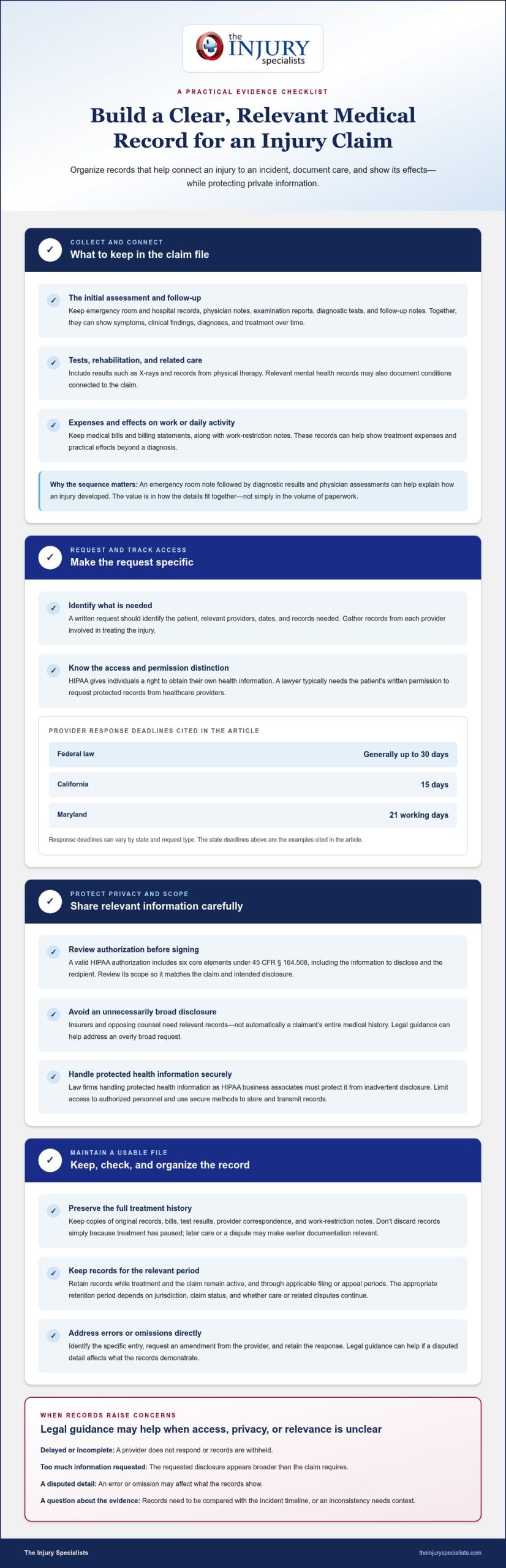
HIPAA gives individuals a right to obtain their own medical information, though access rules govern how providers respond and disclosures to others. Healthcare providers generally have up to 30 days under federal law to comply with a request, according to the U.S. Department of Health and Human Services, Office for Civil Rights. A written request should identify the patient, relevant providers, dates, and records needed. If a provider does not respond or records are withheld, legal guidance can clarify the next step.
Consent and Privacy Obligations
A lawyer typically needs the patient’s written permission to request protected records from healthcare providers. A valid HIPAA authorization includes six core elements under 45 CFR § 164.508, including the information to disclose and the recipient. Review the scope before signing so the authorization matches the claim and intended disclosure. Insurers and opposing counsel need relevant records, not automatically a claimant’s entire medical history. Legal guidance can help address an overly broad request.
State Variations in Record Access and Fees
Yes. Medical-record response deadlines and permitted charges can vary by state and request type: California law sets a 15-day response deadline, according to the California Legislature, while Maryland’s deadline is 21 working days, according to the Maryland General Assembly. Copying or imaging charges depend on applicable limits, format, and whether the patient or a third party requests records. The HIPAA access-fee limit for a patient’s own records doesn’t apply to third-party transmission requests under 45 C.F.R. § 164.524(c)(4). If records contain errors or omissions, identify the specific entry, request an amendment from the provider, and retain the response. Legal guidance can help if a disputed detail affects what the records demonstrate.
What Role Do Medical Records Play in a Personal Injury Case?
Medical records establish a timeline of the injury, the care received, and its effects. They help a lawyer evaluate the evidence and explain how the documented condition relates to a personal injury claim.
Medical Records as Claim Evidence
Medical records document reported symptoms, clinical findings, diagnoses, and treatment over time. Their value lies in how those details fit together, not in the volume of paperwork. For example, an emergency room note followed by diagnostic results and physician assessments can help show how an injury developed. Copies offered in court may need to meet requirements for relevance, authenticity, and trustworthiness.
A lawyer can compare records with the incident timeline and identify inconsistencies that need explanation. Notes about missed work or activity restrictions can show practical effects beyond a diagnosis. Clear, consistent documentation helps a law firm explain the basis of a claim and identify where additional context may be needed.
Records That Support an Injury Claim
Useful documentation may include emergency room and hospital records, physician notes, diagnostic tests, X-rays, examination reports, and physical therapy records. Billing statements and medical bills show treatment expenses, while work-restriction notes can document effects on employment. Each type adds a different piece of evidence, from the initial assessment through rehabilitation.
Gather records from every provider involved in treating the injury, along with test results and follow-up notes. Mental health records may document conditions such as anxiety or post-traumatic stress when relevant to the claim. Together, these materials can connect the injury to treatment, explain its severity, and support an assessment of current or future care needs.
Keeping Injury-Related Medical Records
Keep records while treatment and the claim remain active, and preserve them through applicable filing or appeal periods. The appropriate retention period depends on jurisdiction, claim status, and whether care or related disputes continue. Retain copies of original records, bills, test results, provider correspondence, and work-restriction notes to keep the claim history organized.
Don’t discard records simply because treatment has paused; later care or a dispute may make earlier documentation relevant. For law firms coordinating care documentation across claims, medical case management can support organized record workflows.
What Types of Personal Injury Cases Require Medical Documentation?
Medical documentation matters in claims involving vehicle collisions, falls, workplace incidents, and defective products. In each case, records can help establish the injury, treatment, and connection to the event.
Prompt Treatment and Injury Documentation
Prompt medical attention creates an early record of symptoms, examination findings, and the patient’s reported history. That account can help an attorney compare later diagnoses with the incident and assess how the condition developed. For example, an emergency department note after a collision may document pain and mobility limits before follow-up care begins.
Tell healthcare providers about the incident and any relevant prior symptoms. Follow-up notes, diagnostic results, and treatment recommendations add detail over time. If symptoms change, report the change during care so the medical history reflects that progression. Timely, consistent documentation helps show which injuries were treated and how care responded.
Documenting Treatment and Medical Expenses
Keep records connecting each treatment to the injury, including physician notes, imaging reports, therapy records, and bills. An expense list organized by provider and date helps an attorney compare charges with treatment documents. For example, a physical therapy bill is easier to assess alongside visit notes describing the therapy and the patient’s progress.
Future care recommendations and work restrictions also matter when they appear in medical records. Preserve referrals, test results, and missed-work notes with the related treatment records. These documents distinguish care already received from care recommended for ongoing recovery, supporting a clearer review of expenses and effects.
In a product-related injury claim, records about both the injury and the product can help provide context. Preserve the item, packaging, receipt, instructions, and photographs of damage or visible hazards. Medical records document the harm, while product details may help explain how it occurred. An attorney can assess how the records relate to the claim and whether additional evidence is needed.
AI tools may help legal teams sort files, extract dates, or flag missing documents in a case workflow. Use secure file-transfer systems for medical information, and have qualified staff verify extracted details against original records. For example, a reviewer should compare a tool’s date summary with the provider’s treatment note before relying on it. AI can organize documents, but it cannot establish that a product caused an injury or replace careful evidence review.
How medical records affect a personal injury case
Medical records inform how parties assess causation, injury severity, treatment needs, and damages. In a personal injury case, they provide a clinical timeline that may support or challenge an account of an accident. Their practical value is in connecting documented findings to the losses claimed.
Insurers and attorneys review diagnoses, examination findings, test results, treatment dates, and bills to evaluate injury claims. They compare those details with the reported accident and consider whether the records support the injuries and expenses claimed. A treatment gap or inconsistent symptom history may prompt further questions. Relevant documentation clarifies what the evidence shows, but records alone do not establish accountability.
Records also help distinguish completed care from recommended future treatment when assessing compensation. For example, a physician’s note describing ongoing limitations can provide context for a rehabilitation recommendation. Bills and expense lists help identify current medical costs, while work restrictions document effects on employment. Together, these details help parties compare claimed damages with the documented course of care.
A pre-existing condition does not automatically prevent recovery for a new injury. Tell healthcare providers about prior symptoms and conditions so their notes can distinguish earlier history from changes after the accident. If an existing back problem worsens after a collision, records describing the prior baseline and new symptoms can help explain the difference. Disclosing that history to an attorney also helps prepare for questions about causation.
Medical experts may interpret complex records, explain terminology, and address disputes about causation or future care. Their analysis can be especially relevant when liability is contested or claimed damages are extensive. Keep the original records, bills, and treatment recommendations together so reviewers can follow the timeline. For help aligning claim workflows with case-specific processes, explore attorney case management support.
The Injury Specialists: Physician Referral Services, medical case management, marketing and networking to increase referral partners.
The Injury Specialists helps law firms and healthcare providers coordinate injury-related care and referral relationships. For firms seeking a connected professional network, its Attorney Referral Program includes medical case management tailored to each firm’s process, along with marketing and networking to grow referral relationships.
Healthcare providers can use Physician Referral Services and medical case management to strengthen referral connections. Chiropractic and Physical Therapy Referrals and Imaging Center Referrals support connections across relevant care categories. These services support professional coordination, but do not replace legal representation or medical treatment.
If your firm or practice is building referral relationships or refining case management processes, contact The Injury Specialists or visit theinjuryspecialists.com.
Build a More Connected Case Workflow
The next step is making medical documentation a dependable part of case coordination. For legal and healthcare teams, a clear process for organizing records, tracking outstanding information, and protecting privacy can make collaboration more focused. Review where handoffs slow down, which records are difficult to obtain, and how teams keep case information aligned with each firm’s process. These checkpoints can guide improvements in handling medical records in personal injury cases while keeping the people and professionals involved in view.
The Injury Specialists works with firms and healthcare providers on referral relationships and case management needs. If your team is evaluating ways to strengthen coordination, contact The Injury Specialists to discuss a path that fits your goals. A thoughtful next step can help your team build a more connected process and move forward with clarity.
Frequently Asked Questions
What medical records are important in a personal injury case?
Records explaining the injury’s diagnosis, treatment decisions, and effects are useful. Include discharge instructions, medication lists, referrals, follow-up plans, and provider notes describing symptom changes. For example, a prescription change may show how care evolved after an initial assessment. Keep appointment summaries with related test reports so a reviewer can understand why a particular treatment or referral occurred.
How do you request medical records after an injury in the United States?
Send a written request to each healthcare provider or facility that treated you. Identify yourself, state the treatment period, and specify the records you need, such as imaging reports or therapy notes. Follow the provider’s records-request process and keep copies of your request and any response. If someone else submits the request for you, include the required written authorization.
What are HIPAA rules for sharing medical records in a personal injury claim?
HIPAA protects health information, and a provider generally needs valid permission to disclose a patient’s records to a lawyer or insurer. Before signing an authorization, read its purpose, recipient, and scope. Where possible, share only information relevant to the claim, and use a secure method to transfer files. A lawyer handling protected information must also follow applicable privacy safeguards.
How can you organize and summarize medical records for a personal injury case?
Create a date-ordered index identifying each provider, visit date, document type, and key issue. Keep original records unchanged, then prepare a separate summary with page references for diagnoses, treatment changes, referrals, and work restrictions. Flag missing date ranges for follow-up. This format helps a lawyer find supporting documents quickly without treating the summary as a substitute for the records.
What are the risks of signing a medical records release for an insurer?
Broad wording in a release may allow access to records beyond injury-related treatment, including sensitive history unrelated to the claim. That information may prompt questions about earlier conditions or expose private details without helping evaluate the injury. Review which providers, dates, records, recipient, and purpose the form covers. Ask a lawyer to assess unclear or overly broad language before authorizing disclosure.

Leave A Comment
You must be logged in to post a comment.