
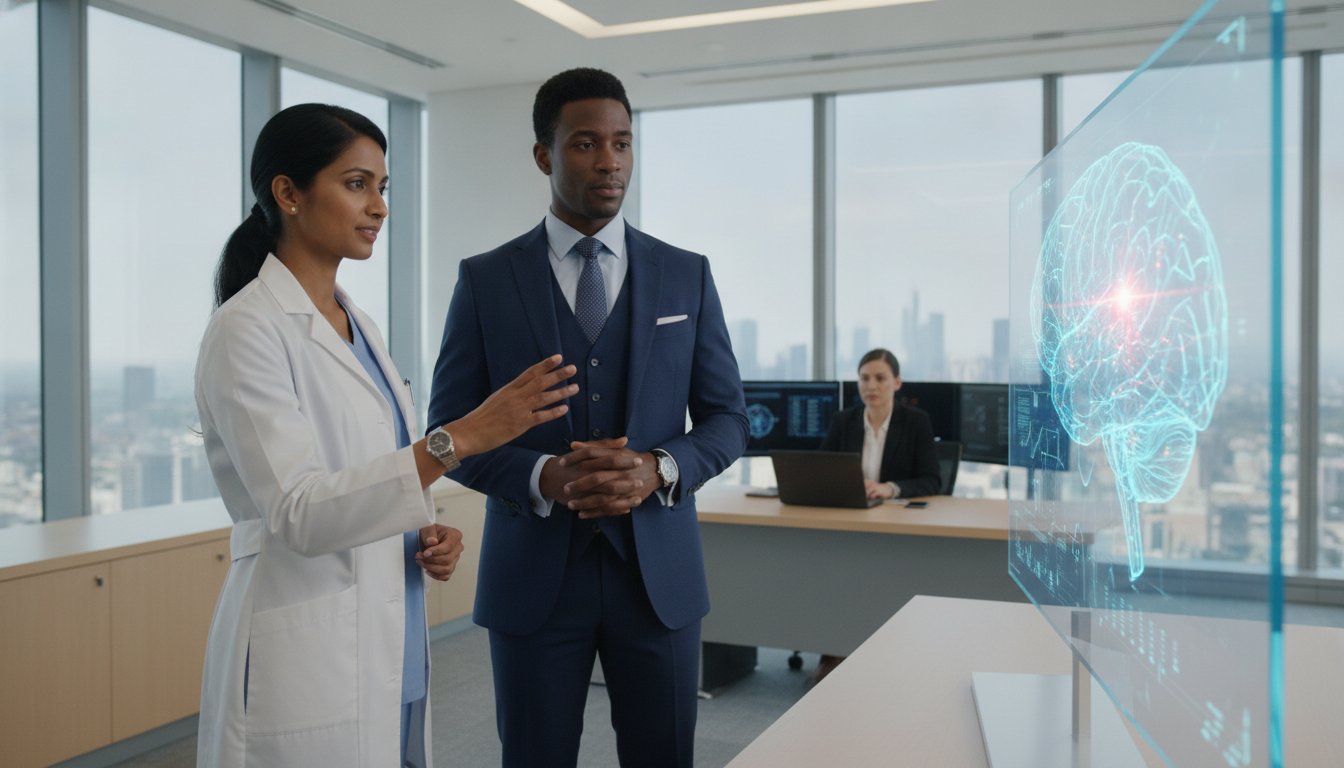
In 2026, a personal injury claim built solely on subjective reports of pain is a strategic liability for your firm. You recognize that insurance adjusters use every tool available to devalue claims, especially under recent legal shifts like New York’s serious injury threshold reforms and Louisiana’s 51% bar rule. It’s a logistical failure when a legitimate nerve injury or traumatic brain injury case stalls because the medical documentation lacks objective weight. Finding a reliable neurologist for personal injury cases who understands the nuances of Letters of Protection (LOPs) shouldn’t be your firm’s primary bottleneck.
This strategic guide demonstrates how expert neurological diagnostics and specialized referral networks transform case outcomes and patient recovery. You’ll learn how to leverage objective medical documentation, such as EMG and NCV testing, to justify higher settlements and secure professional results. We preview the impact of 2026 AI-driven tools like NeuroDiscovery AI and Deep Resolve MRI technology on clinical evidence. Finally, we outline a streamlined referral process that provides access to board-certified specialists nationwide without the burden of constant follow-up.
Key Takeaways
- Objective neurological findings are essential for transforming subjective injury claims into high-value settlements that insurance adjusters cannot easily dismiss.
- Diagnostics like EMG, NCV, and VNG provide the clinical evidence needed to substantiate complex injuries like traumatic brain injury or vestibular dysfunction.
- Selecting a board-certified neurologist for personal injury cases who accepts Letters of Protection (LOPs) ensures patient access to care without financial barriers.
- Advanced case management technology streamlines the referral process and maintains a secure, centralized record of all diagnostic imaging and reports.
- Partnering with a national referral network allows law firms to scale operations while securing consistent, high-quality medical expertise for every client.
The Critical Role of a Neurologist in Personal Injury Litigation
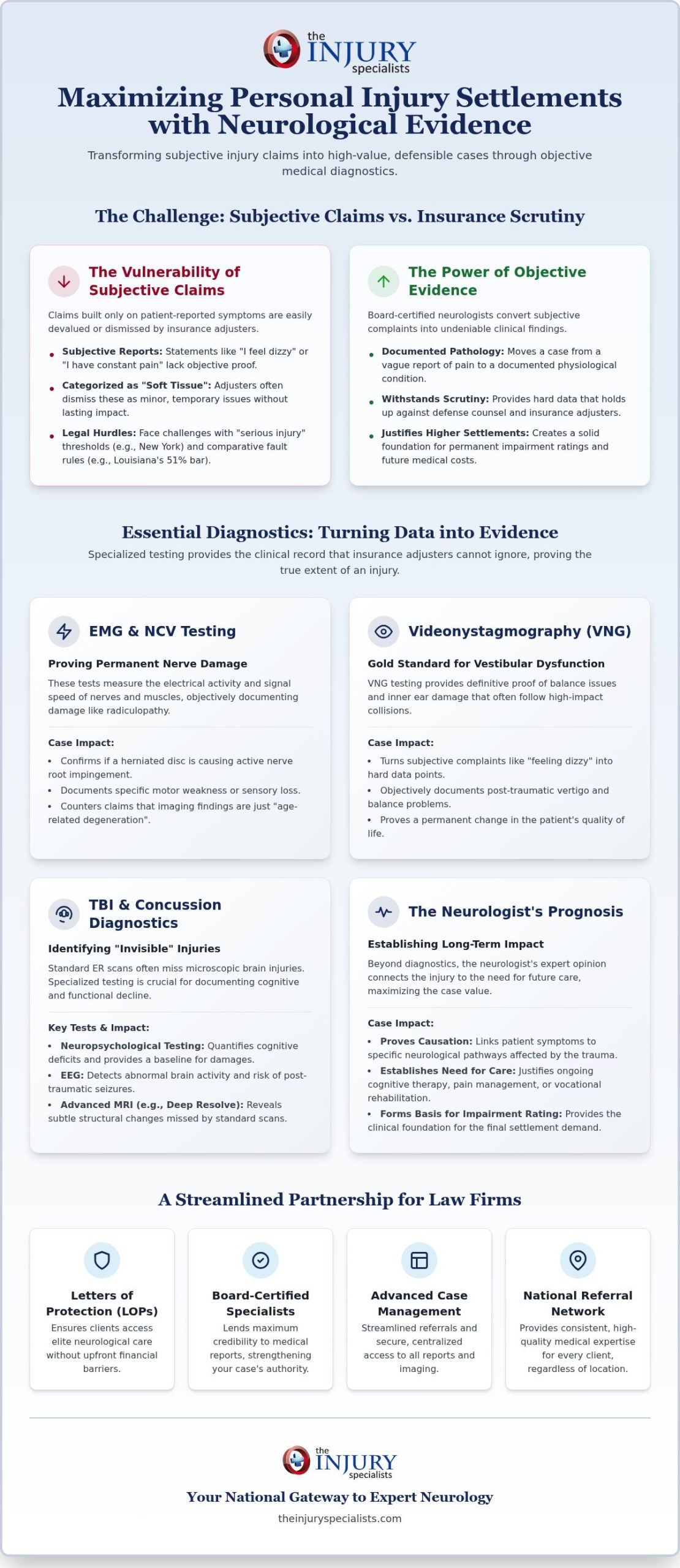
A neurologist for personal injury cases acts as the primary architect of a claimant’s medical evidence. While general practitioners provide essential frontline care, they frequently overlook subtle neurological deficits that define the long term value of a case. Insurance adjusters often categorize subjective reports of dizziness or numbness as temporary soft tissue issues. A board certified neurologist shifts this narrative by providing objective clinical findings that withstand the scrutiny of defense counsel. They don’t just treat symptoms; they document pathology.
Expert neurology provides the foundation for permanent impairment ratings. By identifying specific nerve pathways or brain regions affected by trauma, specialists move the case from a vague injury to a documented physiological condition. This clinical precision bridges the gap between patient recovery and legal testimony. It ensures that the full scope of a client’s impairment is reflected in the final settlement demand rather than being dismissed as a minor inconvenience.
Identifying Invisible Injuries: TBI and Post-Concussion Syndrome
Standard emergency room CT scans are designed to detect life threatening hemorrhages or skull fractures. They often fail to identify microscopic axonal shearing or metabolic changes associated with a Traumatic brain injury. A specialist’s intervention is vital for documenting cognitive deficits, executive dysfunction, and mood alterations that appear weeks after the initial accident. These invisible injuries often carry the highest long term costs for the patient.
- Neuropsychological testing: This testing quantifies cognitive decline to provide a baseline for future damages.
- Clinical Correlation: Specialists match patient symptoms with specific neurological pathways to prove causation.
- Long term Prognosis: Neurologists establish the necessity for ongoing cognitive therapy or vocational rehabilitation.
Neurological Oversight in Spinal and Nerve Damage Claims
Spinal injuries require more than just an MRI report. While an MRI might show a herniated disc, it doesn’t always confirm if that disc is causing active nerve root impingement. A neurologist for personal injury cases validates these findings through detailed clinical examinations and diagnostic testing. This confirmation is critical for justifying surgical referrals or long term pain management protocols. Without this oversight, insurance companies often argue that imaging findings are merely age related degeneration.
Identifying radiculopathy through functional testing proves the injury’s impact on daily life. When a neurologist documents specific motor weakness or sensory loss, they provide the evidence needed to secure higher multipliers. This level of oversight prevents cases from being dismissed as simple back strain. It ensures the legal team has the data required for aggressive negotiation and successful litigation.
Essential Diagnostics: Turning Medical Data into Legal Evidence
The success of a personal injury claim hinges on the transition from a patient’s subjective complaints to objective medical data. While a physical exam provides initial clues, the details of a neurological exam often require specialized diagnostic tools to confirm specific pathologies. A neurologist for personal injury cases utilizes these tests to build a clinical record that insurance adjusters cannot ignore. This evidence base is what separates a nuisance settlement from a high value award.
It’s a common misconception that a negative MRI rules out a neurological injury. MRIs are structural snapshots; they don’t capture the functional electrical failures of the nervous system or microscopic damage. For patients experiencing post-traumatic seizures or chronic vertigo, tests like Electroencephalography (EEG) and Videonystagmography (VNG) are essential. VNG testing provides the gold standard for documenting vestibular dysfunction and balance issues that often follow high impact collisions. These tests turn symptoms like “feeling dizzy” into hard data points that prove a permanent change in the patient’s quality of life.
EMG and NCV: Proving Permanent Nerve Damage
Electromyography (EMG) is the objective measure of electrical activity in muscles. When paired with Nerve Conduction Velocity (NCV) testing, it creates a map of the peripheral nervous system. NCV tests measure the speed of nerve signals to identify compression or damage. This data is vital for countering defense arguments regarding pre-existing conditions or age related degeneration. By identifying acute denervation, a neurologist pinpoints where the damage occurred, linking it directly to the accident. This clinical precision allows legal teams to link the injury to the accident with scientific certainty.
Advanced Imaging and Cognitive Assessments
In 2026, Diffusion Tensor Imaging (DTI) allows specialists to visualize white matter tracks, revealing axonal shearing that standard imaging misses. Standardizing cognitive baseline testing is equally important for post-accident comparison. These reports should be integrated into the demand package to provide a data driven narrative of injury severity. Accessing a neurologist for personal injury cases through The Injury Specialists ensures your clients receive these advanced diagnostics. Utilizing these tools ensures no injury remains “invisible” during litigation.
Selecting a Neurologist for Personal Injury Cases
Vetting a neurologist for personal injury cases involves more than checking their clinical credentials. You need a partner who functions as a high-level facilitator within the legal system. Board certification through the American Board of Psychiatry and Neurology (ABPN) is mandatory. However, you should also look for sub-specializations in areas like vascular neurology or neuromuscular medicine to match the specific injury type. A specialist who understands the legal role of an expert witness provides more than a diagnosis. They deliver testimony that meets the “reasonable degree of medical certainty” standard. This legal literacy is what prevents a case from being dismantled during a deposition.
Effective communication is the second pillar of selection. A brilliant clinician is a liability if their medical reports are late or incomprehensible to a layperson. Your firm requires a neurologist who provides clear, concise, and timely medical-legal reports that align with your filing deadlines. This administrative efficiency is a hallmark of a professional who treats the law firm as a strategic partner rather than just another referral source. It’s about creating a streamlined workflow where medical data is readily available for demand packages.
Medical Liens and Financial Synergy
Finding a neurologist willing to accept a Letter of Protection (LOP) is often the biggest challenge for high-volume firms. Most traditional practices avoid the administrative complexity and delayed payment cycles associated with liens. You need access to a network that understands the financial mechanics of litigation. Integrating pre-settlement funding can be a game-changer here. It provides the liquidity needed to secure top-tier specialist care without forcing the client to pay upfront. This synergy keeps the medical-legal process moving forward without the friction of unpaid invoices or care delays.
The Forensic Value of the Specialist’s Reputation
A neurologist’s reputation in the courtroom is as important as their reputation in the clinic. Juries tend to favor treating physicians over experts who are only brought in for trial. You must ensure your referral partners have a proven track record of clear communication and defensible findings. A specialist using AANEM-accredited protocols for diagnostics ensures that every EMG or NCV test is performed to the highest industry standards. This technical accuracy makes it difficult for defense experts to find flaws in the diagnostic process. Your chosen neurologist must be able to translate complex neurological data into plain English that a jury can easily digest.
Optimizing the Case Workflow with Management Technology
In high-volume personal injury firms, fragmented communication is a primary cause of settlement delays. When medical records or diagnostic images are lost between the clinic and the law office, the case loses momentum. Relying on manual follow-ups for a neurologist for personal injury cases creates unnecessary administrative overhead and increases the risk of critical evidence being overlooked. You need a system that ensures every diagnostic report, MRI, and billing statement is captured automatically and securely.
Implementing personal injury case management technology allows firms to automate referral tracking and document retrieval from day one. This technology eliminates the black hole of missing medical data that often plagues complex TBI or spinal injury claims. It streamlines the delivery of final medical-legal reports, ensuring your demand letters are backed by the objective evidence discussed in previous sections. By centralizing this data, you reduce the time from injury to demand and minimize the burden on your paralegal staff.
Eliminating Communication Bottlenecks
Real-time updates allow attorneys to monitor a client’s neurological progress without picking up the phone. Centralized portals provide immediate access to diagnostic results, ensuring that you aren’t waiting weeks for an EMG report from a neurologist for personal injury cases. This transparency reduces friction for medical providers, making it easier for them to work on a lien basis. When providers don’t have to spend hours on administrative tasks, they focus on delivering high-quality clinical care. This efficiency encourages more referrals and builds a stronger, more reliable network for your firm.
Medical Case Management: The Glue of the PI Ecosystem
Complex neurological recoveries often involve multiple specialists working in parallel. Professional medical case management ensures the neurologist, chiropractor, and physical therapist are all aligned in their treatment plans. This coordination prevents conflicting medical opinions that defense adjusters love to exploit during litigation. Case managers act as the central point of contact, facilitating the flow of information between legal and medical teams. They actively maintain patient compliance, ensuring that care gaps don’t appear in the medical record to devalue the claim. Consistent care leads to better patient outcomes and higher case values simultaneously. A well-managed case is a high-value case.
Experience the efficiency of a unified referral system by connecting with The Injury Specialists today.
The Injury Specialists: Your National Gateway to Expert Neurology
Securing a neurologist for personal injury cases at scale requires a strategic partner with a national reach. The Injury Specialists operates the largest personal injury referral network in the United States. We serve as the power-connector between high-volume law firms and elite medical providers. This model replaces the fragmented, local referral systems of the past with a unified ecosystem designed for efficiency and growth. It’s about providing professional synergy that benefits every stakeholder in the medical-legal process.
Our platform integrates world-class case management technology with specialized medical expertise. This combination ensures that case momentum is never lost due to administrative friction or communication gaps. By bridging the divide between different professional sectors, we allow both attorneys and physicians to focus on their core competencies. Scaling a practice in 2026 demands this level of connectivity and logistical ease.
For Attorneys: Build a Better Medical Referral System
Law firms often struggle with inconsistent medical documentation and difficult referral tracking. You can find doctors for personal injury cases nationwide through our centralized platform. This access ensures your clients receive university-grade neurological diagnostics regardless of their location. Our network simplifies the search for a board-certified neurologist for personal injury cases who understands the nuances of LOP-based care. You’ll leverage our proprietary technology to manage your firm’s distinct medical workflows without the need for constant manual follow-up. This system transforms your medical referral program into a well-oiled engine for case value.
For Physicians: Growing Your PI Practice with Expert Support
For neurologists, the personal injury sector offers significant growth opportunities but presents unique administrative challenges. Joining our network prioritizes efficient case management and targeted marketing to help you scale your PI practice. You’ll access a steady stream of high-quality referrals from leading law firms across the country. Our platform simplifies the business side of personal injury medicine, from document delivery to billing transparency. We provide the support needed to ensure your clinical findings are integrated seamlessly into the legal process. It’s a growth-oriented solution that respects your time and maximizes your professional impact.
Scaling Case Value Through Neurological Expertise
Securing a board-certified neurologist for personal injury cases is no longer just a medical necessity; it’s a strategic litigation requirement. By moving beyond subjective reports and utilizing objective diagnostics like EMG and VNG, you establish a clinical foundation that adjusters cannot dismiss. Our proprietary case management technology ensures this data flows seamlessly from the clinic to your demand package, preventing the administrative delays that often stall case momentum. This integrated approach turns complex neurological injuries into clear, data-driven narratives for settlement.
You don’t have to manage these complex medical-legal connections through fragmented, manual processes. As the largest personal injury referral network in the United States, we provide the infrastructure needed to scale your firm’s success and improve patient outcomes. You gain immediate access to board-certified specialists nationwide who understand the intricacies of LOP-based care and forensic testimony. Connect with the nation’s leading neurologist network today. We’re ready to help you streamline your workflows and maximize your recovery results.
Frequently Asked Questions
Why do I need a neurologist if my client’s MRI was normal?
A normal MRI only rules out structural issues like major hemorrhages or fractures. It doesn’t detect functional failures or microscopic axonal shearing common in concussions. A neurologist for personal injury cases uses specialized diagnostics to identify these invisible injuries. This objective evidence is vital for proving that a patient’s symptoms have a physiological basis. Without this clinical validation, insurance adjusters often dismiss legitimate cognitive or sensory complaints as temporary soft tissue issues.
Do neurologists in your network accept Letters of Protection (LOPs)?
Yes, providers within The Injury Specialists network are specifically vetted for their willingness to work on a medical lien or Letter of Protection basis. We understand the financial complexities of personal injury litigation. Our platform bridges the gap between specialist care and legal settlements. By integrating pre-settlement funding, we ensure that clients receive immediate treatment from board-certified neurologists while protecting the provider’s financial interests throughout the duration of the case.
What is the difference between an EMG and an NCV test in a legal context?
In a legal context, an Electromyography (EMG) measures the electrical activity of muscles to detect damage. A Nerve Conduction Velocity (NCV) test measures how fast electrical signals move through a nerve to identify compression or entrapment. Together, they provide the gold standard of objective evidence for permanent nerve damage. These results allow attorneys to move beyond subjective pain reports and present verifiable clinical data that justifies higher settlement multipliers during negotiations.
How soon after an accident should a client see a neurologist?
Clients should ideally see a specialist within the first 14 days following an accident. Early neurological evaluation is critical for establishing a direct link between the trauma and the symptoms. This promptness prevents defense counsel from arguing that a gap in care exists or that the injuries were caused by an unrelated event. Immediate documentation of cognitive or motor deficits ensures that the full scope of the injury is captured in the initial medical record.
Can a neurologist help prove a Traumatic Brain Injury (TBI) without loss of consciousness?
Loss of consciousness is not a prerequisite for a Traumatic Brain Injury diagnosis. Many significant brain injuries occur through rapid acceleration or deceleration forces that cause microscopic damage without knocking the patient out. A neurologist documents these injuries through detailed cognitive baseline testing and clinical evaluations of mood, memory, and executive function. This professional assessment is essential for proving the existence of post-concussion syndrome in cases where standard imaging appears normal.
How does medical case management improve the value of a personal injury case?
Medical case management acts as the strategic glue between healthcare providers and law firms. It ensures that every specialist involved in a client’s recovery is aligned on the diagnosis and treatment plan. This coordination prevents conflicting medical reports that could be used to devalue the claim. By maintaining patient compliance and ensuring all diagnostic reports are centralized, case management provides a comprehensive, data-driven narrative that significantly increases the overall value of the settlement.
What neurological diagnostics are most effective for documenting whiplash-related nerve damage?
Whiplash often results in cervical radiculopathy, which is nerve root compression in the neck. The most effective diagnostics for documenting this damage are EMG and NCV tests. These tools pinpoint specific nerve pathways that have been compromised by the sudden force of the collision. Additionally, a neurologist for personal injury cases may use Videonystagmography (VNG) if the patient reports balance issues or dizziness. These objective findings turn vague neck pain into a documented neurological condition.
How do I join The Injury Specialists network as a board-certified neurologist?
Board-certified neurologists can apply to join our national network directly through The Injury Specialists website. We provide a comprehensive platform that simplifies the administrative side of personal injury medicine. Members receive a steady stream of high-quality referrals and gain access to proprietary case management technology. This partnership allows physicians to grow their practice while focusing on clinical excellence. Our network prioritizes efficient communication and professional synergy between medical and legal sectors.

Leave A Comment
You must be logged in to post a comment.