
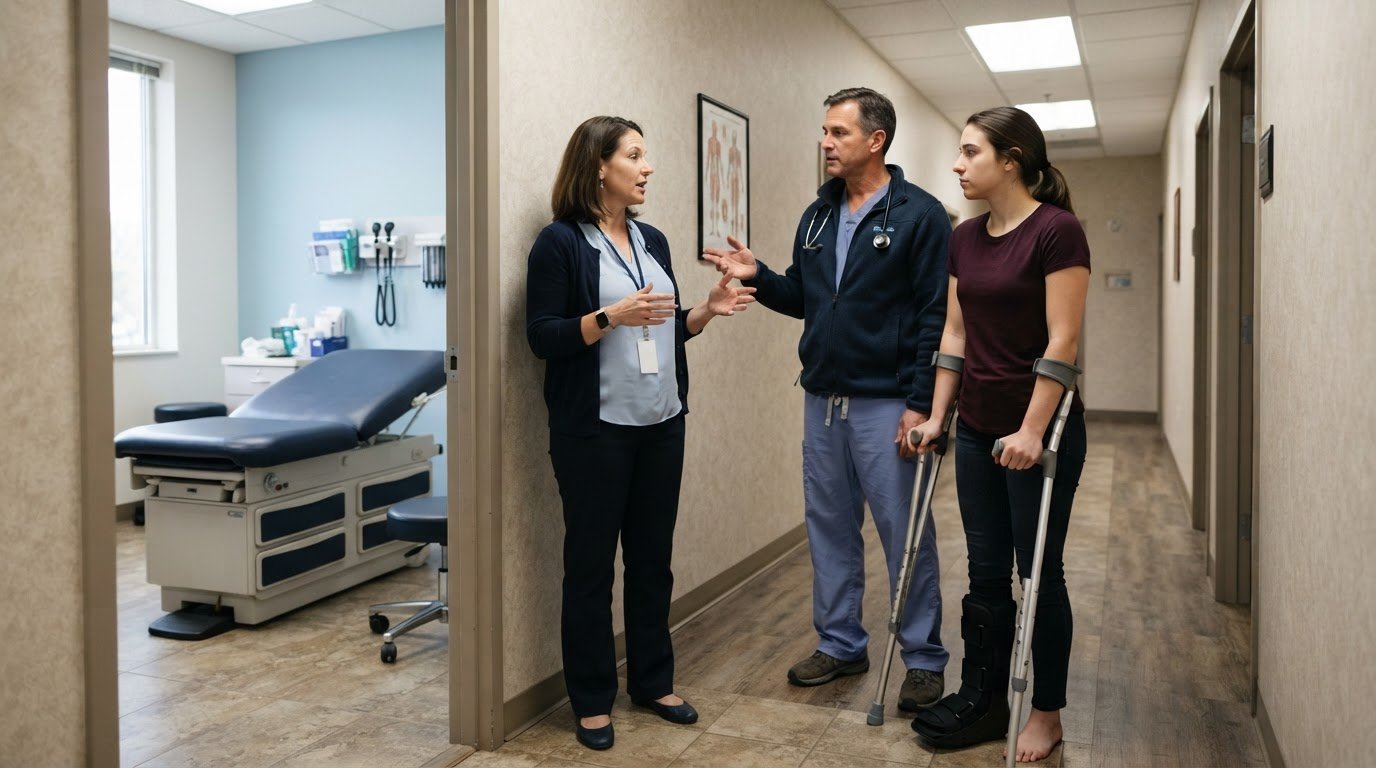
Orthopedic surgeon personal injury marketing combines patient visibility, clinician referrals, and professional relationships with personal injury attorneys to help a practice reach people seeking orthopedic care after an accident. A focused strategy makes the practice’s services easier to find and helps referral partners guide patients through the next steps.
Strong clinical care matters, but patients and referring professionals also need to understand what a practice treats, where it operates, and how to get in touch. Marketing works best when the website, local listings, referral process, and appointment access all reinforce the same clear message.
This article explains how orthopedic practices can improve local search visibility, make clinician handoffs more reliable, and coordinate appropriately with attorneys. It also covers how to assess marketing support and address growth challenges, so the practice can focus on services and relationships that fit its goals.
Key Takeaways
- Align your local listings, practice website, and booking path so patients can quickly understand your services and how to reach you.
- Make your orthopedic focus clear to referring clinicians and build a consistent process for communicating about referred patients.
- Coordinate professional communication with personal injury attorneys while keeping clinical care and legal representation distinct.
- Choose marketing support that connects local visibility, referral development, and case management with your practice’s growth priorities.
Local search and Google Business Profiles
Local visibility starts with accurate listings and a clear path from search to appointment. For an orthopedic practice, its Google Business Profile, website, and patient reviews should present consistent information.
Local Search Presence
Patients may search for “orthopedic surgeon near me” or “knee specialist near me,” so accurate location and specialty details matter. Keep the practice name, address, phone number, and hours consistent across its Google Business Profile and other listings. Make the website easy to navigate: describe conditions and procedures the practice treats, identify provider locations, explain accepted insurance, and outline booking options. Someone looking for an evaluation of a shoulder injury should be able to find relevant information without sorting through unrelated services.
Reputation and Local Visibility
Patients may compare online profiles, reviews, office photos, and booking steps before contacting a practice. Make feedback requests a consistent process, monitor major review platforms, and respond professionally to concerns. The FTC’s 2024 rule bans fake reviews and certain kinds of review suppression, so reputation efforts should rely on authentic patient feedback rather than manufactured praise. Current clinician headshots and clear office photos also help patients connect names, locations, and care focus.
Build useful service pages around the practice’s actual capabilities. For example, a page can explain evaluation and treatment for arthritis, physical therapy, or joint replacement, and identify the relevant clinician and location. Keep each page focused. Someone researching knee care needs a direct route to relevant information and a way to book.
Paid promotion should follow, not replace, these fundamentals. Before directing ads to a practice, strengthen its listings, reviews, service pages, and booking process. This creates a consistent experience from local search through first contact and helps the practice describe its orthopedic services accurately.
Referral visibility and clinician handoffs
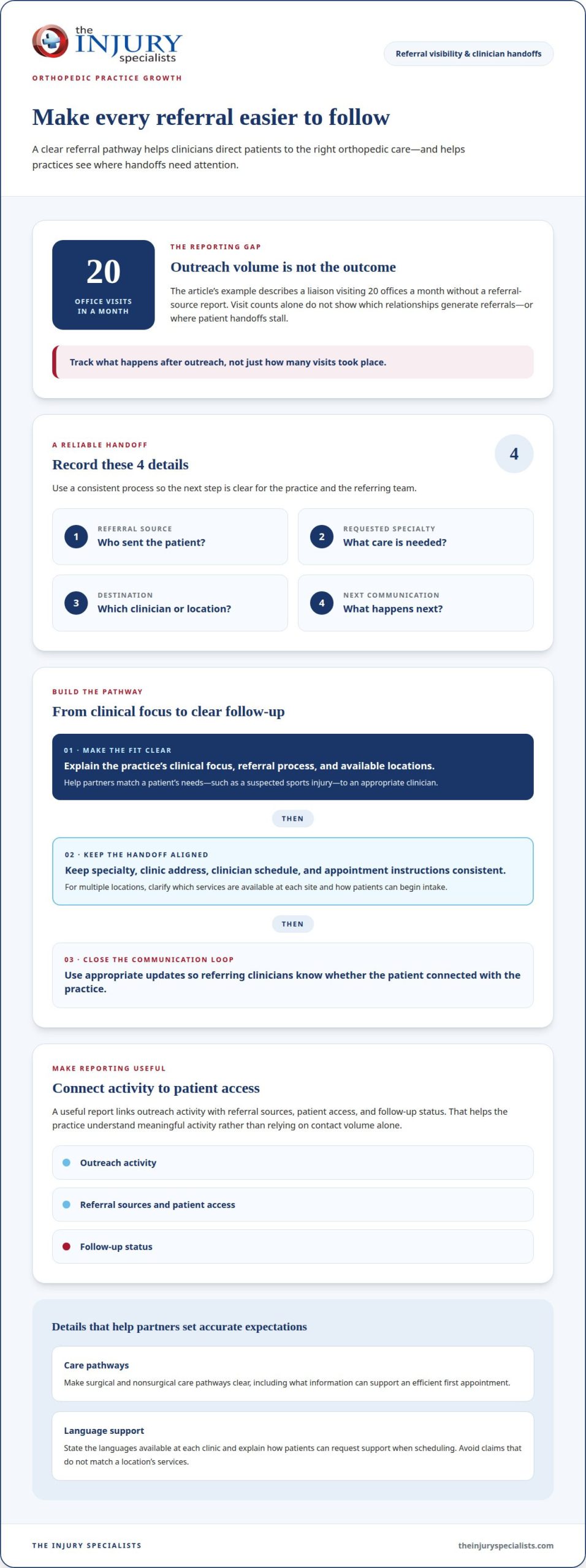
Referring clinicians need a clear reason to send patients to an orthopedic practice. Explain the clinical focus, referral process, and available locations in concise materials for primary care doctors, urgent care teams, and physical therapy providers. For example, a referral for a suspected sports injury should reach a clinician whose expertise matches the patient’s needs.
Make each handoff easy to follow. Use a consistent process to record the referral source, requested specialty, destination, and next communication step. Provide appropriate updates to the referring clinician so they know whether the patient connected with the practice. Clear pathways for surgical and nonsurgical care help partners understand where to direct patients and what information can support an efficient first appointment.
Location details can determine whether a referral works in practice. Keep clinic addresses, clinician schedules, specialty focus, and appointment instructions aligned across referral materials. If the practice has multiple locations, explain which services are available at each site and how patients can get in touch. For example, a sports injury referral should identify a suitable clinic and explain how to start intake, rather than leaving the referring office to guess.
Measure relationship activity alongside referral outcomes. One example describes a liaison visiting 20 offices a month without a referral-source report. Visit counts alone cannot show which relationships generate referrals or where handoffs stall. A useful report connects outreach activity with referral sources, patient access, and follow-up status. That view helps a practice prioritize clinician relationships based on meaningful activity, not contact volume alone.
Language support also belongs in referral information. State the languages available at each clinic and explain how patients can request support when scheduling. Avoid broad claims that don’t match a specific location’s services. Clear details help referring teams set accurate expectations and help patients prepare for appointments. Practices seeking structured referral network coordination can connect outreach, case management, and partner communication around these handoffs.
Coordination with personal injury attorneys
Attorney relationships work best when clinical independence, accurate information, and clear processes guide every interaction. Orthopedic providers can support case communication without allowing marketing to determine treatment or procedures.
Direct Patient Ads and Attorney Referrals
Direct-to-patient ads build visibility among people seeking care after an accident. Attorney referral marketing develops professional relationships and clearer coordination around records, appointments, and case communication. Assess each channel by its purpose: patient access, appropriate referrals, and completed appointments, not clicks or contacts alone. Orthopedic assessments and detailed medical records can help explain injury severity, future needs, and effects on function in a personal injury claim.
Referral and Fee-Splitting Rules
Rules for physician referrals, fee-splitting, and attorney relationships depend on applicable state laws. Before launching an arrangement, have its structure reviewed for the states where the practice operates. Keep marketing, clinical decisions, and financial arrangements distinct, and document the services and communications involved. The American Academy of Orthopedic Surgeons expects its members’ marketing to be truthful, accurate, and not misleading, particularly when describing expected procedure outcomes.
Marketing costs depend on scope, channels, geography, and the work required; pricing is provided after a quote request. No single advertising benchmark applies to every practice. Track qualified inquiries, referral sources, scheduled appointments, and completed visits by channel. For example, compare attorney-sourced inquiries with direct-ad inquiries, then assess which lead to appropriate appointments.
Risks include overstated recovery claims, unclear advertising, and pressure that could blur the line between promotion and medical judgment. Promising a specific result after surgery can mislead patients about individual outcomes. Keep claims factual, describe treatment options accurately, and do not let a case’s legal value shape clinical recommendations.
A professional plan starts with the practice’s goals, locations, specialties, and appointment capacity. A marketing provider can map those priorities to direct advertising, attorney outreach, referral workflows, and measurement. Set review steps for claims and materials, define how inquiries and records move between authorized parties, and report performance by source. This structure can increase visibility while keeping patient care and case coordination clear.
What marketing strategies can a professional use to help orthopedic surgeons attract personal injury patients?
An effective strategy connects useful patient information, referral development, and accessible appointment pathways. For example, a campaign about accident-related shoulder injuries should lead from an educational page to relevant services and clear booking information. Effective orthopedic surgeon personal injury marketing connects these steps to appropriate inquiries, not clicks alone.
Educational content can answer common questions about pain, injury evaluation, recovery, and consultations. A page about a fracture might explain what an orthopedic assessment covers and describe relevant treatment options. Provider bios can clarify clinicians’ focus areas, care philosophy, locations, and visit types. This information helps patients decide whether the practice may meet their needs before contacting the office.
Email can support follow-up with patients who need time to decide, require continuing care, or may return with recurring orthopedic needs. A marketing professional can organize messages around useful topics, such as preparing for a consultation or understanding rehabilitation. Booking improvements also matter: visible calls to action, online scheduling where available, and accessible insurance and office details can make it easier to move from interest to appointment.
Paid advertising works best with a defined purpose, such as supporting a new location or promoting a service line. Campaign planning should account for the practice’s schedule capacity and growth priorities. A focused orthopedic surgeon personal injury marketing plan can prioritize two or three service lines with both margin and open schedule capacity, rather than promoting every specialty.
- Connect each campaign to a specific service, location, and appointment pathway.
- Track inquiries, scheduled appointments, and completed visits by source.
- Adjust messaging when the practice’s service focus or capacity changes.
A professional can coordinate these channels with referral outreach and case management, then report which sources support practice goals. To build a more connected growth strategy, explore referral marketing support.
The Injury Specialists
The Injury Specialists helps orthopedic practices build referral relationships and coordinate personal injury case workflows. Its Physician Referral Services combine medical case management, marketing, and networking to increase referral partners. Its Attorney Referral Program supports medical case management tailored to each firm’s distinct process.
Practices seeking to connect patient pathways across providers can also use Chiropractic and Physical Therapy Referrals and Imaging Center Referrals. These referral services can complement outreach to clinicians and attorneys. They suit practices seeking structured relationship development and case coordination, not direct medical treatment or legal representation.
Contact The Injury Specialists to discuss referral development and medical case management for your practice.
Set the Next Growth Priority
The next step is to turn marketing activity into a focused operating priority. Choose one area for leadership attention, assign a clear owner, and agree on how to measure progress. That could mean improving how inquiries move through the practice or aligning outreach with a growth objective. A defined focus helps teams make decisions without adding disconnected campaigns.
Build a regular review into the practice’s planning routine. Bring clinical and operational leaders together to consider whether current priorities still match appointment capacity, service focus, and patient access. This keeps orthopedic surgeon personal injury marketing connected to how the practice operates, rather than treating promotion as a separate function. Adjust the plan as needs change to keep teams coordinated and support deliberate growth.
When you’re ready to discuss a practical next step for your practice, contact The Injury Specialists. A focused conversation can help you identify where to direct attention and move forward with a clearer plan.
Frequently Asked Questions
What is marketing for orthopedic surgeons?
Marketing for orthopedic surgeons coordinates how patients and professional partners discover, understand, and access a practice. It connects educational content, appointment pathways, clinician outreach, and attorney networking to the services the practice can provide. For example, a practice seeking more accident-related shoulder evaluations needs messages that explain its clinical focus and direct appropriate inquiries through an intake process.
How can a marketing provider help orthopedic practices get more referrals when local primary care is hospital-owned?
A marketing provider can help reduce dependence on hospital-owned primary care by developing relationships with other appropriate referral sources. It can identify relevant independent clinicians, physical therapy practices, imaging centers, and community providers, then organize outreach around the orthopedic services each group may need. For example, education about fracture evaluation may matter more to urgent care teams than a broad practice introduction. Referral tracking can guide follow-up.
How can a marketing provider help orthopedic surgeons build referral relationships with personal injury attorneys?
A marketing provider can help build attorney relationships through clear referral pathways and consistent professional communication. It can organize introductions, clarify the practice’s orthopedic focus, and align medical case management with a law firm’s distinct process. For example, agreed points of contact and a defined way to route case updates can reduce confusion. Clinical assessments remain guided by medical need, not a firm’s marketing or case goals.
How can a marketing provider optimize local SEO for personal injury orthopedic care?
A marketing provider can organize local search content around actual clinic locations, orthopedic services, and patient questions. Pages can address specific needs, such as fracture evaluation after a collision, and connect each topic to the appropriate clinic and intake process. Reviewing search queries and inquiry sources can reveal content gaps. The provider can then improve useful pages instead of creating near-identical content for every location.
How do state laws regulate physician referrals, fee splitting, and attorney relationships?
Requirements depend on applicable state laws. Before starting an arrangement, have its structure reviewed for each state where the practice operates. Keep marketing, clinical decisions, and financial arrangements distinct, and document the services and communications involved.
How can orthopedic surgeons measure leads, patient acquisition costs, and marketing ROI?
Track qualified inquiries, referral sources, scheduled appointments, and completed visits by channel. Compare sources, such as attorney referrals and direct advertising, to assess which generate appropriate appointments.

Leave A Comment
You must be logged in to post a comment.