

A settlement’s value is shaped by more than the total of past medical bills. Increasing settlement value with medical evidence means clearly documenting how the injury happened, the care it required, the treatment still ahead, and any effect on work and earning capacity. There’s no fixed settlement amount for every case; the evidence and losses help determine what a claim can support.
Medical records and billing statements document treatment costs and help explain recovery. A consistent treatment history, records of work limitations, and well-supported projections for future care can clarify the injury’s broader financial impact. The goal is not to prolong treatment or inflate costs, but to present a complete, accurate account of injury-related losses.
This article explains how records, treatment history, future medical needs, and earning capacity can affect settlement value. It covers practical ways to document expenses and recovery, why gaps in care may raise questions, and how to support projected costs. Together, these factors show how the evidence relates to the compensation being sought.
Key Takeaways
- Connect medical records and treatment history to the injury and its effects to build a clearer picture of the claim.
- Keep organized records of care, expenses, missed work, and daily limitations so injury-related losses are easier to document.
- Use medical evidence to explain future care needs and how lasting limitations may affect earning capacity.
- Understand how pre-settlement funding may help address financial needs while an injury claim is ongoing.
1. Future medical expenses and earning capacity
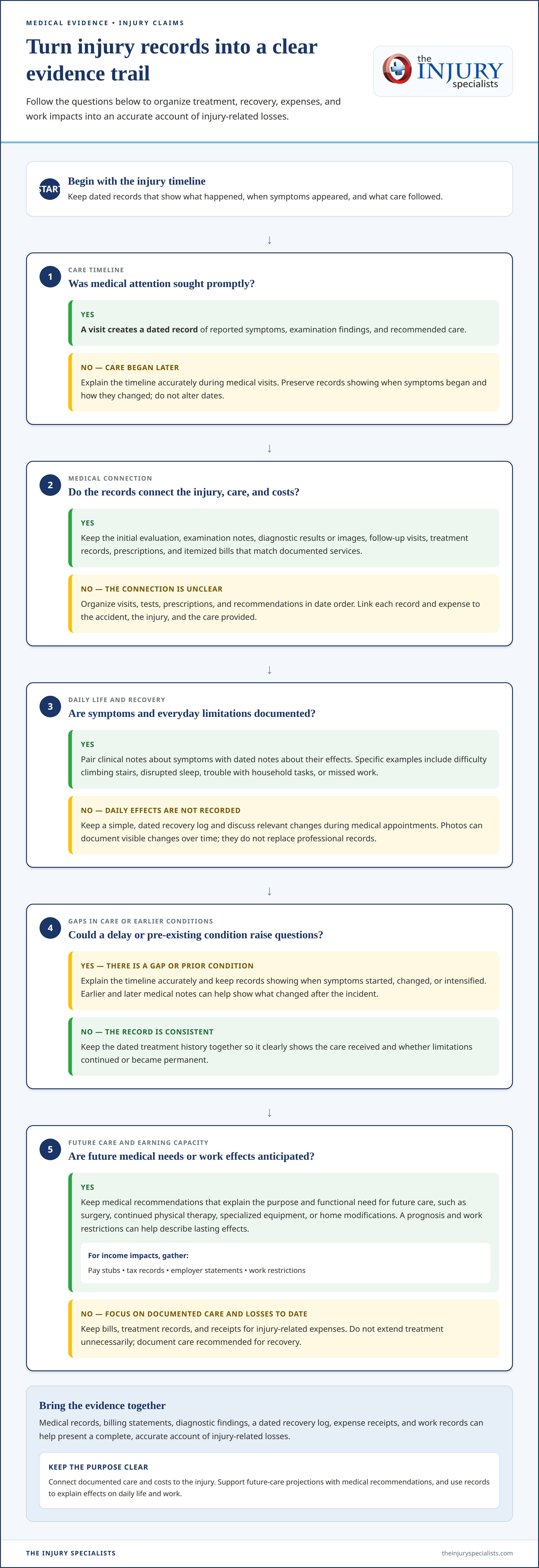
Medical records can show an injury’s diagnosis, treatment, and progression. Link each visit, test, prescription, and recommendation to the accident and its effects. For example, a physician’s notes may describe a shoulder injury, while imaging and therapy records document the care plan. Bills that match documented services help establish expenses already incurred. A practical approach to increasing settlement value with medical evidence connects each cost to the injury and the care provided.
Medical evidence that can support a claim includes examination notes, diagnostic images, treatment records, and billing statements. Clinical notes describing symptoms and their effects on daily life may support pain and suffering damages. For example, a record of limited movement, paired with documented difficulty completing household tasks, gives context beyond a diagnosis. Keep dated notes about specific limitations and discuss relevant changes during medical appointments.
Future care may involve surgery, continued physical therapy, specialized equipment, or home modifications. A medical recommendation can explain each service’s purpose and connection to the injury. Projections are clearer when they identify the expected care and functional need. Reaching maximum medical improvement can also make lasting effects and future needs easier to assess. Do not extend treatment unnecessarily; document care recommended for recovery.
Before settling, gather medical records, itemized bills, imaging reports, therapy notes, prescriptions, and recommendations for future care. Pay stubs, tax records, and employer statements can document lost wages. If an injury affects the ability to return to the same job, work restrictions can help explain potential effects on future earning capacity. Attorneys may use medical and financial evidence to connect these losses to the claim. These steps for increasing settlement value with medical evidence show how past expenses, future care, and income impacts relate to documented injuries.
2. Recordkeeping and documenting the injury experience
After an accident, seek medical attention promptly, even if symptoms seem minor. A visit creates a dated record of reported symptoms, examination findings, and recommended care. If pain develops later, tell the treating professional when it began and how it affects daily activities. This timeline helps distinguish the injury’s progression from unrelated events.
Medical records and diagnostic results can support a claim by connecting an injury to the accident and documenting its severity. For example, an imaging report, examination notes, and follow-up visits may show how a diagnosis informed treatment. Billing statements document the expenses associated with that care. Together, these records give attorneys evidence to evaluate damages and negotiate based on a clearer account of the injury.
Keep a simple, dated recovery log alongside clinical documents. Note specific changes, such as difficulty climbing stairs, disrupted sleep, or missed work, and save receipts for prescriptions, travel to appointments, and other injury-related expenses. Photographs can document visible changes over time. These details add context to medical notes without replacing professional documentation. Store records together and update the file after each appointment or expense.
Yes, personal injury settlement valuation rules vary by state. In Michigan, compensation may be reduced by the injured person’s share of fault; under Georgia Code § 51-12-33, a plaintiff who is 50% or more at fault cannot recover damages. State rules affect how evidence and liability shape a claim.
Delays in care can leave gaps between the accident and recorded symptoms. If treatment began later, explain the timeline accurately during medical visits and preserve records showing when symptoms appeared. Don’t alter dates or extend treatment unnecessarily. Consistent documentation can clarify what happened, what care followed, and whether limitations continued or became permanent. For a structured way to support case documentation, explore injury case documentation support.
3. Treatment delays and arguments about worsening injuries
A gap between an accident and medical treatment can give the opposing party grounds to question causation. If the delay worsened an injury, the other side may argue that it contributed to the losses. Explain the timeline accurately in medical visits and keep records showing when symptoms began, changed, or intensified. In Georgia, Code § 51-12-11 addresses an injured person’s duty to make reasonable efforts to mitigate damages.
Pre-existing conditions do not automatically erase a claim. Medical records can distinguish a person’s condition before an incident from a new injury or an aggravation afterward. For example, earlier notes describing manageable back pain and later records showing new movement limits may help establish what changed. Clear documentation matters because conflicting records can make it harder to connect present symptoms to the accident.
Expert medical opinions and a prognosis can explain an injury’s severity, expected course, and lasting effects. A medical professional may describe whether treatment is ongoing, whether limitations are likely to persist, and how those limits affect daily function or work. Evidence of permanent disability, disfigurement, or reduced physical ability can help show why a personal injury settlement should account for more than initial treatment.
An insurer may challenge an injury claim when records are sparse, inconsistent, or disconnected from the incident. That can lead to a lower offer if the evidence does not clearly establish the injury’s cause, severity, or impact. Assemble a focused record set: the initial evaluation, diagnostic findings, follow-up notes, and documented work or daily-life restrictions. Each record should support a consistent account, not exaggerate symptoms.
When treatment has gaps, the opposing party may argue that the injury was less serious or that the delay contributed to worsening. A clear explanation, such as a documented scheduling barrier or symptoms that emerged later, can put the gap in context. Follow recommended care and report changes promptly. These steps support a credible account of negligence, causation, and the effects of personal injury, while helping an injury settlement reflect documented losses.
4. Calculating future medical and economic losses
A future-loss projection should connect a medical recommendation to its expected effect on recovery. Start with the treatment plan, then identify the service, frequency, duration, and reason it relates to the injury. For example, a physician may recommend continued rehabilitation because a specific movement remains limited. A life care plan can organize projected needs; one example in the field estimates future medical care at $1.2 million. That figure illustrates a case-specific projection, not a standard amount.
Separate past expenses from anticipated care in a personal injury claim. Past bills show treatment already received, while a projection explains what care may remain and why. Tie each projected item to medical support, such as a recommendation for follow-up procedures or equipment. This structure clarifies which losses have occurred and which are expected. It also makes missing records easier to identify before presenting the claim.
Economic losses need their own supporting evidence. Pay stubs, tax records, and employer statements can document lost wages; work restrictions and medical opinions can explain how an injury affects future earning capacity. A personal injury lawyer can help identify economic experts to value losses. Those experts can connect documented income history and work limitations to the person’s circumstances, rather than relying on a broad estimate.
Review the complete calculation against liability evidence and available insurance limits, which affect the maximum possible settlement. A fair offer should account for documented medical costs, lost income, and other verifiable losses. Organize the records into a clear sequence: past expenses, projected care, income impact, and supporting evidence. This lets decision-makers see how each requested part of compensation relates to the injury and recovery. For a coordinated case-development process, connect future-loss documentation with case development.
The Injury Specialists: Pre-Settlement Funding
The Injury Specialists offers pre-settlement funding for people managing financial pressure while a personal injury claim is ongoing. It may be relevant when everyday expenses are difficult to manage before a case resolves. Funding is separate from medical evidence: it doesn’t document an injury, establish future care, or increase a claim’s supported value. Keep building the case record around treatment, losses, and the prognosis, and consider funding only as a separate financial decision.
Review how this option fits your circumstances and the status of your claim before moving forward. For information about pre-settlement funding, contact The Injury Specialists.
Move Forward With a Clear Case Strategy
Use the next stage of your claim to make deliberate decisions, not rushed ones. Before responding to a settlement offer, identify what decision it requires and whether the evidence on file supports the losses being presented. Keep financial planning separate from claim valuation so immediate pressures do not replace a careful review of the case.
A focused approach to increasing settlement value with medical evidence means keeping documentation aligned with the claim as it develops. Coordinate questions about case strategy with your legal representative, and organize new information for review. If financial needs arise before resolution, treat them as a separate part of planning, not as proof of what the claim is worth.
The Injury Specialists can be a resource for next-step conversations about its services and pre-settlement funding. Contact The Injury Specialists to discuss your situation and move forward with a clear plan.
Frequently Asked Questions
How Is the Value of a Settlement Determined?
A settlement’s value depends on documented losses, evidence of fault, and available insurance coverage. Relevant factors can include medical expenses, missed income, future care, property damage, and non-economic harm. For example, two people with similar diagnoses may have different claims if one needs continuing care or cannot perform the same work. No single formula determines every personal injury settlement.
Does Physical Therapy Increase a Settlement?
Physical therapy can support a claim when it is necessary for recovery and relates to the injury. Records can show the treatment plan, attendance, progress, and remaining limitations. For example, therapy notes documenting improved movement but ongoing lifting restrictions may help explain both the care received and its practical effects. Therapy alone does not establish a particular settlement amount.
What is a reasonable settlement offer?
A reasonable offer reflects the claim’s supported losses and the evidence concerning fault. Compare the offer with documented expenses, income losses, future needs, and other claimed harm. Consider liability evidence and the at-fault party’s policy limits, since coverage affects potential recovery. If an offer leaves out a documented loss, an evidence-based response may be appropriate before accepting it.
How does consistent medical treatment influence settlement negotiations?
Consistent care can create a clearer timeline of symptoms, clinical findings, and treatment response. That sequence helps explain why particular services were provided and whether limitations continued. For example, progress notes across physical therapy visits may show changes in balance or range of motion. Organized, contemporaneous records give negotiating parties specific information to assess, rather than leaving them to rely only on a later summary.
How are future medical expenses calculated in a personal injury settlement?
Future medical expenses are projected from recommended care linked to the injury. An estimate can identify the service needed, its expected frequency and duration, and the medical reason for it. For example, a recommendation for follow-up rehabilitation should explain the functional problem it addresses. Medical opinions and an organized care projection help distinguish anticipated treatment from speculative costs.
How can medical bills and treatment costs be documented for an insurance claim?
Keep itemized provider bills with payment records, receipts, and explanations of benefits. Match each document to the date and type of care, then retain prescriptions, therapy invoices, and travel receipts when they relate to treatment. For example, a dated pharmacy receipt paired with the prescription record makes the expense easier to identify. A chronological file also helps reveal missing bills before claim review.

Leave A Comment
You must be logged in to post a comment.