

The settlement decision matters most before you sign. Improving personal injury settlement outcomes can mean responding to an offer with evidence that supports a different amount. Once you sign a settlement release, the claim generally ends. Reopening it is rare, with fraud, duress, or mutual mistake among the limited circumstances that may make it possible.
It’s understandable to focus on the offer amount, but a fair settlement also depends on the losses it covers. Medical costs, lost income, pain and suffering, and the effect of an injury on daily life all shape the picture. This article explains how to document damages, assess current and future needs, and understand why signing can make a settlement final. It also explains how to describe pain and suffering as part of a claim, helping you evaluate an offer before deciding whether to accept it.
Key Takeaways
- Organize treatment records, receipts, and other evidence to support the losses in your claim.
- Account for ongoing care and changes to your work or daily activities when assessing damages.
- Review what an offer covers and consider supporting evidence before responding or signing.
- Use specific examples of how pain and suffering have affected your life to explain non-economic losses.
1. How Do I Increase My Personal Injury Settlement?
Start with prompt medical care, then build a clear record of your recovery. An early evaluation links the accident to your symptoms and identifies injuries that need follow-up. Follow the treatment plan your clinician recommends. If pain, mobility, or other symptoms change, report them at appointments so your medical records reflect those developments. Evidence is more useful when it establishes a consistent timeline.
Organize treatment and expense records by date. Include medical bills, therapy receipts, prescription records, diagnostic results, and travel costs for appointments. Add accident-scene photographs, witness accounts, and the police report, if available. A dated note about missed work or daily limitations can connect documented losses to the injury. For example, record when a back injury prevents you from lifting what your job requires.
Your future prognosis matters if treatment continues or recovery remains uncertain. Ask your medical provider to document recommended care, its expected duration, and any lasting limitations. An attorney can use that information to assess projected medical costs and reduced earning potential, rather than relying only on bills already received. Compare your work duties and hours before and after the accident, including any effect on career advancement.
Comparative negligence rules differ by state and can reduce recoverable damages when the injured person shares fault. In Massachusetts, according to the General Court of the Commonwealth of Massachusetts, a person may recover when their negligence is no greater than the defendants’ negligence, with damages reduced in proportion to their negligence.
Personal injury claims can take weeks to several years to settle, depending on complexity, negotiations, and court schedules. Filing deadlines vary by state, and the applicable statute of limitations can restrict the time to act. Identify the accident date and location early, since those details help determine which deadline applies.
There is no single contingency-fee average that reliably describes every U.S. claim. The fee calculation and handling of case expenses depend on the written agreement with the attorney, so review those terms before signing. Improving personal injury settlement outcomes starts with clear documentation. An evidence-based approach supports improving personal injury settlement outcomes by connecting the injury, treatment, and losses.
2. Calculating current and future damages
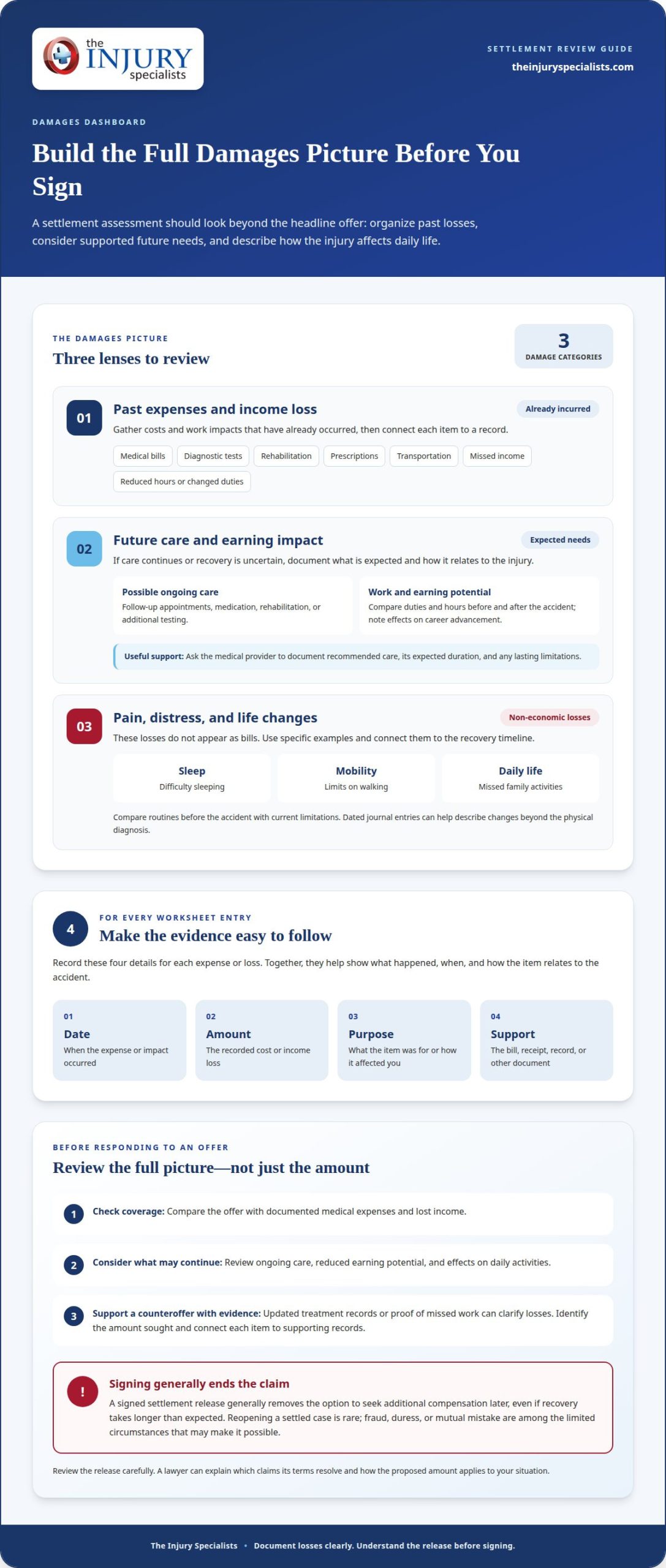
Create a damages worksheet that separates expenses already incurred from losses expected later. For each entry, record the date, amount, purpose, and supporting document. Group medical bills, diagnostic tests, rehabilitation, prescriptions, transportation, and missed income into clear categories. For example, a physical therapy receipt supports a past expense, while a clinician’s recommendation may support continued treatment. This structure shows how each item relates to the accident and your personal injury claim.
Current damages can include more than invoices. Add lost-wage records, reduced work hours, and documented changes to your job duties. Then consider ongoing medical needs, such as follow-up appointments, medication, rehabilitation, or additional testing. A future estimate should identify the expected service and explain its connection to the injury. If recovery affects your earning potential, document the change through work records and a clear comparison of your duties or hours before and after the accident.
Pain and suffering, emotional distress, and loss of enjoyment of life are non-economic damages. They do not appear as bills, so describe specific changes and connect them to your recovery timeline. A daily journal might note difficulty sleeping, limits on walking, or missed family activities. Concrete entries help explain the effects of symptoms beyond the physical diagnosis. Compare your routines before the accident with your current limitations, using dates and examples rather than broad statements.
Before negotiating, review each category for missing records, duplicate expenses, and unsupported projections. A proposed settlement amount should account for documented past losses and reasonably supported future needs. Medical case management can help firms coordinate case information around their distinct processes. For firms organizing medical timelines alongside damages documentation, medical case management can support a more structured workflow.
3. Understanding Settlement Finality: Can You Increase Your Settlement Money After Signing?
Before signing, assess the offer against your documented losses, not just its headline amount. Compare the medical expenses and lost income it covers with your records. Then consider ongoing care, reduced earning potential, and the accident’s effects on daily activities. A lawyer can review the proposed terms and explain how they apply to your situation before you agree.
If the first offer seems inadequate, you can counteroffer and provide additional evidence to support a different amount. For example, updated treatment records or proof of missed work may clarify losses the initial demand did not address. Keep your response focused: identify the amount sought, explain which records support it, and connect each item to the injury. This gives negotiations a clear basis instead of relying on an emotional reaction alone.
Review the release as carefully as the offer. A signed settlement agreement generally ends the claim and removes the option to seek additional compensation later, even if recovery takes longer than expected. Signing matters when symptoms continue or the future prognosis remains uncertain. Ask your lawyer to explain which claims the release resolves and whether the proposed amount accounts for known losses.
After signing, increasing the settlement is generally not an available next step. Reopening a settled personal injury case may be possible in rare cases involving fraud, duress, or mutual mistake. These exceptions are narrow, not a routine way to renegotiate after an injury’s effects become clearer. The best opportunity to maximize a settlement is usually before signing, while you can still discuss the evidence and offer terms.
Take time to assess the full agreement before accepting. Compare the offer with documented expenses, future needs, income effects, and non-economic losses. If the amount does not reflect the evidence, a counteroffer can explain the gap and support a different figure. Once you sign, settlement finality can limit your options, so make your decision with the full recovery picture in view.
4. Compensation for pain and suffering
Pain and suffering covers non-economic harm, not charges on a medical bill. It can include physical pain, emotional distress, and loss of enjoyment of life. A personal injury claim presents these effects alongside financial losses, such as treatment expenses and lost income. The goal is to explain how the injury changed your life, not to assign an unsupported price to each difficult day.
Specific comparisons make the impact clearer. Someone who regularly walked a dog before an accident might now need to stop after a short distance. A parent who handled bedtime routines may need help because of limited movement or persistent pain. Describe the activity, the change, and how long the limitation has continued. These examples clarify an injury’s practical effects beyond general statements that recovery has been difficult.
Medical treatment records can add context to these descriptions. For example, a note about limited movement may align with difficulty performing household tasks. A personal injury lawyer can connect medical information with your account and other evidence. Describe emotional effects with clear examples, too, such as avoiding a previously routine drive after a collision or withdrawing from social activities.
Consistency matters. Keep your descriptions accurate and tied to the period they cover, such as symptoms during treatment or limitations that remain afterward. Explain good days as well as difficult ones. A balanced account can show the actual pattern of recovery without overstating the impact. Claims are stronger when each example fits the medical timeline and your circumstances.
Before resolving a claim, review whether the proposed compensation addresses both economic expenses and non-economic effects. Separate the documented bills from the experiences that cannot be shown on a receipt. For firms coordinating injury-related medical information, explore medical case management as a way to organize case details alongside the recovery timeline.
The Injury Specialists: Pre-Settlement Funding
The Injury Specialists offers Pre-Settlement Funding for people with pending personal injury cases who need financial support before resolution. Financial pressure can make an early offer seem more attractive, even when treatment or recovery is ongoing. Funding may provide an option to consider while weighing a settlement, but it does not change the claim’s value or make signing appropriate.
Use the decision process outlined above to assess damages, future needs, and settlement terms separately from immediate financial concerns. Pre-Settlement Funding may be relevant when a case remains unresolved and those concerns affect your ability to wait. Review the funding terms alongside your broader financial and legal considerations before deciding whether it fits your situation.
Contact The Injury Specialists to discuss Pre-Settlement Funding.
Make Your Next Decision Deliberately
Before taking another step, set a clear decision point: identify what remains unresolved, which documents or answers would help, and what you need to understand before committing. This keeps the process focused on informed choices rather than urgency alone. Improving personal injury settlement outcomes is not only about the figure offered; it also means choosing a path that reflects your priorities, recovery needs, and tolerance for uncertainty.
Write down the questions you still need answered and bring them to the professional advising you on your case. Clarify the consequences of each available option, including what changes once an agreement is final. If financial pressure is shaping your timing, consider what support could help you make the decision at a pace that suits your circumstances.
For a conversation about available support, connect with The Injury Specialists. Take the next step with a clear view of your options and the confidence to make a considered decision.
Frequently Asked Questions
How Do I Increase My Personal Injury Settlement?
Support your claim with evidence linking the accident, your injuries, and your losses. Organize records chronologically so each event has a date and supporting document. Include witness accounts or photographs that clarify disputed details. If an offer overlooks a documented loss, identify that gap in a counteroffer and explain how the evidence supports the amount you are seeking.
Understanding Settlement Finality: Can You Increase Your Settlement Money After Signing?
Usually, no. Signing a settlement release generally ends the claim, so later changes in symptoms or expenses don’t ordinarily create another opportunity to seek payment. Reopening a settled case may be possible in rare situations involving fraud, duress, or mutual mistake. Before signing, ask a lawyer to explain which claims the release resolves and how it applies if your condition changes.
What factors increase the value of a personal injury settlement?
Settlement value can reflect the strength of the evidence, documented losses, clarity of fault, and negotiation approach. The links among these factors matter: clear proof of responsibility supports the claim, while records showing how the injury affected your work or career advancement help explain the financial impact. Consider whether your health could worsen and what care might follow, rather than evaluating only the losses already recorded.
What evidence is most important in a personal injury claim?
Useful evidence includes medical records, accident reports, witness accounts, scene photographs or videos, and proof of lost wages. Evidence is often more useful when different records support the same account. For example, a witness description may align with a scene photograph, while medical records show the injury’s effects afterward. Keep original files and note when and where each photograph or account was created.
How do medical treatment and gaps in care affect settlement value?
Consistent treatment records can document the injury’s course, while unexplained gaps may make ongoing effects harder to establish. If a scheduling issue, cost concern, or other event interrupts care, keep an accurate account and discuss the interruption with your treating provider. The records should explain the reason and any resulting change in symptoms, rather than leave a timeline gap without context.
How do insurance adjusters evaluate and negotiate personal injury claims?
Adjusters review evidence of responsibility and losses when assessing a claim. They may consider medical records, bills, wage documentation, and information about how the accident occurred. You can counter a first offer with additional evidence that addresses what it leaves out. Keep your response specific: identify the disputed amount or loss, then connect it to supporting records instead of making a general request for more.

Leave A Comment
You must be logged in to post a comment.