
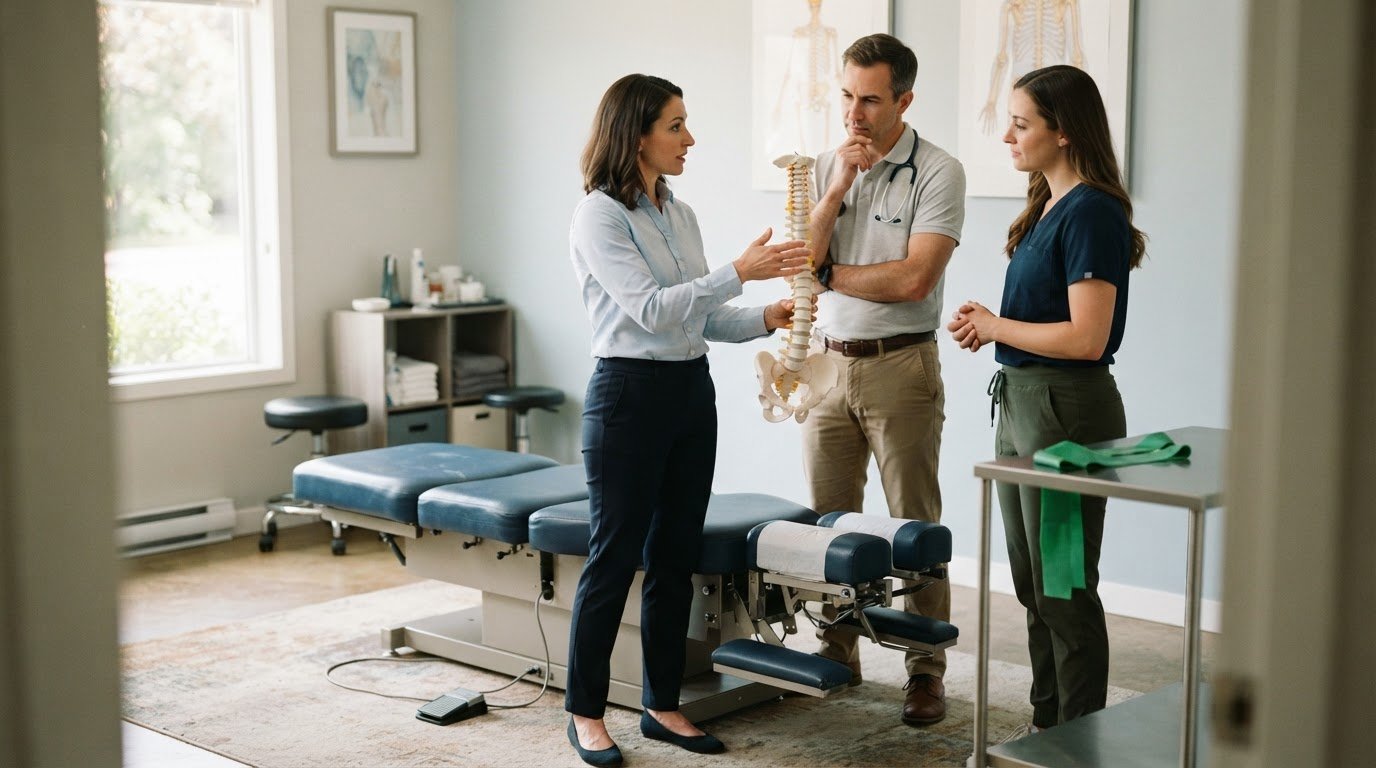
Strong referral networks grow through consistent professional relationships, not one-off introductions. Networking for chiropractors can connect practices with local physicians, physical therapists, dentists, fitness professionals, and community organizations. The most useful connections begin with shared interests, clear communication, and an understanding of how each provider can support patients.
Building those relationships takes more than attending an event. Chiropractors can use professional associations, conferences, community gatherings, and online discussions to meet providers, learn about their work, and explore opportunities to collaborate. Thoughtful follow-up keeps conversations going and makes referrals part of a broader professional relationship.
This guide explains how to identify relevant local providers, make productive introductions, and maintain connections over time. It also covers ways to build visibility through professional and community events, so your networking efforts support stronger relationships across your local healthcare community.
Key Takeaways
- Build referral relationships around complementary expertise, clear communication, and shared value for patients.
- Focus outreach on local physicians whose specialties and patient populations align with your practice.
- Use conferences and community events to create professional connections, then follow up to keep conversations moving.
- Consistent collaboration can strengthen referral pathways and expand your connections across the local healthcare community.
How can a professional networking service help chiropractors build healthcare connections?
A professional networking service can help a chiropractic practice connect with providers whose work complements chiropractic care. For example, a physical therapist may support rehabilitation goals, while a primary care physician can coordinate broader health needs. Prioritize shared patient interests and professional fit, not referral volume alone.
Connections can extend beyond chiropractic to dentists, fitness professionals, sports coaches, and community health groups. You can also build on existing contacts by asking established providers to introduce you to colleagues with compatible approaches. Give each introduction a practical starting point, such as discussing care coordination or communication about patient needs.
To build referral relationships with physicians and other healthcare providers, identify professionals with aligned interests, make introductions, and communicate each practice’s role clearly. A physician and chiropractor can discuss complementary services without assuming what a patient needs.
Follow-up turns an introduction into an ongoing professional connection. Record each contact, the meeting date and purpose, agreed next steps, and topics for a future conversation. After speaking with a physical therapist, for instance, a brief check-in can clarify whether the referral process is clear and if communication needs adjustment. Tracking outreach helps prevent missed follow-ups.
Address HIPAA, licensing, and advertising requirements with a compliance review suited to the states and professional roles involved. Protect patient information, represent credentials and services accurately, and avoid implying guaranteed results.
Referral partnerships also carry ethical risks. A relationship can create conflicts or pressure to refer when another provider is not the right fit. Keep decisions patient-centered, communicate transparently, and base referrals on relevant expertise rather than personal benefit.
Identifying local physicians who may refer patients through a professional networking service
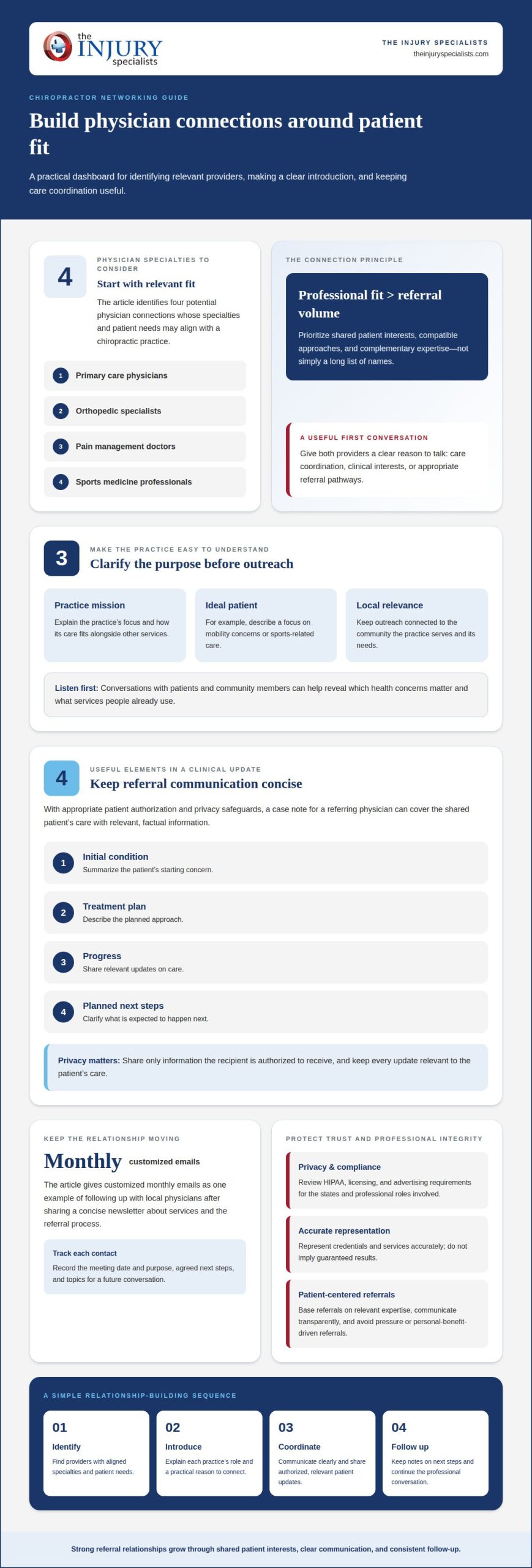
A networking service can help identify physicians whose specialties and patient needs align with a chiropractic practice. Potential connections may include primary care physicians, orthopedic specialists, pain management doctors, and sports medicine professionals. The goal is a credible professional connection, not simply a long list of names. A useful introduction gives both providers a clear reason to discuss care coordination, clinical interests, or appropriate referral pathways.
Before outreach, the networking provider clarifies the practice’s mission and ideal patient. A chiropractor might emphasize supporting patients with mobility concerns, while another practice may focus on sports-related care. These details help shape introductions and explain how chiropractic care fits alongside other services. A defined local focus also helps keep outreach relevant to the community the practice serves.
Genuine interest starts with listening. In conversations with patients and community members, practice staff can learn which health concerns matter and what services people already use. A networking provider can help organize those insights into useful outreach themes. For example, a practice might share a concise newsletter with local physicians about its services and referral process, then follow up through customized monthly emails.
Clear communication after a referral helps sustain trust. With appropriate patient authorization and privacy safeguards, case notes for a referring physician can summarize the patient’s initial condition, treatment plan, progress, and planned next steps. Keep clinical updates concise and focused on the shared patient’s care. A networking provider can support consistent reporting, thank-you notes, and follow-up messages, while the chiropractic practice supplies accurate case information. This gives physicians a practical view of how referrals are handled and where coordination may help. Each update should be relevant, factual, and limited to information the recipient is authorized to receive.
Meeting providers at conferences and community events through a professional networking service
A professional networking service can help chiropractors find conferences attended by doctors, physical therapists, and wellness professionals. Before an event, identify relevant sessions, arrange introductions, and prepare a concise explanation of the practice’s focus. A chiropractor interested in sports-related care, for example, can prioritize conversations with sports medicine professionals. A planned meeting gives each provider a clear starting point for discussing complementary expertise.
Not every useful connection happens at a formal networking event. A community health fair, local continuing education class, or sporting event can create natural opportunities to meet providers and local businesses. The U.S. Environmental Protection Agency describes health professional-to-patient communication as an interpersonal channel and health fairs or sporting events as community channels. A networking service can help select events and coordinate introductions in either setting.
Relevant groups may include state and local chiropractic associations, multidisciplinary healthcare organizations, physical therapy groups, and sports medicine organizations. Chambers of commerce and wellness groups can also foster community connections. Costs depend on the event and scope of support, including association dues, registration, travel, sponsorship, and coordination. These factors shape the budget; no single fee applies to every event.
Fundraising events can connect a practice with nonprofit leaders, local businesses, and residents around a shared community purpose. A networking service can identify a suitable cause, coordinate introductions, and help the practice contribute in a way that supports the event. A local 5K walk-run offers one practical setting for meeting community members and participating businesses.
An in-house health event can bring providers directly to the practice. The service can coordinate invitations, event messaging, and follow-up with attendees. A posture workshop or health information session can introduce the chiropractor’s work to local professionals and residents. Even an event with three attendees can give the practice a focused opportunity to build connections and strengthen local marketing.
4. Benefits of networking for chiropractors
A strong professional network makes referrals part of a broader care relationship. A primary care physician may connect a patient with a chiropractor, who can refer patients to other suitable professionals. This exchange helps providers understand each other’s roles and gives patients clearer pathways to care. The benefit is more than a new referral: it is a reliable connection grounded in communication and appropriate patient needs.
Collaboration also helps providers share perspectives across disciplines. A conversation with a physical therapist can clarify how chiropractic care may complement rehabilitation, while a discussion with a sports medicine professional can reveal shared interests in supporting active patients. These exchanges build working relationships and improve coordination, while helping each provider understand when another professional’s expertise may be relevant.
Networking can strengthen a practice’s standing in its community. Attending a local health fair, continuing education session, or chamber event creates opportunities to meet healthcare professionals and business leaders outside routine appointments. A chiropractor who listens, describes the practice clearly, and follows up can build recognition over time. Community connections may also lead to collaborations, such as a wellness workshop organized with a local fitness professional.
Digital channels extend connections between in-person meetings. A thoughtful LinkedIn message or relevant contribution to an online healthcare discussion can keep a professional conversation active. Digital contact works best when it adds value, such as sharing a useful practice update or arranging a focused discussion. It should support, not replace, direct professional relationships.
Results take sustained attention. Allowing 6-12 months to assess networking approaches gives a chiropractic practice time to observe which connections lead to productive conversations and appropriate referrals. Track meetings, follow-up, and referral patterns to see where relationships are developing. The practical takeaway is simple: invest in relevant connections, communicate consistently, and evaluate progress over time rather than judging the network by one event.
The Injury Specialists
The Injury Specialists helps healthcare providers strengthen referral connections through marketing, networking, and medical case management. For chiropractors building professional relationships, the company’s referral network connects chiropractic practices with physicians and other providers, supporting referral pathways that include chiropractic and physical therapy.
When a practice wants a more structured approach to expanding referral partners, these services can complement the relationship-building strategies above. The Injury Specialists also supports physician and imaging center referrals, as well as attorney referral programs with medical case management tailored to each firm’s processes.
Contact The Injury Specialists to discuss professional networking and referral connections for your practice.
Turn professional connections into a stronger referral network
The next step is to make relationship-building a consistent part of your practice’s growth strategy. Choose connections that align with your approach to care, keep communication focused on shared patient needs, and give promising professional relationships room to develop. A deliberate plan for networking for chiropractors can help turn introductions into lasting connections across the local healthcare community.
For practices seeking structured support, The Injury Specialists can help strengthen referral relationships through professional marketing and networking, along with medical case management for providers. Choose an approach that fits your practice’s goals and the connections you want to build.
Contact The Injury Specialists to discuss support for your referral network. With a clear focus and consistent follow-through, your practice can keep building valuable professional connections.
Frequently Asked Questions
How can a professional networking service help chiropractors make the most of healthcare networking?
Effective networking for chiropractors starts with connections that match the practice’s patient focus. Map those goals to complementary provider roles and organize purposeful introductions. For example, a practice focused on sports-related care may prioritize conversations with sports medicine professionals. Clear goals for each discussion keep outreach relevant and help you decide whether a connection merits ongoing communication.
How can a professional networking service help chiropractors find local networking events and referral groups?
Potential opportunities include chambers of commerce, wellness groups, professional associations, and community organizations. Sort options by audience and purpose, such as meeting healthcare providers or connecting with local businesses. This helps prioritize events where attendees’ interests align with the practice’s goals, rather than filling the calendar with unrelated gatherings.
Which online platforms and communities can a professional networking service use for chiropractor networking?
LinkedIn and healthcare-related online discussions can help chiropractors make professional connections beyond in-person events. Professional association communities can also provide forums for sharing ideas and learning about colleagues’ work. Describe the practice accurately and keep digital conversations professional. Avoid sharing identifiable patient details in public posts or discussion groups.
Which chiropractic conferences and networking events in the United States in 2026 can a networking service help chiropractors access?
For 2026, a service can help identify relevant chiropractic association conferences, multidisciplinary healthcare meetings, sports medicine events, and continuing education gatherings. The best fit depends on the practice’s specialty, intended professional contacts, and event program. A service can help narrow the options and plan introductions around the conference’s audience, rather than treating attendance alone as a networking strategy.
What HIPAA, state licensing, and advertising rules apply to chiropractors networking and sharing patient referrals?
Use a compliance review suited to the states and professional roles involved. Protect patient information, share case details only with appropriate authorization and privacy safeguards, represent credentials and services accurately, and avoid implying guaranteed results.
Which chiropractic associations and professional groups offer networking opportunities?
Networking opportunities include state and local chiropractic associations, multidisciplinary healthcare organizations, physical therapy groups, and sports medicine organizations. Chiropractors can also build connections through chambers of commerce and wellness groups.

Leave A Comment
You must be logged in to post a comment.